
 coinculture.com
In the past few days, fears regarding FTX’s apparent bankruptcy have emerged, and the price of its native token continues to fall. FTT token has dropped by over 75% in the past day.
The crypto sell-off after Binance CEO CZ announced that he had signed a nonbinding agreement on Tuesday to buy FTX. However, after conducting its corporate due diligence, Binance would not proceed with the purchase, causing a massive sell-off that made crypto prices crash.
In the spirit of transparency, might as well share the actual note, sent to all Binance team globally a few hours ago.https://t.co/IUNkPcLC8T pic.twitter.com/XGlIJB7EV5
— CZ 🔶 Binance (@cz_binance) November 9, 2022
BTC has lost around 63% of its value since the beginning of the year. The price of Bitcoin dropped below $16,000 by Wednesday evening after falling below $18,500 late Tuesday, sending it down to levels not seen since November 2020, when BTC hit an all-time high of $69,400 amid the bull market.
The price of Ethereum has decreased 68% year-to-date, reaching a low of $1,200. That’s well off Ethereum’s (ETH) all-time high of almost $4,900 in November 2021.
Other prominent cryptocurrencies were also declining. XRP (XRP) has been down by 16%. Solana (SOL), in which Bankman-Fried is a key supporter, is down a stunning 35%.
What is evident is that the implosion of FTX and Alameda is having a terrible influence on crypto prices, but other macro-level forces are weighing on the crypto market.
Concerns about a bank run and contagion risk
The May 2022 Terra bank run and final collapse of LUNA, which has since been renamed LUNA Classic, rippled across the crypto market, leading to Bitcoin’s first seven-week losing streak.
Analysts are seeing parallels between the current FTX bank run, the significant budget shortfall, and what occurred to Terra earlier this year, precipitating a slew of bankruptcies at Singapore fund Three Arrows Capital and U.S. fintech companies Voyager Digital and Celsius.
The rapid response of crypto players to news and rumours exacerbates a liquidity crisis much more than in traditional finance.
The persistent threat of legal frameworks
The crypto sector and authorities have a long history of conflict owing to misunderstandings or scepticism over the use cases of digital assets.
Without a functional framework for the crypto sector, several nations and jurisdictions have contradictory regulations about how cryptocurrencies are categorised as assets and what makes a legal payment system.
Many observers feel that the mainstream adoption of cryptocurrencies cannot occur without a set of regulations more broadly agreed upon and understood.
Risk assets are highly influenced by investor mood, and this pattern extends to Bitcoin and altcoins. Until now, the possibility of unfavourable restrictions or an outright ban has had a virtually monthly influence on crypto prices.
After the FTX catastrophe, regulators may intensify their enforcement efforts. According to Reuters, the U.S. Justice Department is investigating Binance for alleged breaches of anti-money laundering regulations. This is one of several probes into Binance’s poor history of financial regulatory compliance this year.
The impacts of Fraud on investor confidence
Scams, Ponzi schemes, and extreme market volatility impacted the decline of crypto prices in 2022. Due to the absence of regulation, the infancy of the cryptocurrency business, and the market’s modest size compared to equity markets, bad news and events that impair market liquidity are likely to yield disastrous results on the crypto market.
The implosion of Terra’s LUNA and Celsius Network, as well as Three Arrows Capital’s (3AC) misuse of leverage and client money, were individually responsible for subsequent falls in crypto market asset values. Bitcoin is still the largest asset by market capitalisation, and historically, altcoin values tend to follow the direction in which the BTC price moves.
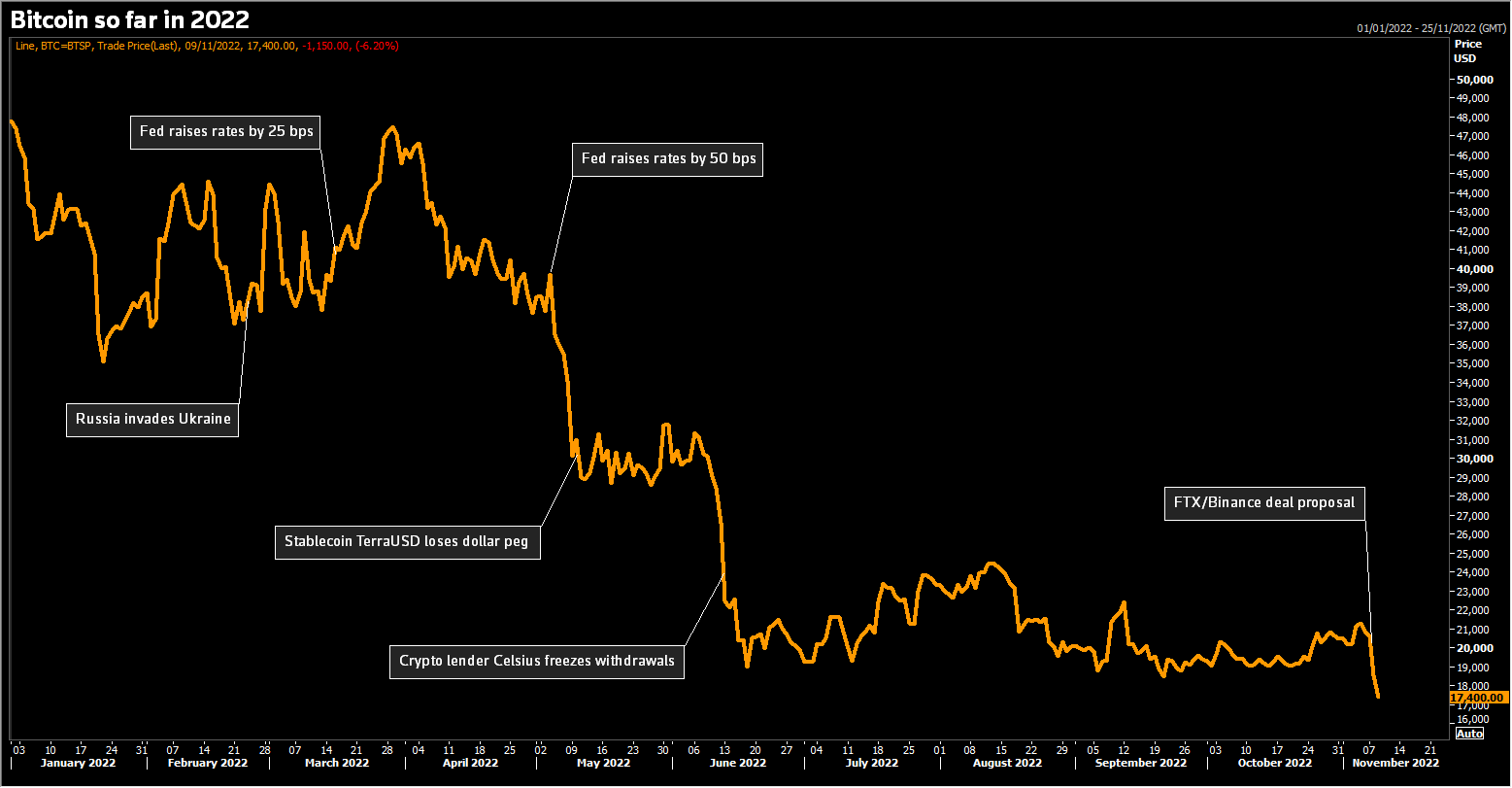
As the Terra and LUNA ecosystem collapsed, the Bitcoin price dropped drastically, and investor sentiment plummeted due to multiple liquidations within Terra. When Voyager, 3AC, and Celsius fell, tens of billions in investor and protocol funds were removed from the market.
What to expect for the rest of 2022 through 2023
The causes of decreasing prices in the cryptocurrency market include FTX’s capital shortage and investors’ concern about prior insolvencies.
Meanwhile, the risk appetite is likely to remain low. Potential crypto traders may wait for signs that U.S. inflation has peaked and for the regulatory environment to become more transparent.