Bitcoin Mining Crisis Deepens as Falling Prices and AI Costs Squeeze Miners
coinedition.com
54 m
Bitcoin miners are shutting down their machines as falling prices make mining unprofitable. At the same time, major mining companies are investing heavily in artificial intelligence (AI) and high-performance computing (HPC).
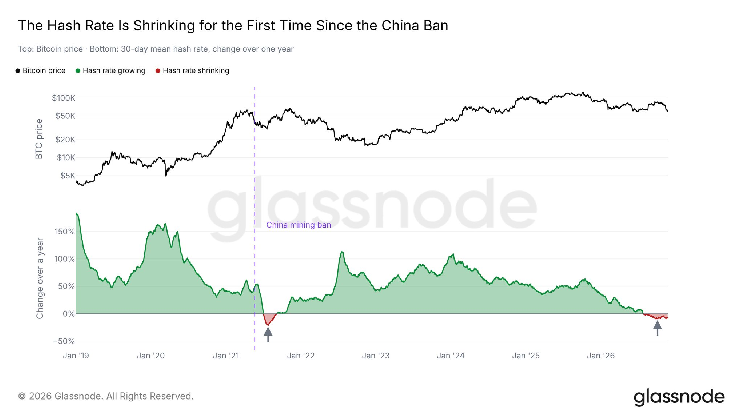
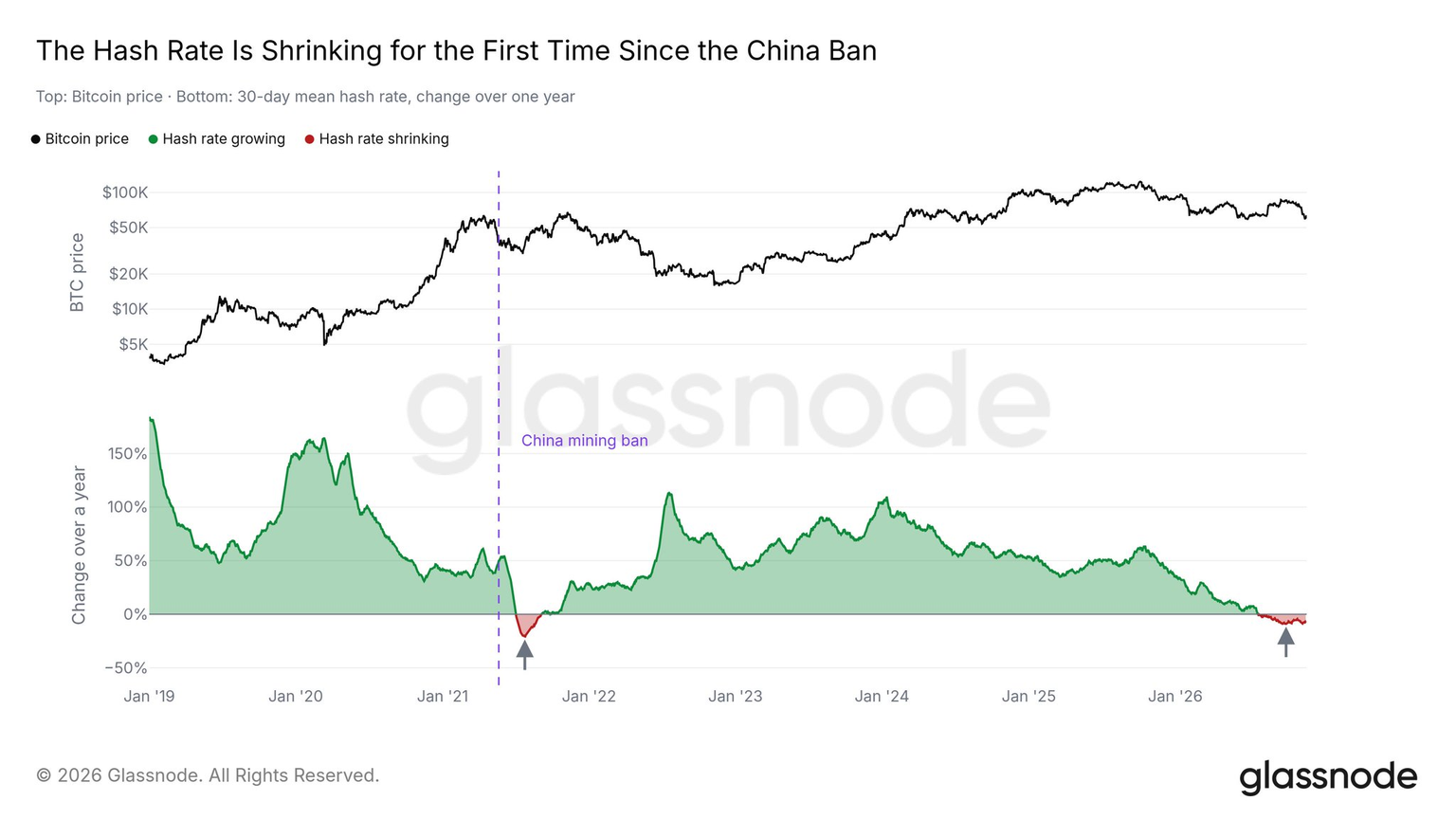
According to Glassnode, Bitcoin’s network hash rate has fallen 8% year over year, marking its first annual decline since China’s 2021 ban on crypto mining. Unlike that earlier decline, the current drop is driven primarily by falling mining profitability.
Glassnode attributed the decline to mining revenue falling to record lows, forcing operators to switch off unprofitable machines.
Know when your coins move
Alerts, real-time prices, and market news — all in one app
Point your phone camera to install
4.8 based on 40K reviews in the App Store and Google Play
Source:Glassnode
Mining Costs Exceed Revenue
A November 25 Bloomberg report revealed that falling Bitcoin prices are pushing mining companies to consider selling their $BTC reserves to cover operating expenses and finance AI investments.
Bitcoin recently fell to around $55,000, its lowest level in more than two years. Meanwhile, Hashrate Index data showed that hash price, a measure of mining revenue, had dropped to its lowest level in at least a year.
JPMorgan estimates that the average cost of mining one Bitcoin stands at $86,000, significantly above its recent market price. As a result, many miners are spending more to produce Bitcoin than they can recover through sales.
Profitability varies depending on electricity prices, equipment efficiency, and operating expenses. Companies running older machines or paying higher electricity rates face even greater losses.
GoMining CEO Mark Zalan warned that miners may have to sell more of their Bitcoin reserves to meet ongoing expenses, including electricity bills and staff salaries.
Several major mining companies, including MARA Holdings, Core Scientific, and CleanSpark, have already reduced their Bitcoin holdings.
American Bitcoin, a mining company backed by the Trump family, had previously pledged to retain every Bitcoin it mined. However, it also sold part of its holdings in the third quarter to cover operating expenses.
The industry’s financial difficulties are also reflected in stock performance. MARA has fallen 40% this year, while CleanSpark is down 50%. American Bitcoin has lost around 85% of its value since December 2025.
Smaller mining companies face even greater risks because they have fewer financing options and often operate less efficient equipment.
Follow us onXfor real-time crypto updates.
Is the Move Into AI Making Things Worse?
Bitcoin miners are also investing billions of dollars in AI and HPC infrastructure as demand for computing power grows. Companies are converting existing mining facilities into data centers, purchasing specialized computers, upgrading cooling systems, and securing electricity supplies to serve AI businesses.
However, these investments require substantial capital. Miners must finance infrastructure upgrades while managing the operating costs of their existing businesses.
With Bitcoin prices falling and mining revenue shrinking, funding this transition is becoming increasingly difficult. Companies must balance the cost of maintaining mining operations against the investment required to establish new revenue streams.
The AI pivot could eventually diversify miners’ income and reduce their dependence on Bitcoin prices. In the short term, however, it is adding to their financial burden.
Falling Bitcoin prices and declining mining profitability remain the primary reasons operators are shutting down machines. AI investments are an additional financial strain rather than the main cause of the shutdowns.
Bitcoin’s Long-Term Supply Tells a Different Story
While mining companies face financial difficulties, Bitcoin’s long-term supply is showing a different trend. A recent analysis found that wallets holding Bitcoin untouched for at least 10 years accumulated 230,000 $BTC over the past year.
That amounts to roughly 630 $BTC entering long-term storage each day, compared with 450 newly mined Bitcoin. These long-term holders now control around 3.6 million $BTC, representing nearly 18% of the circulating supply.
The accumulation suggests that the amount of Bitcoin available for trading could continue to shrink, even as mining companies struggle to remain profitable.
For miners, the immediate challenge is surviving the downturn. If Bitcoin prices remain below production costs, more companies could shut down equipment, sell their reserves, or accelerate their transition into AI infrastructure. Smaller operators with limited financial resources are particularly vulnerable as the downturn continues.
Related: AI Shift Reshapes Bitcoin Mining as Hashrate Declines

 coinedition.com