
 coindesk.com
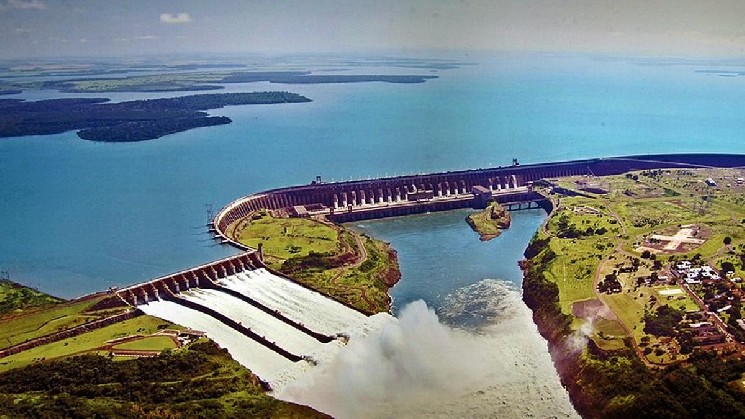
For years, the rhythmic hum of industrial cooling fans has echoed across this subtropical stretch of eastern Paraguay, where rows of specialized computers churn out Bitcoin using some of the cheapest electricity on earth.
Drawn by surplus hydropower from the 14,000-megawatt Itaipu Dam on the Brazilian border, foreign crypto companies struck lucrative deals with Paraguay’s state utility, turning excess energy into roughly $350 million in annual public revenue and making the country the world’s fourth-largest Bitcoin mining hub.
But that bargain is now unraveling. Paraguay’s national power company, ANDE, plans to let every special crypto contract expire on Dec. 31, 2027, a deadline officials have declared nonnegotiable, as domestic electricity demand surges and a new, even hungrier competitor arrives: Artificial intelligence.
Adding to that, the once-surplus electricity supplied nearly 88% of the country's power in 2025, and more will soon be needed at home. ANDE’s transmission master plan projects national demand growing nearly 8% a year through 2027 and about 5% a year after that.
Electricity is the biggest cost for miners, who are paid in new bitcoin for running specialized computers around the clock. So mining businesses have, historically, scouted for countries with cheap or excess power and a favorable climate to keep their machines cool.
Places like Iceland and Scandinavia became early hubs, but in subtropical Paraguay the power was cheap enough to cover the cost of cooling, too.
ANDE had about 944 megawatts contracted to miners as of April, roughly 13% of Paraguay’s Itaipu share, according to figures the utility’s then-president Félix Sosa gave local publication ABC Color. Four companies, Cademot, Zuns, Muiden and W3X, took 730 megawatts of that.
In return, these miners pay ANDE a flat $44 per megawatt-hour, under 5 U.S. cents a kilowatt-hour, with no annual adjustment. That adds up fast, with ANDE projecting $350 million from crypto miners in 2026, up from $295 million in 2025 and about $100 million in 2024. Miners based here - accounted for about 4% of global mining power in the second quarter, making it the fourth-largest mining jurisdiction, according to Hashrate Index.
But ANDE is now dropping the industry that pays it that much, and three groups are fighting over what replaces it.



