The support underpins around $19 billion in lease commitments from Anthropic PBC. Those commitments sit inside a 20-year agreement.
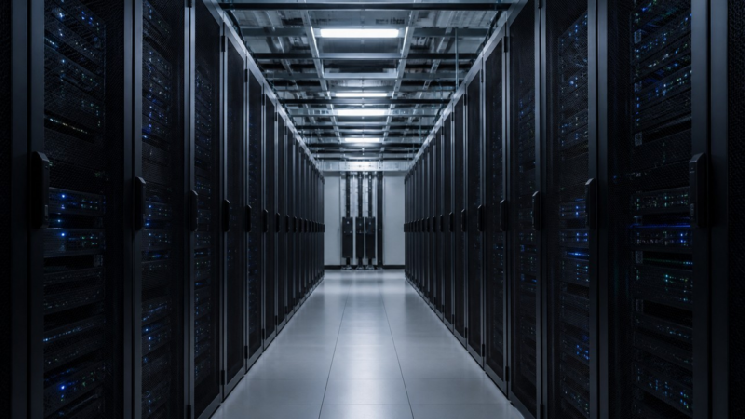
The campus is designed to deliver approximately 401 MW of critical IT load capacity. Critical IT load is the power that goes directly to servers and computing gear, not to cooling or lighting. In plain terms, it measures how much actual computing the site can run.
TeraWulf CEO Paul Prager said the Google arrangement strengthens the company’s ability to line up competitive financing for the project. He also pointed to expanded execution capacity through a new construction partnership.
Fluor gets the hard hat job
Alongside the Google news, TeraWulf finalized a definitive engineering, procurement, and construction agreement with Fluor Enterprises, Inc. That type of contract, known as an EPC, hands one firm responsibility for designing, sourcing, and building the project.
The deal is structured on a guaranteed maximum price basis. A GMP contract caps what the owner pays, with the contractor generally absorbing overruns beyond that ceiling.
Fluor will build three data center buildings at the site. Phased readiness is anticipated from late 2027 through the second quarter of 2028.
TeraWulf says the Fluor agreement boosts its construction capacity and helps keep project milestones on track.
How we got here
The financing news builds on a lease TeraWulf announced in July 2026. That Anthropic deal is projected to generate around $19 billion in revenue over its term.
Google’s role here is not a one-off. The company has provided similar financial backstops for other Anthropic-related projects. Those prior arrangements have helped finance more than 2 GW of capacity in total.
TeraWulf has also been growing its footprint elsewhere in the state. The company expanded its contracted power capacity to 1 GW at its Muskie campus in Kentucky.
All of this fits a broader shift at the company. TeraWulf has been moving away from traditional Bitcoin mining toward high-performance computing and AI data centers.
What this means
For TeraWulf shareholders, the Google guarantee changes the conversation around risk. A $19 billion lease is only as valuable as the confidence that it will be paid. Having Google partially stand behind those payments could make the revenue stream look sturdier to lenders and investors alike.
The financing angle is the real story. Data center construction is capital intensive, and the cost of borrowing can make or break project economics over a 20-year horizon. If Google’s backing lowers TeraWulf’s borrowing costs, the margin on that contracted revenue improves, even if the headline lease value stays the same.
There are still things to watch. Phased delivery stretches from late 2027 into the second quarter of 2028, so execution risk remains for the next couple of years. The guarantee covers some of Anthropic’s obligations, not all of them, so the precise scope of Google’s backstop matters.
For Anthropic, the arrangement secures a large block of dedicated capacity without carrying the full balance sheet weight alone. For Google, it deepens ties with an AI company whose compute needs keep growing.
And for TeraWulf, it marks another step away from its mining roots. The company that once measured success in hash rate is now measuring it in megawatts of critical IT load and the strength of its tenants’ guarantors.

 cryptobriefing.com