
 coindesk.com
Anthropic has announced a partnership with Google and Broadcom for "multiple gigawatts" of next-generation TPU compute capacity expected to come online starting in 2027, a commitment the company called its most significant to date as revenue growth accelerated to a $30 billion annual run rate from $9 billion at the end of 2025.
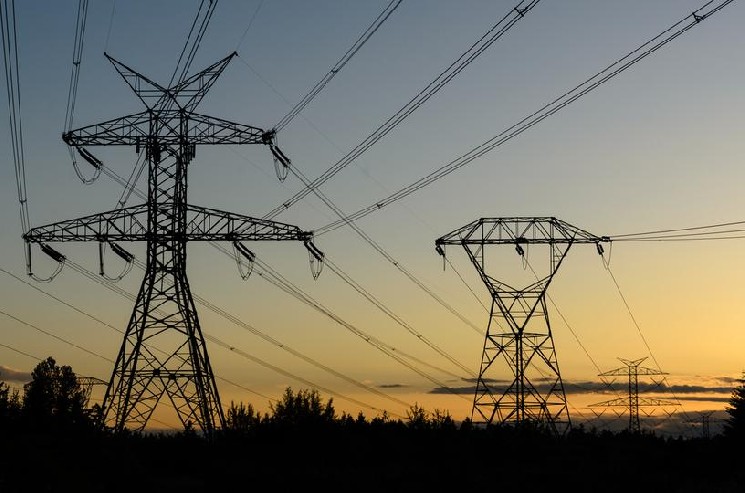
The scale of AI compute demand is now competing directly with bitcoin mining for the same scarce resources — grid connections, land permits, cooling infrastructure, and cheap electricity.
A Cambridge tracker estimates bitcoin mining draws roughly 13 to 25 gigawatts of continuous power globally depending on hardware efficiency assumptions.
Anthropic securing multiple gigawatts from a single deal, on top of existing capacity across AWS Trainium, Google TPUs, and Nvidia GPUs, shows just how quickly AI is becoming a peer-level competitor for the same energy infrastructure that miners depend on.
And Anthropic is one company. OpenAI, which raised $122 billion last week and described compute as a "strategic moat," is building across an even wider infrastructure portfolio spanning five cloud providers and four chip platforms.
The aggregate AI compute buildout now represents one of the largest sources of new electricity demand in the United States, arriving at the same moment bitcoin miners are deciding whether to mine bitcoin or rent their infrastructure to AI companies.
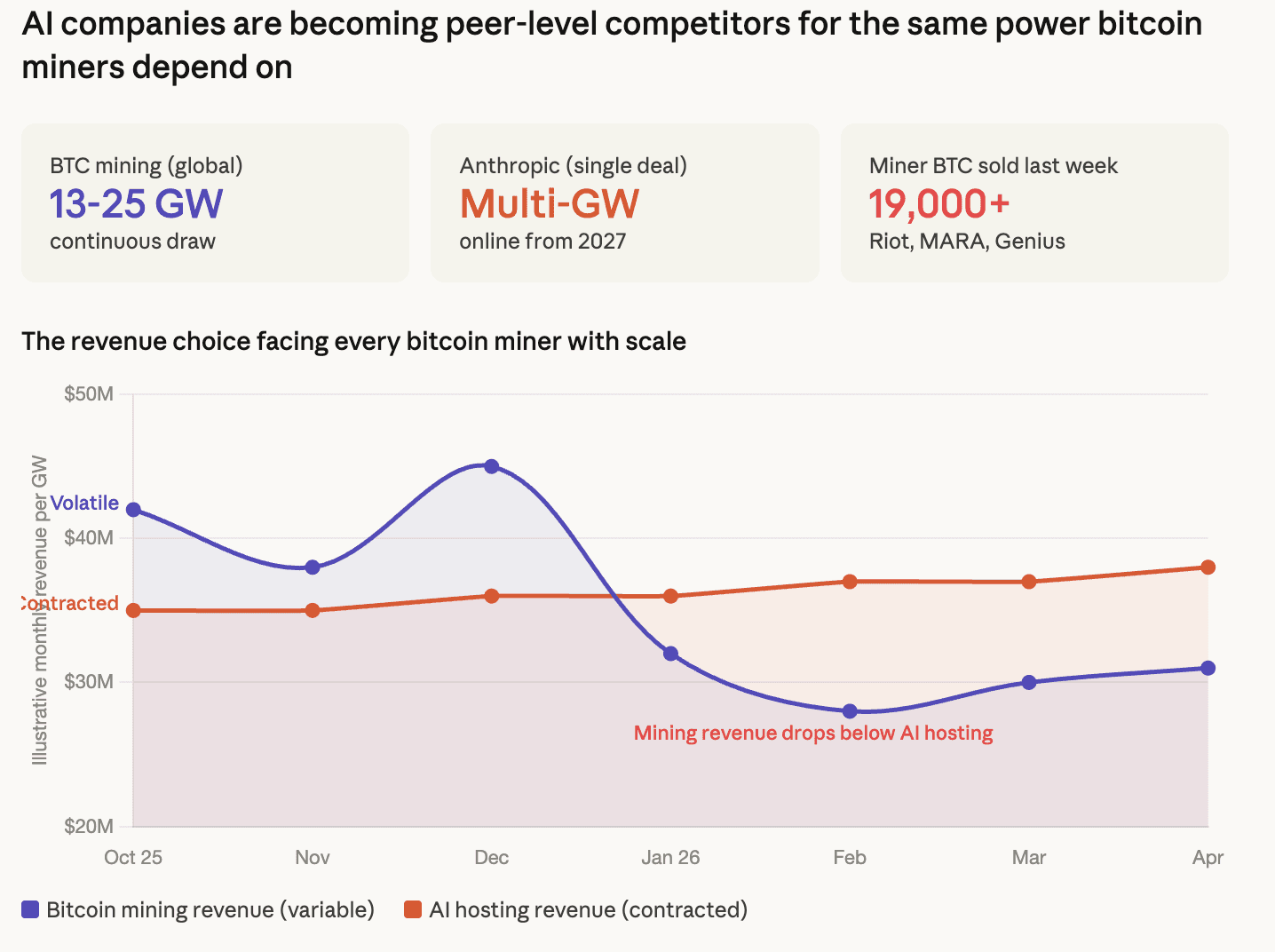
That decision is increasingly going one direction. Core Scientific converted a significant portion of its mining capacity to AI hosting through a deal with CoreWeave. Iris Energy and Hut 8 have expanded their AI and high-performance computing revenue. Riot Platforms, MARA Holdings, and Genius Group disclosed selling more than 19,000 BTC from their treasuries last week, a sign that mining economics alone are not sustaining operations at current prices and difficulty levels.
A bitcoin miner running a gigawatt of capacity earns revenue that fluctuates with bitcoin's price and network difficulty. The same gigawatt rented to an AI company earns a contracted rate with predictable cash flows.
At $69,000 bitcoin with difficulty at all-time highs and energy costs rising alongside every other industrial consumer competing for the same grid capacity, the AI rental often pays better.
The revenue numbers behind the expansion tell their own story. Anthropic said the number of business customers spending more than $1 million annually on Claude has doubled from 500 to over 1,000 in less than two months.
None of this means bitcoin mining is dying, however. The network's hashrate continues to hit record levels above 1 zetahash per second.
But the miners who survive the current cycle may look less like energy companies that produce bitcoin and more like infrastructure companies that happen to mine bitcoin on the side while renting their real asset, cheap power at scale, to an AI industry that cannot build data centers fast enough.