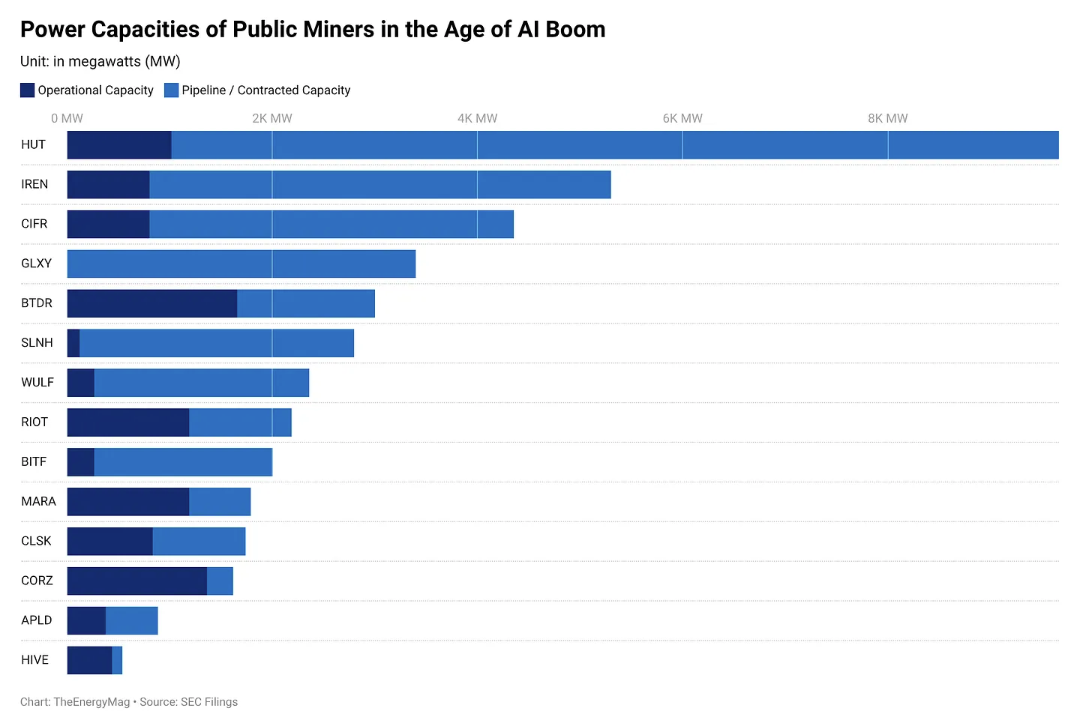
Current and proposed power capacities of public Bitcoin miners. Source: TheEnergyMag
The widening gap suggests competition is shifting from ASIC efficiency to securing power, financing and delivering data centers on time.
“This is the megawatt arms race of the AI boom,” TheEnergyMag said, adding that monetization ultimately depends on whether AI demand remains strong enough to justify the scale of investment.
Related: The real ‘supercycle’ isn’t crypto, it’s AI infrastructure: Analyst
AI pivot delivers early revenue gains for some miners
The shift toward artificial intelligence infrastructure reflects an increasingly hybrid strategy among established Bitcoin miners, with some companies already reporting meaningful revenue contributions from AI and high-performance computing (HPC) workloads.
One example is HIVE Digital, which recently posted record quarterly revenue driven in part by its AI and HPC business lines. The company reported fourth-quarter sales of $93.1 million, up 219% year on year, even as Bitcoin prices declined during the period.
Investors, too, are attuned to the shift. Earlier this week, Starboard Value went public with its suggestion to Riot Platforms management that they accelerate the miner’s expansion into HPC and AI data centers.
The push to diversify comes as mining profits have taken a hit since the 2024 Bitcoin halving, which cut block rewards and squeezed margins across the industry.
Conditions have gotten even tougher since the fourth quarter, when heavy selling pressure sent Bitcoin tumbling from its record high above $126,000. Prices eventually stabilized in February, after briefly falling to below $60,000.
Despite these headwinds, US-based miners showed resilience at the start of the year, with output rebounding after a severe winter storm temporarily disrupted operations.

Source: Julien Moreno
Related: Paradigm reframes Bitcoin mining as grid asset, not energy drain

 cointelegraph.com




