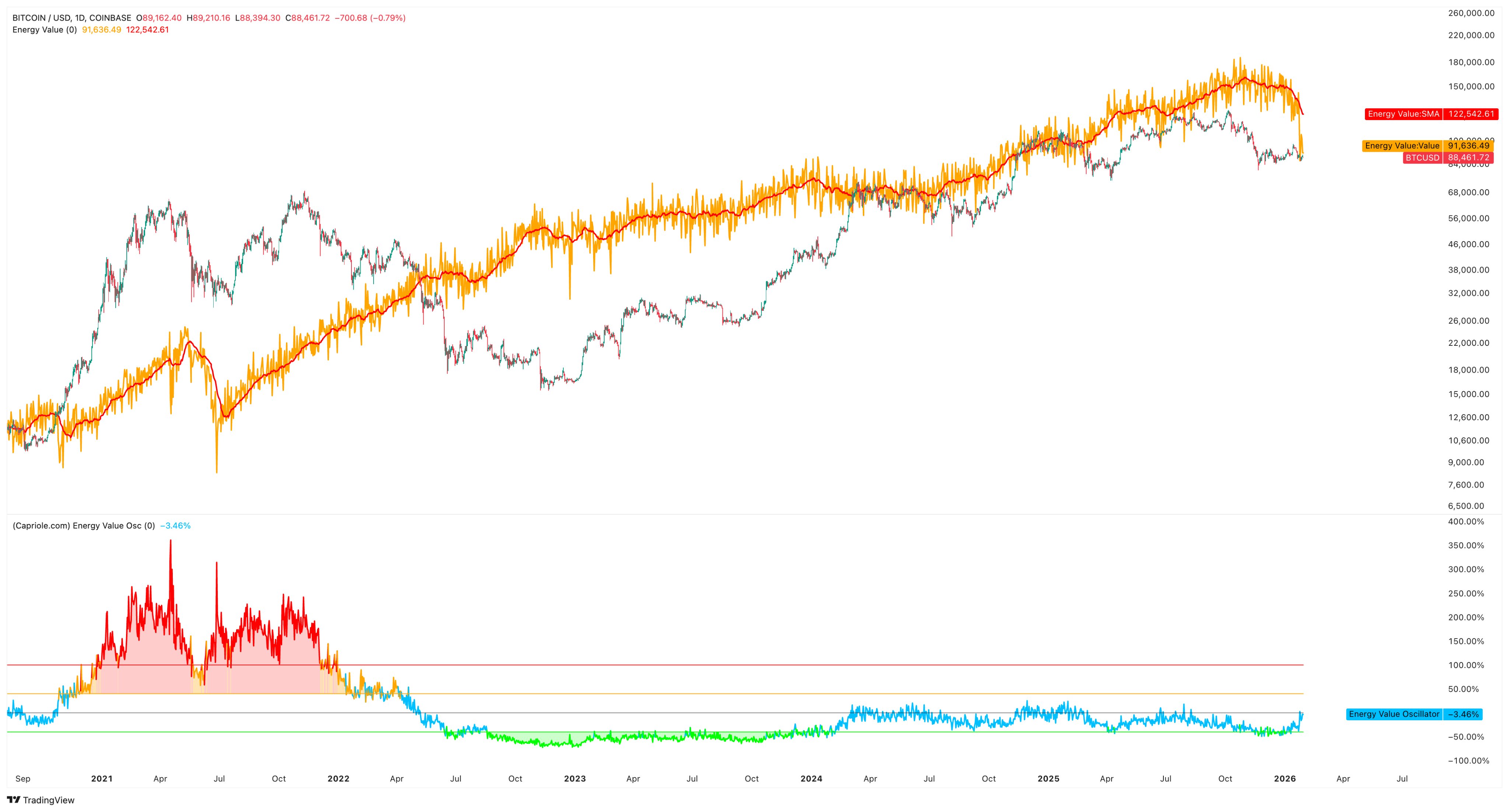
The indicator, which links hashrate and energy costs to fair value, now shows Bitcoin priced almost 4% below its energy-derived baseline. And the moving average has turned over for the first time in over a year.
But not everyone is buying into the doom.
"Crypto winter" is still winter
The opposing camp says the hashrate drop is not capitulation — just winter. Power prices across the major U.S. grids shot up to over $100/MWh as Winter Storm Fern messed with supply and led to load curtailments. In this version, miners did not quit, they just paused.
So, it may come that most of that hashrate will bounce back within two weeks, and Edward's chart just captured a weather event.
Others see rising energy costs as an opportunity, not a threat. With the smaller players now out of the game, the big industrial-scale miners are able to get their hands on more of the market share, and at better margins. That changes Edwards's bearish take into a miner consolidation thesis.
Even so, the size of the drop is hard to ignore. The last time Energy Value fell this hard and fast, the cryptocurrency spent six months in a death spiral before finding the bottom. That does not mean we are heading for a repeat of the past, though. Today's environment includes ETFs, nation-state buyers and structurally higher demand.
But the warning sign is flashing again.

 u.today