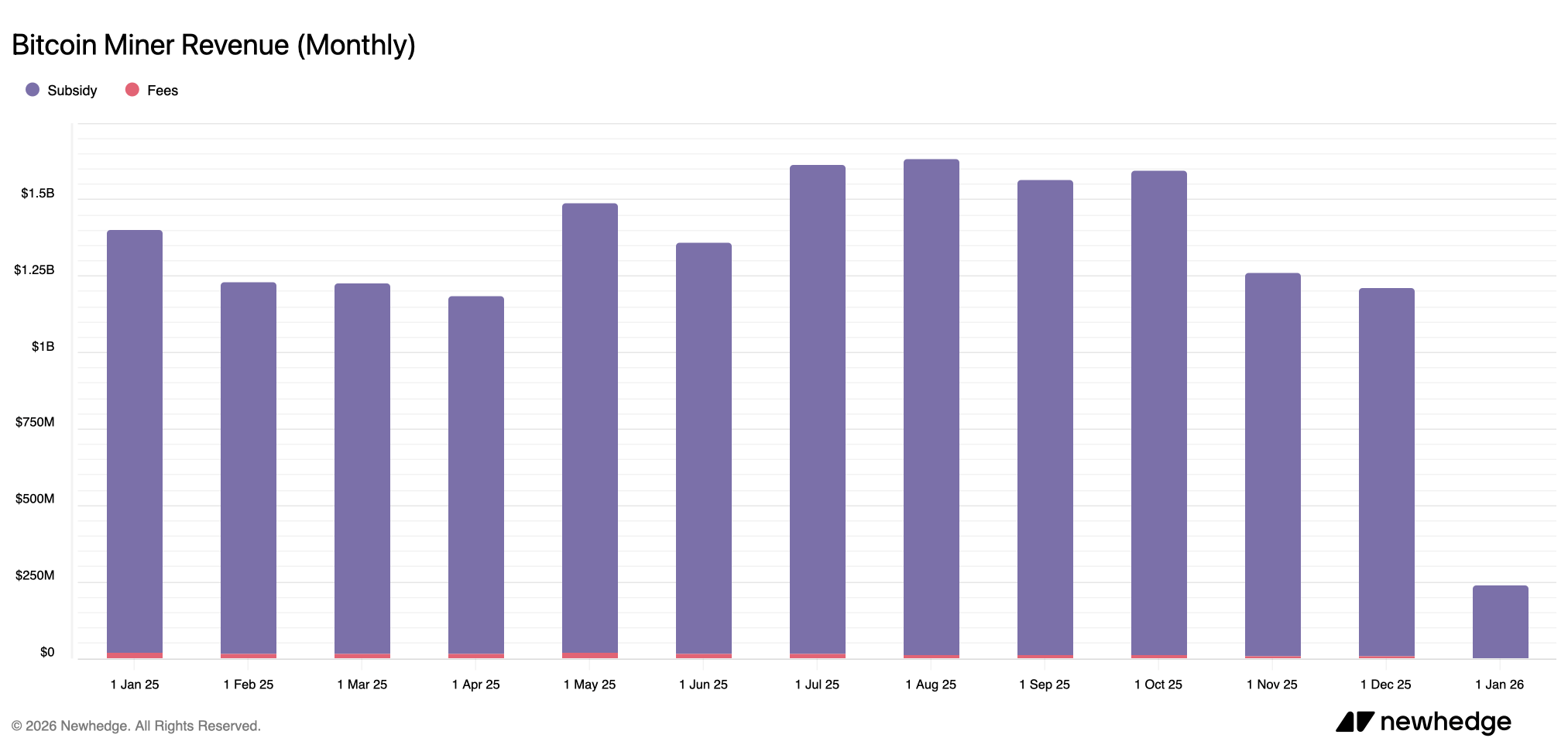
Even with revenue under pressure, the network’s hashrate stayed north of the 1,000 exahash per second (EH/s), or 1 zettahash per second (ZH/s), threshold through the final days of December. As the first week of January 2026 wraps up, the hashrate sits at 1,046 EH/s, with a new difficulty epoch set to arrive in two days.
Also read: Wall Street Heavyweight Morgan Stanley Files for Bitcoin and Solana ETFs
Block times have drifted slightly longer, averaging 10 minutes and 8 seconds, and current projections suggest the difficulty could ease by 1.4%, though that outlook may shift over the next two days.
The slight extension in block times and a potential downward difficulty adjustment hint at modest mechanical relief, but not a fundamental reset. Both moderately average-timed blocks and strong hashrate are largely due to improving revenue, with current hashprice levels sitting at $40.26 per PH/s.
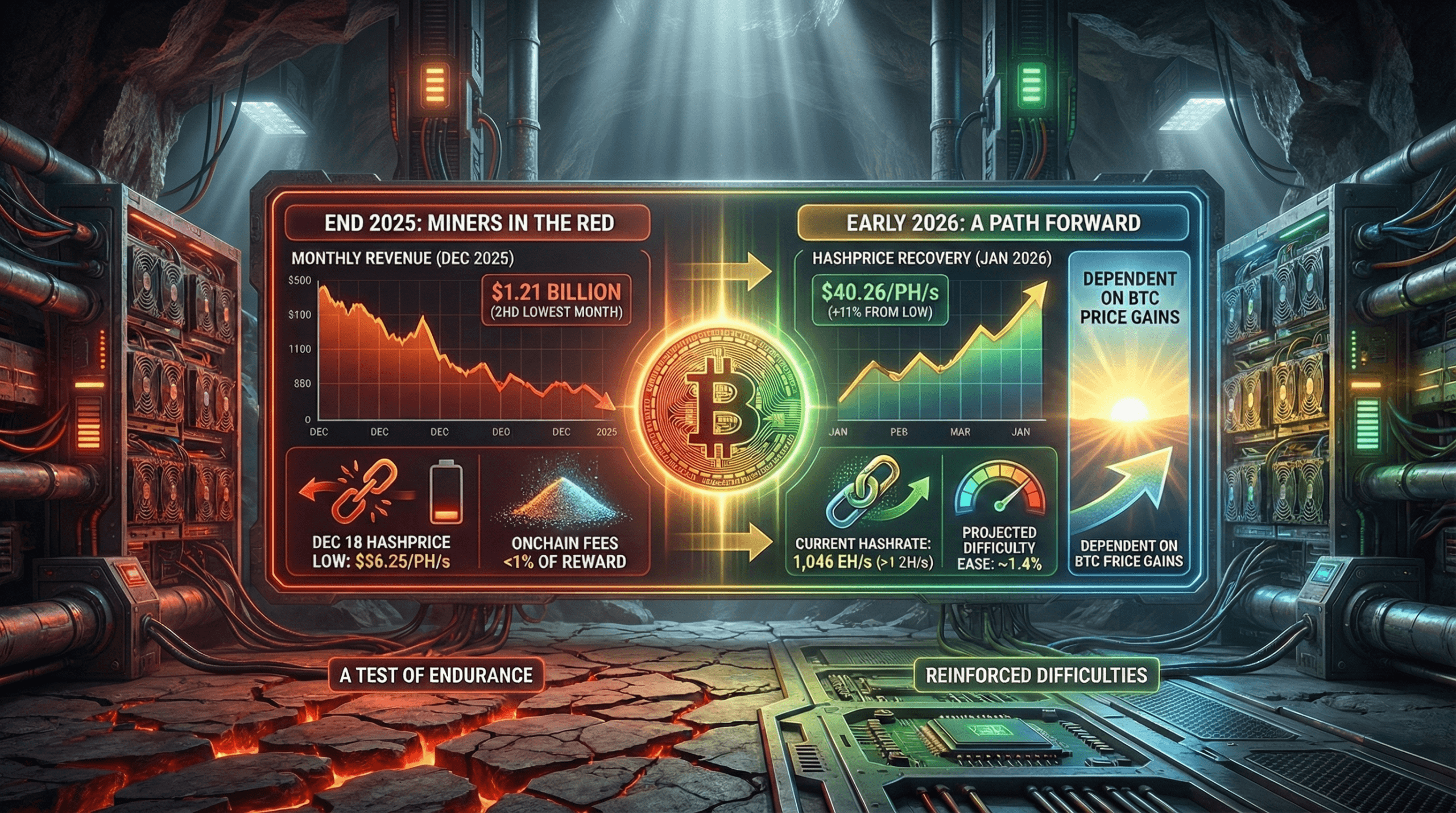
Spot hashprice has climbed 11% from the Dec. 18 low. But onchain fees still account for less than 1% of the total block reward, leaving bitcoin miners largely reliant on $BTC’s price gains to lift the value of the subsidy.
If $BTC prices continue to firm and hashprice sustains its recent gains, early 2026 could offer steadier footing. Until then, mining economics remains a test of efficiency, balance-sheet endurance, and patience.
FAQ ⛏️
-
Why did bitcoin miners struggle in December 2025?Revenue fell to $1.21 billion as hashprice dipped to multi-year lows and transaction fees remained minimal.
-
What changed for bitcoin miners heading into 2026?Hashprice rebounded 11% from the Dec. 18 low while network hashrate and revenue indicators began to improve.
-
How strong is the bitcoin network despite lower miner revenue? Hashrate held above 1 zettahash per second through late December, signaling sustained mining participation.
-
What are miners relying on to improve profitability in early 2026?Miners remain largely dependent on $BTC price gains, with onchain fees still contributing less than 1% of block rewards.

 news.bitcoin.com




