Greenidge disclosed the fire at the Dresden, New York, facility in a recent SEC filing. Source: Greenidge
Greenidge’s Dresden site generates 106 megawatts of natural gas energy to power its mining operations and machines co-hosted with NYDIG, according to TheMinerMag.
The downtime caused by the fire showcased the challenges of commercial mining operations, which operate on thin margins and must weather supply chain issues, high energy costs, equipment failures, dwindling block rewards, and regulatory hurdles to remain profitable.
Related: Bitdeer in flames: Ohio mining facility fire extends stock sell-off
The latest headwinds to hit the mining industry are straining miners even more
Hashprice, a critical metric for miner profitability that measures expected profits per unit of computing power, dropped to about $35 petahashes per second (PH/s) in November as $BTC plunged to lows of about $80,000.
For context, mining operations typically become unprofitable around the $40 PH/s level. The hash price is back to about $39 PH/s at the time of this writing, according to Hashrate Index.
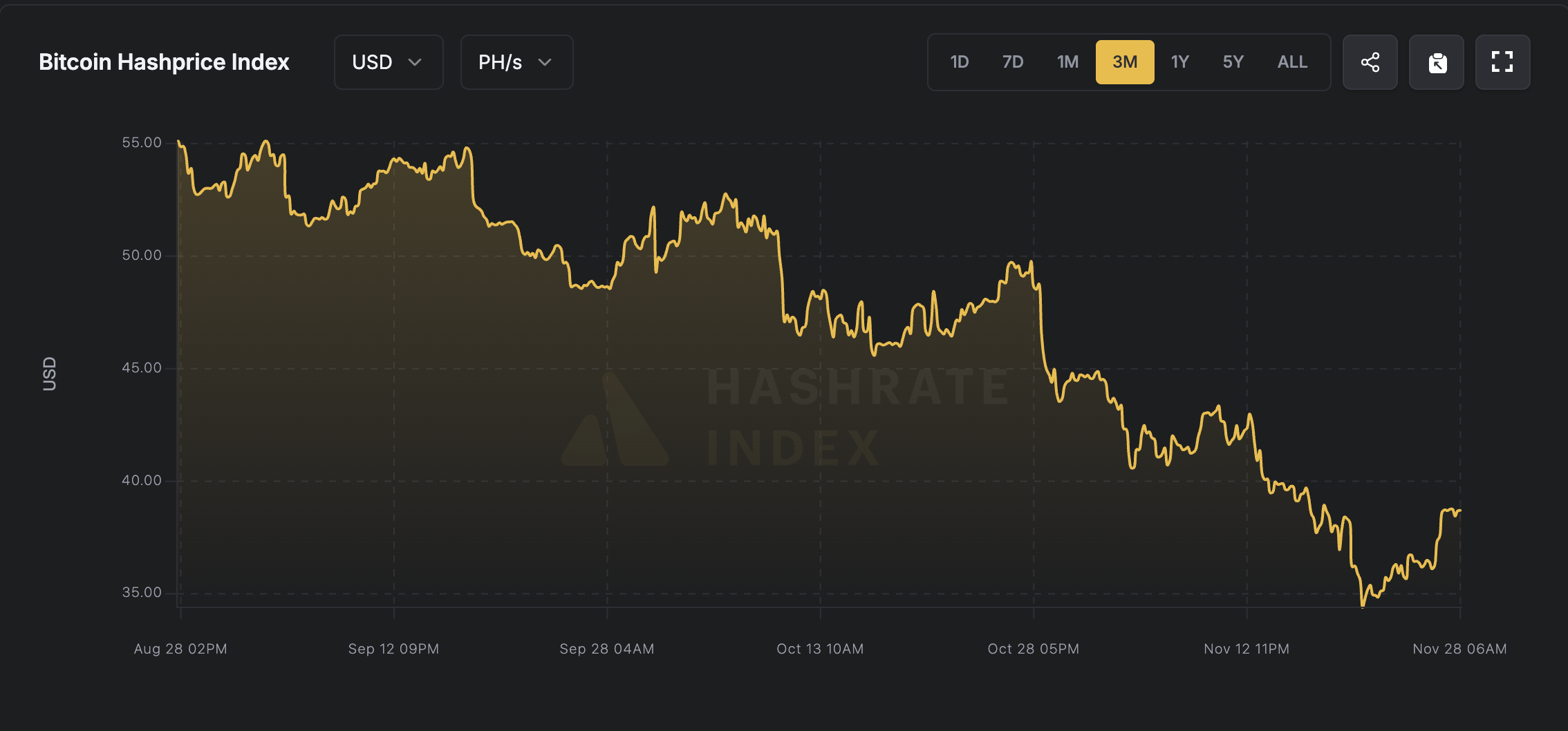
Bitcoin mining hash price August-November 2025. Source: Hashrate Index
Stablecoin issuer Tether confirmed it shut down its mining operations in Uruguay on Tuesday, citing surging energy costs as the main reason for the exit.
The company was also in a dispute with a local state-owned energy provider over $4.8 million in unpaid energy bills and fees.
Bitmain, one of the leading mining hardware manufacturers, is now under investigation by US officials over national security concerns.
The officials are probing whether Bitmain’s application-specific integrated circuits (ASICs), the hardware used to mine proof-of-work (PoW) cryptocurrenccould be remotely accessed and used for espionageonage.
Bitmain is a Chinese company that has about an 80% market share of mining hardware, and any potential ban could make things even more challenging for the mining industry.
Magazine: Bitcoin mining industry ‘going to be dead in 2 years’: Bit Digital CEO

 cointelegraph.com