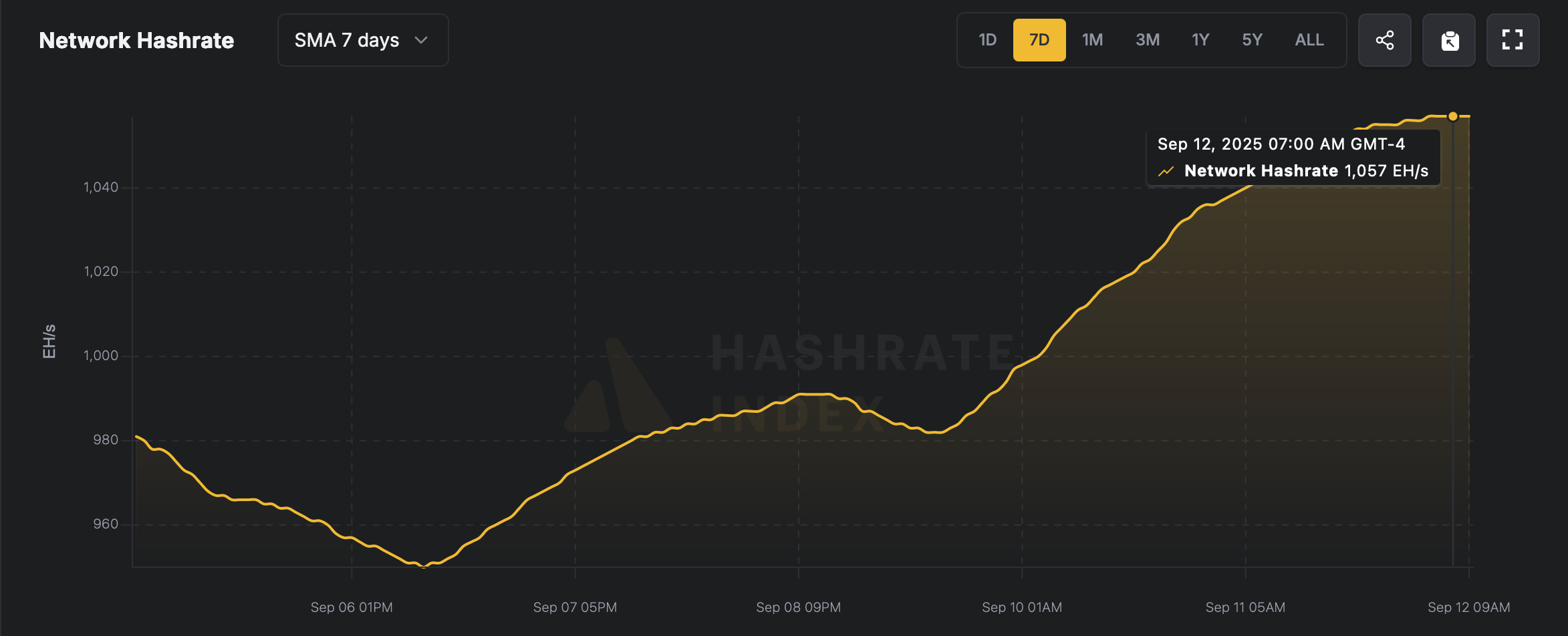
If block times keep zipping by quicker than the 10-minute average, miners can bet on a difficulty hike coming their way. Right now, projections point to a 6.12% difficulty hike, though that figure could shift on Sept. 18 when the next retarget kicks in. Difficulty is already sitting at a record-setting 136.04 trillion.
Bitcoin’s nonstop climb in computational horsepower highlights the network’s swelling defenses and the deep confidence bitcoin miners are throwing behind its future. At this scale, the zettahash era acts like an ironclad shield — making any serious attack not just costly, but practically impossible.
The shortened block times reveal a mining arena brimming with competition, as miners roll out cutting-edge gear to chase rewards. This isn’t just transaction processing — it’s a live showcase of proof-of-work (PoW) in action. Every fresh peak cements Bitcoin as the planet’s most resilient decentralized network, powered by a constantly growing well of energy and ingenuity.
Still, miners face the constant challenge of stretching ever-thinning onchain rewards to stay profitable. With low fee revenue and block subsidies shrinking over time, they must rely on BTC price jumps, efficiency gains, cheaper energy, and creative strategies to make the math work — proving that even in an era of record hashrates, survival in the mining game is anything but guaranteed.

 news.bitcoin.com