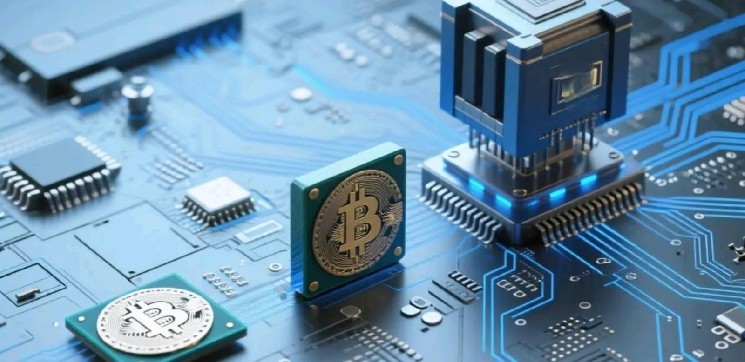
Hardware Evolution and Industrial Mining
By 2010, GPUs replaced CPUs due to superior parallel processing power, leading to increased mining competitiveness and complexity. Mining pools expanded quickly, enabling more miners to join forces. FPGAs briefly enhanced mining efficiency before being outpaced by ASICs.
The ASIC era, starting around 2013, dramatically increased mining speed and power efficiency. ASIC miners made individual mining with less specialized equipment nearly impossible. Mining pools scaled up their infrastructure, introducing sophisticated reward distribution mechanisms to accommodate a growing and diverse membership, thus becoming essential to mining operations worldwide.
The Formation of Mainstream Pool Models
Mining pools developed various reward systems over time to balance risk, fairness, and income stability:
-
Proportional Model: The earliest system paying miners proportionally based on shares within a mining round.
-
Pay-Per-Last-N-Shares (PPLNS): Rewards miners based on their most recent shares contributing to block discovery, introduced circa 2011 to reduce pool-hopping.
-
Pay-Per-Share (PPS): A payout model pioneered by ViaBTC, introduced and launched in August 2016. It added transaction fees on top of PPS rewards, and was later adopted by many other mining pools.
-
Full Pay-Per-Share (FPPS): Came later than PPS+, only appearing around 2018. It evolved from PPS to include both block rewards and transaction fees, providing miners with more stable income.
These models aimed to reduce payment variance and risks, offering miners choices suited to their preferences for reward frequency and stability.
Modern Mining Pools and Their Services
Today, mining pools manage millions of miners globally using advanced software that coordinates mining tasks and manages proportional payouts efficiently. They charge competitive fees and provide transparency and security. Leading pools like ViaBTC offer flexible mining services and competitive reward systems, supporting miners from individuals to large-scale operations.
Conclusion
Mining pools have evolved from simple collaborations in Bitcoin’s early CPU mining days to sophisticated global operations alongside ASIC miners. The continuous development of mining hardware spurred innovation in pool reward models, enhancing fairness, reducing income volatility, and promoting large-scale mining participation. Together, the evolution of mining machines and pools underpins the robust and dynamic cryptocurrency mining ecosystem today.

 cryptopolitan.com