
 news.bitcoin.com

After vaulting past the 1 zettahash per second (ZH/s) threshold, Bitcoin’s mining difficulty climbed 4.89% to reach an all-time pinnacle of 136.04 trillion. This adjustment, paired with softened bitcoin prices, has tightened the squeeze on mining participants.
Mining Just Got Harder: Bitcoin Pushes Difficulty to Lifetime Peak
According to the seven-day simple moving average (SMA) tracked by hashrateindex.com, Bitcoin’s total hashrate reached 1,013 exahash per second (EH/s) on Sept. 2, surpassing the symbolic threshold where 1,000 EH/s equals a single zettahash.
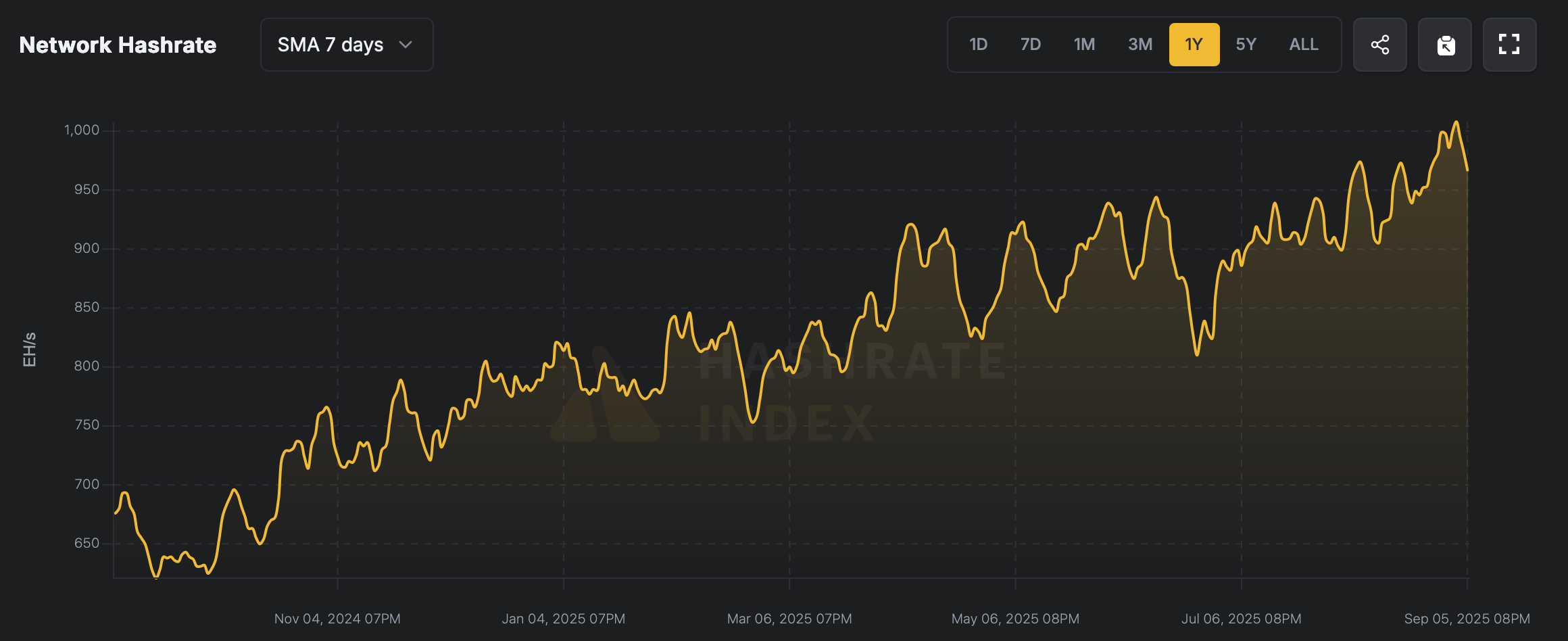
Total hashrate SMA 7 days via hashrateindex.com.




