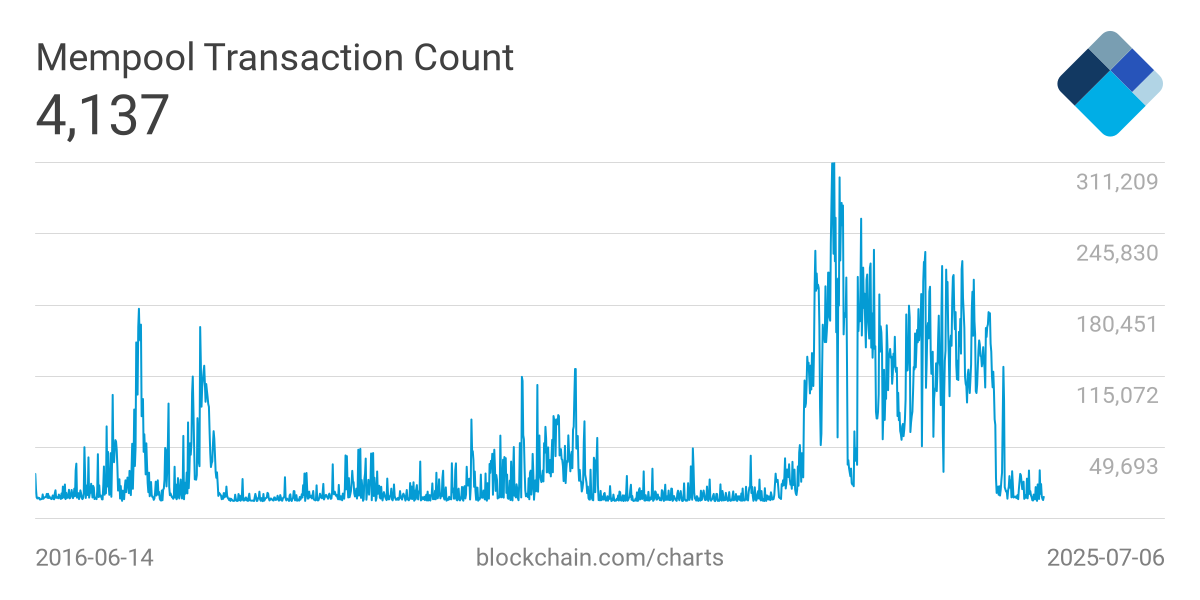
$BTC Pending Transactions
The mempool — the queue of pending Bitcoin transactions — acts as a buffer when transaction demand exceeds block capacity. Users attach fees to incentivize miners to include their transactions in the next block. When activity surges, so do fees. But when the mempool is clear, competition for blockspace disappears, and so does miner revenue from fees.
Miners Face Declining Revenue
With the mempool empty, miners are already feeling the squeeze. Ethan Vera, chief operating officer at Luxor Technologies, a Bitcoin mining infrastructure provider, told The Defiant that Bitcoin’s long-term security model hinges on either fee growth or sustained price appreciation.
“We believe that continued investment in infrastructure and hashrate production is a key element of Bitcoin's security,” Vera said, adding that “as block rewards decrease, it is critical that Bitcoin price increases and/or transaction fees increase...”
“So while low transaction fees are not a cause of concern in the near term, they are really important in the mid to long-term, and miners should be encouraging more projects to consume blockspace and transact on the L1,” Vera explained.
Others point to changing patterns in both user behavior and protocol usage. For instance, as doggfather, CEO of Doggfather Analytics, explained in a commentary for The Defiant, retail investors are just “not there yet or they don't come at all during this cycle because retail rather invests in ETFs and similar indirect vehicles (like exchange-traded notes in other legislations).”
Network Security at Stake
Another factor behind the mempool emptiness is the lack of non-financial transaction activity. With the minting of Ordinals and fungible tokens like BRC-20s and Runes now largely dormant, blockspace demand has plummeted, doggfather noted.
“The mempool was crowded and fees were high when there were ‘hot’ ordinals or rune mints. The most famous block was after the fourth halving at block 840,000. The fees were 37.626 $BTC ($2,402,245) just for this one block. Everyone wanted to get their Rune ticker first and paid extreme fees,” he said.
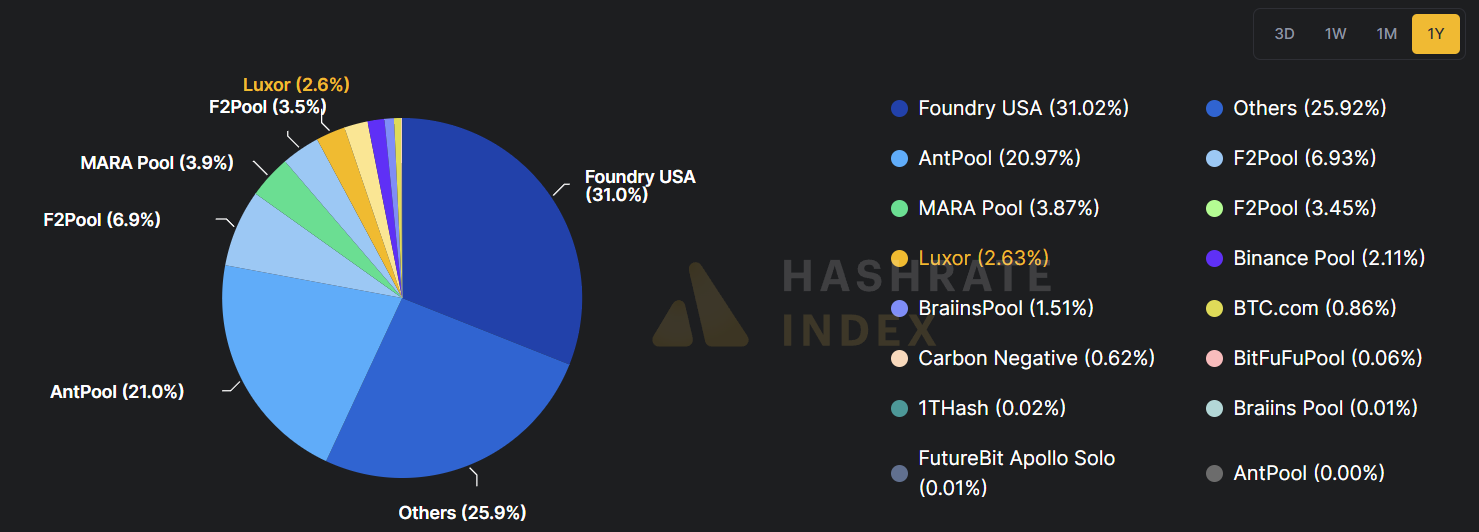
$BTC Miners Market Share
But concerns run deeper than usage. “Fee revenue for miners is now a pitiful fraction of a percent, endangering security,” said Nishant Sharma, head of developer ecosystem at Doma Protocol. “Worse, mining’s centralized, with the top five pools, including Foundry and AntPool, controlling over 60% of blocks.”
Sharma highlighted grassroots mining efforts as a potential way to challenge centralization. He described a new mining pool model that charges no fees to participating miners, offers Lightning Network payouts, and is designed to empower smaller, home-based miners to compete with dominant pools.

 thedefiant.io




