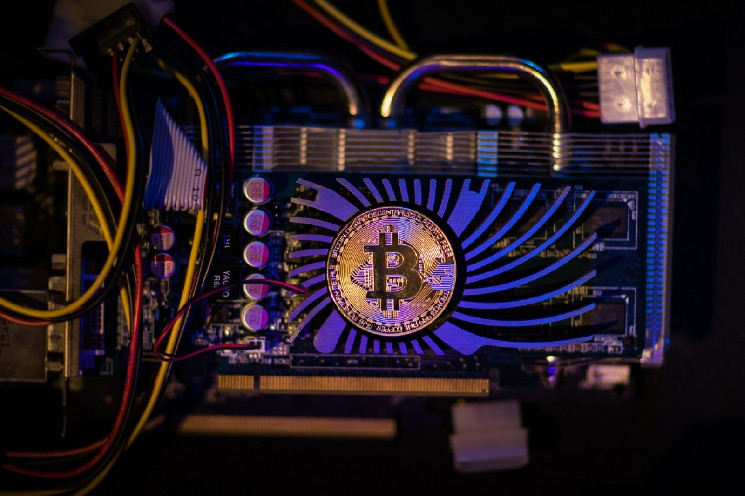
The block was found on an Apollo II full-node device that was running the user's own independent node and solo stratum server.
During Bitcoin's earliest days, it was possible to produce blocks with an ordinary personal computer. However, after more users started joining the network, solo mining was getting increasingly difficult. Miners started joining "pools" that made it possible to signfincalty speed up the block generation process by collectively using their resources and subsequently sharing block rewards.
Given that Bitcoin's difficulty currently stands at 95 trillion, the odds of mining a solo block are infinitesimally low. Producing a block can take years or even decades for a solo miner.
As noted by Stefanopoulos, "someone’s life just changed in the best way possible."
Following the most recent halving, Bitcoin's current block reward currently stands at 3.125 BTC (roughly $216,024).
As reported by U.Today, the price of Bitcoin recently surpassed the $69,000 level.

 u.today