As he anticipated a hard time for miners, Sullivan also argued that many players in the industry would sell their assets and even companies for cash by the end of 2024.
“You can only survive on getting cash, making some money some amount of money for three to four months before a lot of these companies have to say ‘I need a big cash infusion. Let me go sell some of my assets,’” he elaborated.
“I think no one will be surprised by a significant amount of M&A (mergers and acquisitions) that occurred,” noted Sullivan.
Future of Mining in a Changing World
In addition to the halving event, the future of the U.S. mining industry faces major changes driven by external economic factors and the ongoing search for cost-effective mining locations.
As the power prices trend higher in regulated markets, Sullivan predicts a restructured and redefined mining business in North America, especially when miners struggle to find opportunities to operate sizable facilities across the United States.
“I would say it’s amazing how people can find low-cost power in other countries,” he said. “The China shutdown in 2021 accelerated the exploration throughout the world. And I would say we’re kind of going through that again.”
Looking into the next cycle till 2028, Sullivan pointed out the emerging opportunities in Africa and South America, and highlighted the Middle East as a burgeoning hub for low-cost power.
“A number of locations that have access power and want to find a way to bring jobs to those communities, some of that’s being advertised right now by some countries,” said Sullivan. “But we might find Northern Canada ending up being the Holy Grail of Bitcoin mining four years from now.”
$CORZ Full Fiscal Year 2023 Highlights
– 19,274 bitcoin mined in our data centers; 13,762 by self-mining, more than any other publicly listed miner in North America, and an estimated 5,512 for our hosting clients
– Total revenue of $502.4 million
– Operated total hash rate of… pic.twitter.com/ylVHPyJRW5
— Core Scientific (@Core_Scientific) March 13, 2024
Even if Bitcoin mining operations were to emerge in uncharted territories, Sullivan stated that the existing leaders will probably pilot the projects with the assistance of local parties.
“There’s a lot of nuances to running the game,” he said. “You learn how to design these buildings much more efficiently from experience.”
“The local parties give us the conditions like the temperature, the humidity, the wind speeds, what direction is the parcel facing, and we can design a facility that is optimized for all those weather conditions,” claimed Sullivan. “That’s something you can’t just learn in your first build.”
Bitcoin Halving and Market Volatility
Adam Sullivan also discussed the potential impact of the Bitcoin halving on its price, noting, “We are definitely going to see more volatility post-halving.” He mentioned the role of ETFs in providing broader access to Bitcoin, which could eventually help stabilize fluctuations over time.
Addressing external factors, Sullivan said, “Policies from the Fed (Federal Reserve) during an election year could boost Bitcoin prices if inflation rises…But I think there’s a real possibility here where we just stay flat post halving.”
Concluding his insights, he suggested that the long-term prospects for Bitcoin are likely positive, saying, “Easier access to Bitcoin through ETFs could lead to greater price increases as more financial institutions engage.”
“And for Core Scientific, we believe we’re very well prepared for this upcoming halving. We have a plan over the next four years that we’re executing on to remain a very competitive Bitcoin miner in 2028,” said the CEO.

 cryptonews.com

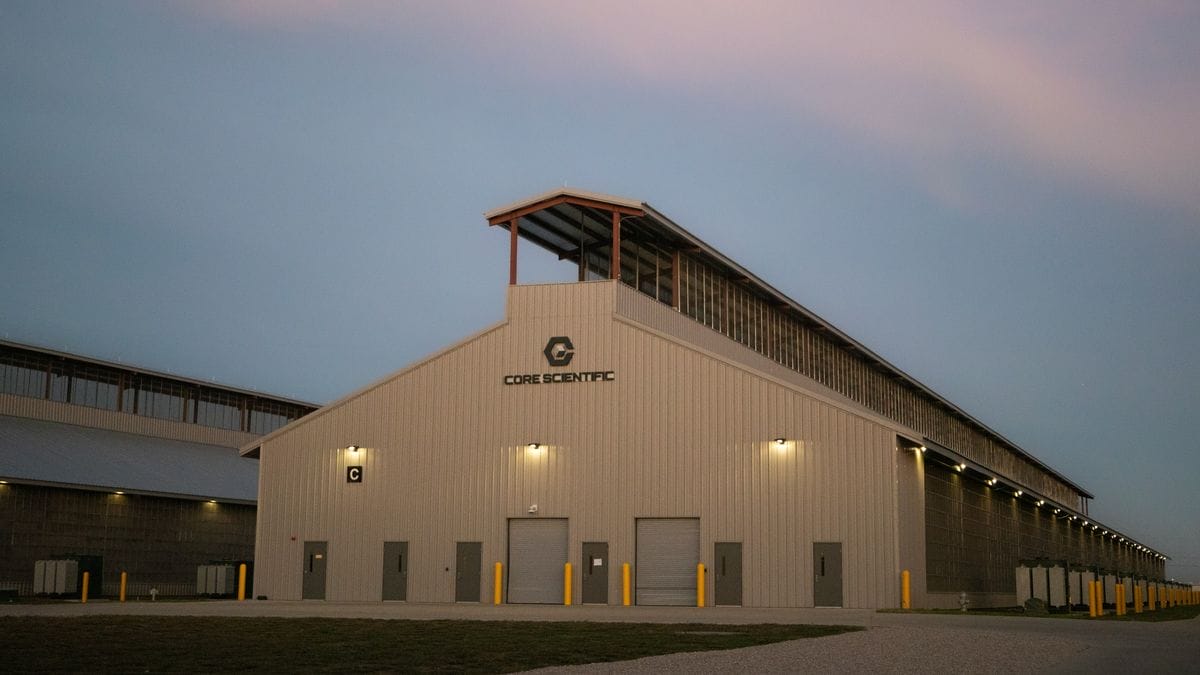 Source: X / @Core_Scientific



