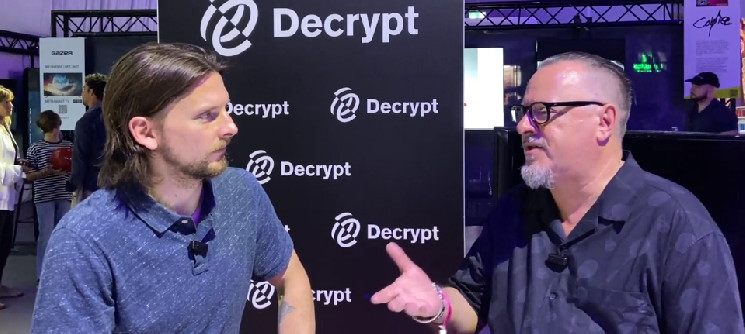
“We have to demonstrate how that can actually be quite cool. You can still retain your brand DNA, your brand identity, your brand IP, but you can also enable your community to be proactive around that,” he said.
He pointed out that in physical retail, a customer can purchase an item from a brand—such as a Ralph Lauren shirt—and customize it, before selling it on to a new owner.
BNV Takes Paris Fashion Week Into the Metaverse With K-Pop Group Lightsum
“I can rip the sleeves off, paint an anarchy symbol on the back, stick a badge on it, nobody can do anything about that, nobody can stop me,” said BNV’s CEO.
Allowing the same thing to happen in the metaverse could be an opportunity for both the original brand and the creator alike, he argued, giving designers free rein to play with existing styles while brands earn royalties from the altered items.
The concept is also scalable online in a way it would not be in the real world, he said. “I don’t need to sell one, I can sell 50 or 100 or 1,000.”
Still, Hobbs said that allowing this kind of creative freedom with their products can be “a big step to take” for many fashion brands.
“Most people have invested a lot of their own personal time and ideation into what [their brand] is,” he said. “When you’re used to designing a collection [...] it becomes very personal.”
But he was confident that by seeing how co-creation could work, including the commercial elements, more fashion businesses will be persuaded to take the step into Web3.

 decrypt.co