
 coindesk.com
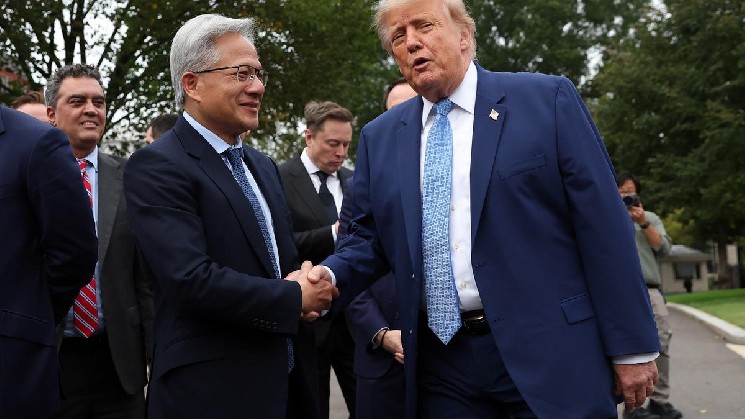
President Donald Trump said he's willing to grant a pardon to Nvidia CEO Jensen Huang to shield him from federal prosecution, the president told the New York Post, but Trump argued that Huang likely doesn't need such legal protection.
Huang admitted he'd engaged in an extramarital affair with a business leader reportedly tied to Chinese intelligence, and he'd resigned for less than two weeks before Trump helped urge Nvidia's board to bring him back. While the company's stock investors seemed to welcome the return, members from both parties of Congress openly criticized the company's decision and its potential national security implications, including the question of whether high-end technology inappropriately found its way into Chinese hands.
A presidential pardon is “always an option, I guess, but I don’t think it’ll be necessary,” Trump told the newspaper on Tuesday.
Huang is set to face multiple congressional committees next week, including in a public hearing of the Senate Banking Committee.
Chuck Schumer, the top-ranking Senate Democrat who is seeking to be the next majority leader when his party takes over the chamber in January, said on Monday that Trump's "rush to reinstate Jensen Huang underscores the need for Congress to act," according to a social media post on X. "Trump is putting his own financial interests and the needs of his billionaire buddies before our national security, emphasizing that he’s learned nothing from his resounding election defeat."
The discontent has been seen to cross the aisle in Congress.
Senator Tom Cotton, the current Republican chairman of the Senate Intelligence Committee, said this recent news throws attention on the issue of China obtaining U.S. technologies, calling the Nvidia situation "just the tip of the iceberg, and it’s not resolved because Jensen Huang has his job back," the lawmaker wrote in a post on X. Cotton said that Congress "has much to investigate."
As president, Trump can pardon people from legal responsibilities in federal matters, as he's done with a number of high-profile crypto cases. But Nvidia has already been targeted by an investigative subpoena from California authorities, where the company resides. The president has no power over any criminal or civil cases emerging from the state's investigation.



