coindesk.com
The crypto industry has become famous for its spending on elections and boasts an array of expensive booster organizations, but it also sought to convert almost $8 million into political results this year through direct lobbying on its central pursuit: getting a law to regulate the U.S. digital assets markets.
In the first half of 2026, the sector's paid advocates swarmed Capitol Hill as the U.S. Senate worked on the Digital Asset Market Clarity Act. About half of those registered lobbyists work as direct crypto firm employees and the rest came from outside shops or the industry's trade associations. That expensive army has so far failed to accomplish its mission.
In a CoinDesk analysis of federal lobbyist disclosures, the industry spent more than $13 million on lobbying in that six-month period. Most of that — $8 million — was linked to the market structure legislation in Congress, though the filings don't detail how much attention was also paid to other issues that might have been pursued alongside it.
This is not crypto's mountain of more than $100 million in campaign funds meant to steer friendly politicians into Congress. Nor is it the tens of millions the industry spends each year on its many advocacy groups, such as the Digital Chamber, Blockchain Association, Crypto Council for Innovation and others, (though some of those groups' membership fees do go toward this cause). This is a separate campaign of straight-up lobbying, which is a narrowly defined field of experts who represent client interests in meetings with the federal officials writing legislation and policy.
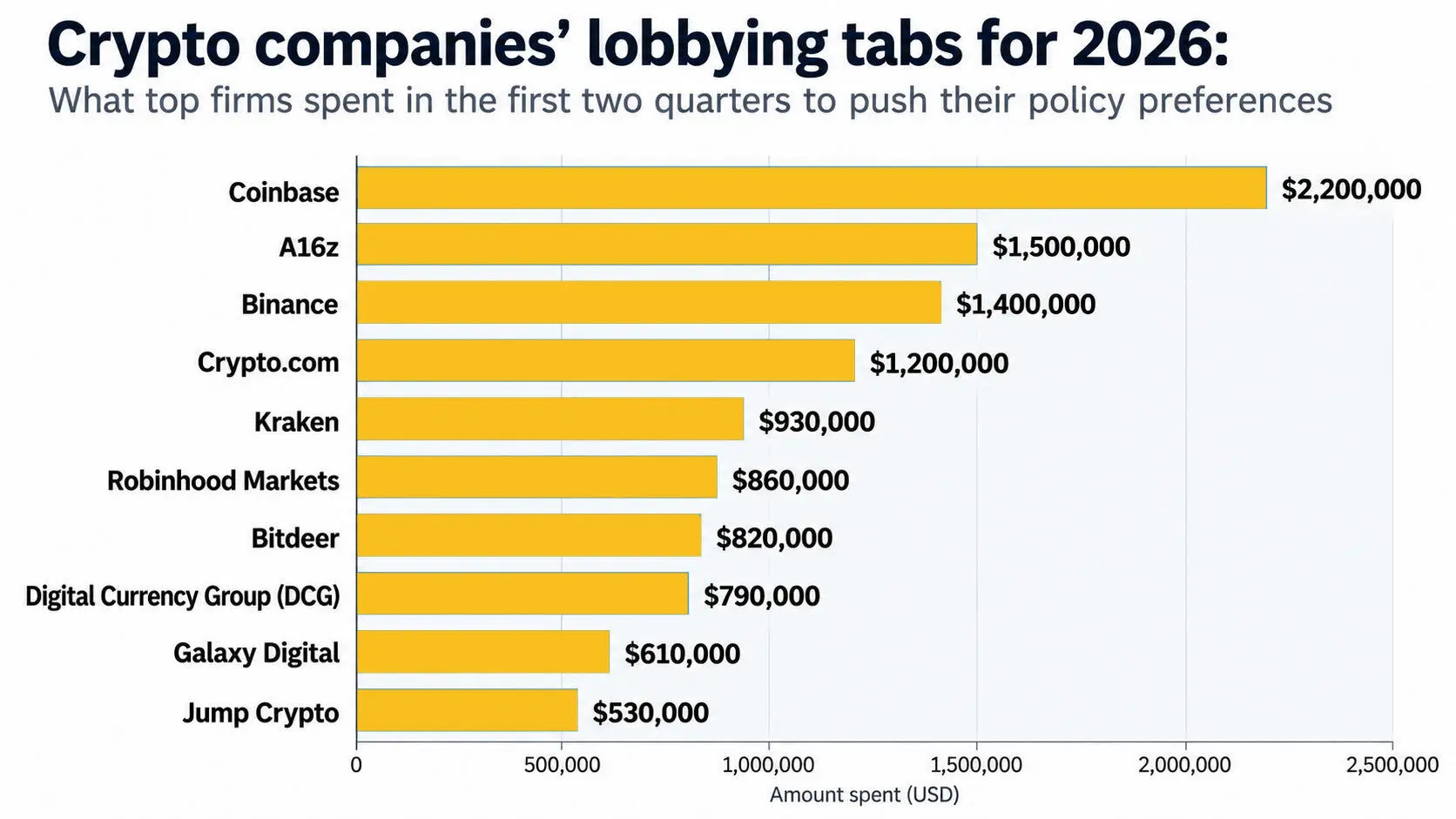
In its push for the Clarity Act, the industry spent about $2.4 million on guns for hire — the third-party lobbying firms that stalk the corridors of power full-time pushing whatever causes they're paid to represent. And its dollars supported another $2.1 million for captive lobbyists who work as employees of the trade associations. The rest of the $8 million funded crypto companies' own influence operations.
The lobbying efforts and goals aren't consistently described in filings, but disclosures reviewed by CoinDesk related to the $8 million legislative push made at least some mention of Congress' effort to enact a crypto oversight regime in the U.S. Some of the remaining $5.4 million the crypto sector spent on lobbying (for which disclosures didn't link explicitly to the Clarity Act) could actually have been devoted in part to that same cause, under vague descriptions like "issues relating to cryptocurrency" or "financial services." Some of the funds, though, were more clearly identified as going toward influencing tax legislation, digital mining issues or making the industry's case to the U.S. regulators who are writing crypto rules.