
 coindesk.com
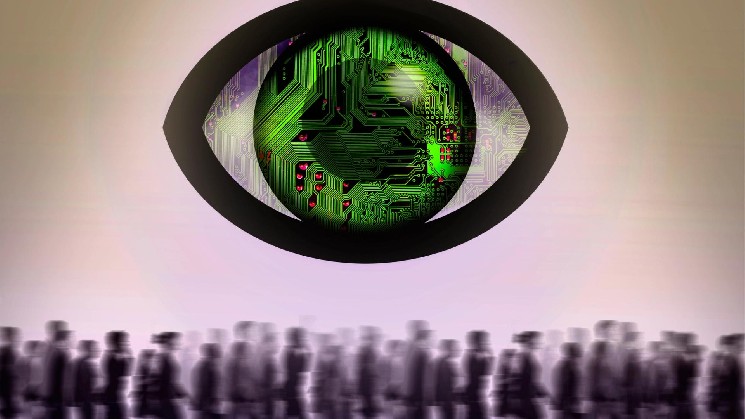
Recent reporting has revealed that the U.S. Department of Homeland Security (DHS) has been aggregating data of Americans’ financial activities to analyze and then provide local law enforcement with tips on potential criminals. This practice — known as predictive policing — is inherently authoritarian. It completely depends on mass surveillance to aggregate and analyze enough data to then determine whether or not you could be a criminal in the eyes of the state.
Here’s the problem: information tells a story and says whatever its narrator wants it to say, which is then used to justify subsequent actions. The state — as the collector of your data — is the narrator of your story. It determines which dots get connected and which picture gets painted about you. That’s ripe for abuse because anyone can take massive amounts of information and cherry-pick it to convey anything they want and then act on it.
In the words of Cardinal Richelieu, “If you give me six lines written by the hand of the most honest of men, I will find something in them which will hang him.”
For predictive policing, law enforcement watches your every move to determine if you might be a criminal and then goes after you for it. With this current situation, part of this predictive policing is based on financial surveillance of the American people, meaning your transaction history is essentially treated as evidence before you’ve done anything wrong. This is deeply un-American and unconstitutional. Here, you are far from innocent until proven guilty; here, you are always a suspect that the state is always prepared to prosecute.
The clearest example is of Kyle William Olson, whose traffic stop in Montana was instigated by a Border Patrol Predictive Intelligence Targeting Team (PITT). A DHS memo produced in his criminal case and shared with 404 Media said the team had identified “financial activity patterns commonly associated with illicit narcotics activity,” but did not explain which records it examined or how it obtained them. Police ultimately found marijuana in Olson’s vehicle, but that discovery does not resolve the underlying question: why was the government secretly analyzing his finances before officers had identified a specific crime?
And the other examples provided by 404 Media illustrate this well. Americans are pulled over and questioned based on information provided to local law enforcement from the DHS. One of the victims, Alek Schott, was pulled over for allegedly drifting between lanes and had his truck searched for drugs, but none were found. The Associated Press reported that federal agents monitored Schott’s travel patterns through license-plate scans and other surveillance technologies. Schott is now suing Bexar County, as well as the sheriff and some deputies, for violating his Fourth Amendment rights — and rightfully so.



