
 coindesk.com
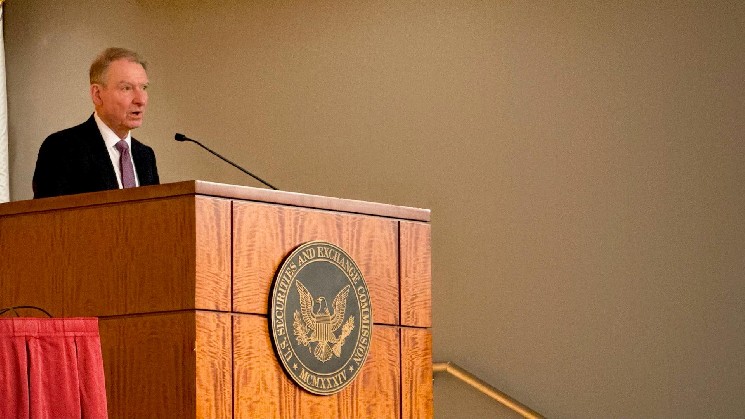
Last time the U.S. Securities and Exchange Commission (SEC) tried to tighten the regulatory leash on where its investment advisers could hold client crypto assets, it didn't go well.
But the agency is giving the regulation of crypto safeguarding another shot, hoping to answer the industry's urgent questions about how to comply with the existing custody regulations for crypto assets. The SEC took the very preliminary step of sending the concept this week to the White House Office of Budget and Management, where it'll sit for a while under review before the agency can move forward to actually propose it.
The SEC said that its future effort "would improve and modernize the regulations around custody of investment adviser client assets and fund assets, including to address crypto assets," according to its current description on the agency's public regulatory agenda.
Apart from clarifying the situation for a rapidly growing market, the pending proposal would "remove burdens from certain outdated provisions that are no longer needed to provide investor protection given the evolution in the markets and security trading and holding practices."
The language isn't helpful in providing the contours of what this might look like, though the tone suggests an agency that will stick to its path of making crypto business easier to conduct in the U.S.
But it's been a perilous topic in the past.
When announcing the agency's previous custody proposal in 2023, then-Chair Gary Gensler fired a warning shot across the crypto sector. "Make no mistake: Based upon how crypto platforms generally operate, investment advisers cannot rely on them as qualified custodians," he'd said of the proposed expansion of the agency's custody regulations.
That proposal would have required investment advisors to place clients' cryptocurrency with a narrow field of "qualified custodians," which would generally have meant a chartered bank or trust company, a broker-dealer registered with the agency or a futures commission merchant under the jurisdiction of the Commodity Futures Trading Commission.
An unusual array of financial firms, crypto platforms and even a fellow regulatory agency objected to the way the SEC pursued the proposal. Senior lawyers at the Small Business Administration told the securities regulator that the agency's effort “drastically underestimates potential impacts” that could have put smaller advisers out of business.
And investment firm a16z called it "illegal, infeasible, and dangerous.”