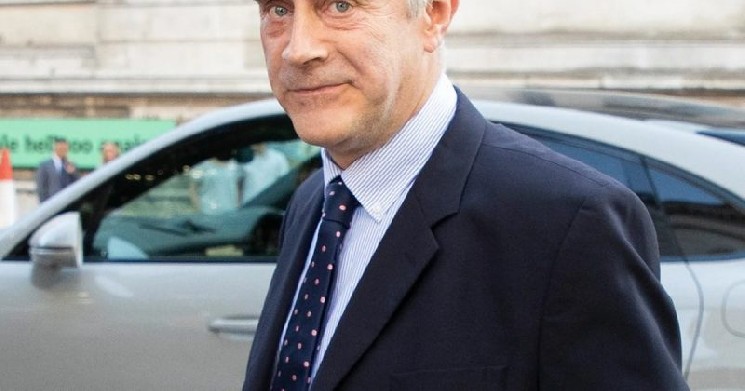
His wealth is valued at £18.2 billion according to the 2026 Sunday Times Rich List, placing him at No. 6 in the country. That fortune stems from a combination of aviation businesses, including Sherriff Global Group and AML Global, and early bets on digital assets, including Bitcoin and Ethereum.
The most notable line item on his portfolio, though, is a 12% stake in Tether Limited. Tether issues USDT, the most widely used stablecoin in crypto. Harborne’s political giving didn’t start with Reform UK. He previously donated to the Conservative Party and gave £6 million to the Brexit Party in 2019, the predecessor organization that eventually became Reform UK under Nigel Farage’s leadership.
The Farage factor and parliamentary scrutiny
Beyond party donations, Harborne reportedly made an undisclosed £5 million personal gift to Nigel Farage in June 2024. That payment is currently under investigation by UK parliamentary authorities.
The issue isn’t necessarily the money itself. It’s the disclosure, or lack thereof. UK parliamentary rules require members to declare financial interests, and the question of whether Farage properly disclosed the gift is what triggered the investigation.
The broader debate this fuels is about political donation limits in the UK. Unlike the US, where individual contributions to candidates are capped, the UK has no upper limit on donations from eligible individuals. The only requirements are that donors are on the UK electoral register and that donations above £7,500 are publicly reported. Harborne meets both criteria.
What this means for crypto and politics
Harborne’s donations are a case study in the growing intersection of digital asset wealth and political power. Tether has faced its own share of regulatory questions over the years regarding reserve backing and transparency. Having a major Tether stakeholder serve as the dominant funder of a rising UK political party creates a web of interests that policymakers will eventually need to untangle.

 cryptobriefing.com