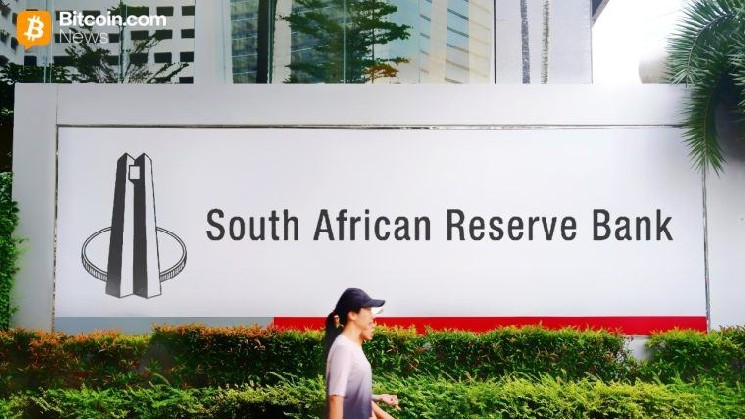
The joint regulatory clarification responds directly to a shifting financial landscape in South Africa, where digital assets are rapidly transitioning from speculative investments to mainstream transactional tools. This domestic migration toward decentralized finance has intensified pressure on current monetary policies. Prominent South African economist Dawie Roodt argues that the country’s existing exchange control laws are fundamentally incompatible with modern capital flows, warning that a failure to modernize these regulations will inevitably accelerate consumer abandonment of the local currency in favor of more stable, digitized alternatives.
However, the regulators counter that widespread crypto adoption could compromise the efficiency of the National Payments System (NPS) and trigger broader systemic risks across the financial sector. To mitigate these vulnerabilities, the South African government aims to expand the regulatory perimeter of the NPS Act.
“The revision of the NPS Act will include provisions that would enable the SARB, at its discretion, to declare and regulate payment instruments other than money, such as crypto assets. Among other aspects, this will provide the SARB with the authority and discretion, should a compelling case arise, to designate crypto assets as payment instruments for domestic transactions,” the statement reads.
While the SARB is not envisioned to regulate “unbacked” crypto assets as payment instruments, the approach toward stablecoins will be different. Because stablecoins have been determined to possess some characteristics of digital money, they have the potential to be adopted as a payment instrument, the regulators said. Consequently, the Intergovernmental Fintech Working Group (IFWG) is analyzing the applicable use cases of local currency-pegged stablecoins to inform an appropriate policy and regulatory response.
Still, the South African central bank is unlikely to sanction or consider foreign currency-pegged stablecoins as payment instruments for domestic transactions because they “may result in the risk of currency substitution (‘dollarization’), which would weaken the monetary policy transmission.”

 news.bitcoin.com