The UK’s Financial Conduct Authority (FCA) has been consulting on a broader crypto asset regime that is expected to come into force on Oct. 25, 2027, when companies conducting the new regulated activities will need authorization.
Trusted stablecoins “expand” markets Circle’s Disparte
Disparte also addressed concerns that stablecoins could deplete bank deposits and reduce demand for traditional lines of credit.
“The future is not banks versus stablecoins,” argued Disparte, adding that a clear regulatory framework can manage these risks without stifling innovation by adopting strong reserve and liquidity standards and encouraging bank participation.
“Our growth across currencies and jurisdictions is proof that trusted stablecoins expand markets. They do not shrink them.”
Disparte proposed four governing principles to anchor the UK’s regulatory framework: 1-to-1 reserve backing, requiring high-quality liquid reserves, enforceable redemptions and strong transparency standards.
Related: UK House of Lords presses Coinbase exec on stablecoins, KYC and bank run fears
Circle is the issuer of the world’s second-largest stablecoin by market capitalization, $USDC ($USDC).
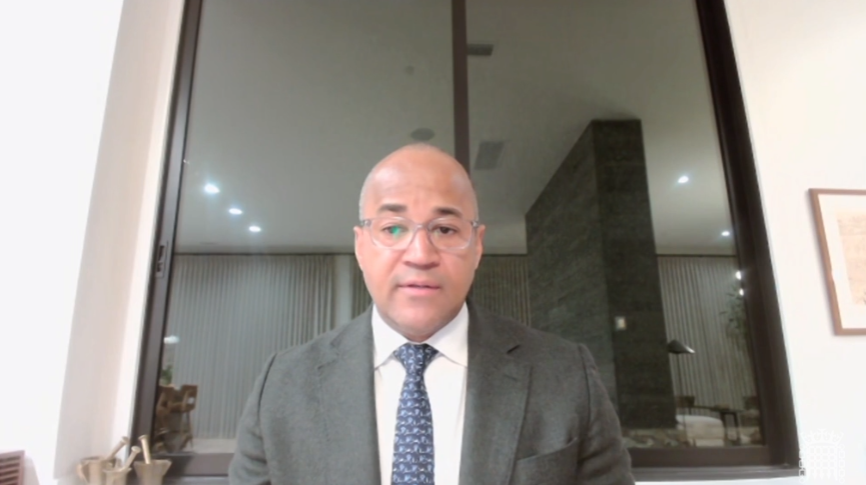
Dante Disparte, chief strategy officer and head of global policy and operations at Circle. Source: Parliamentlive.tv
The US’s federal stablecoin framework, the GENIUS Act, was signed into law on July 18, 2025. The EU’s MiCA framework, the first comprehensive regulatory framework for the crypto industry, went into effect for crypto-asset service providers on Dec. 30, 2024.
Related: UK gambling regulator weighs allowing crypto payments for online betting
Stablecoins lack clear value proposition
Mastercard’s McWaters said stablecoins lack a clear value proposition to threaten payment cards.
Stablecoins currently lack a “clear value proposition that would drive customers” to adopt them over the variety of domestic payment options available, McWaters said, while also praising their ability to accelerate cross-border transactions.

Jesse McWaters, executive vice president and head of global policy, Mastercard. Source: Parliamentlive.tv
“Blockchain technology, the rails on which stablecoins run, provides a new, innovative and potentially significantly additive way of moving money, particularly in cross-border contexts,” he said.
Magazine: How crypto laws changed in 2025 — and how they’ll change in 2026

 cointelegraph.com