The sandbox program aims to spur crypto innovation while ensuring adequate consumer protection safeguards are in place. The participants will also need to comply with anti-money laundering and counter-terrorism financing standards.
The sandbox will last for 12 months, though companies that show market readiness and comply with all regulatory requirements can transition to a full license after six months.
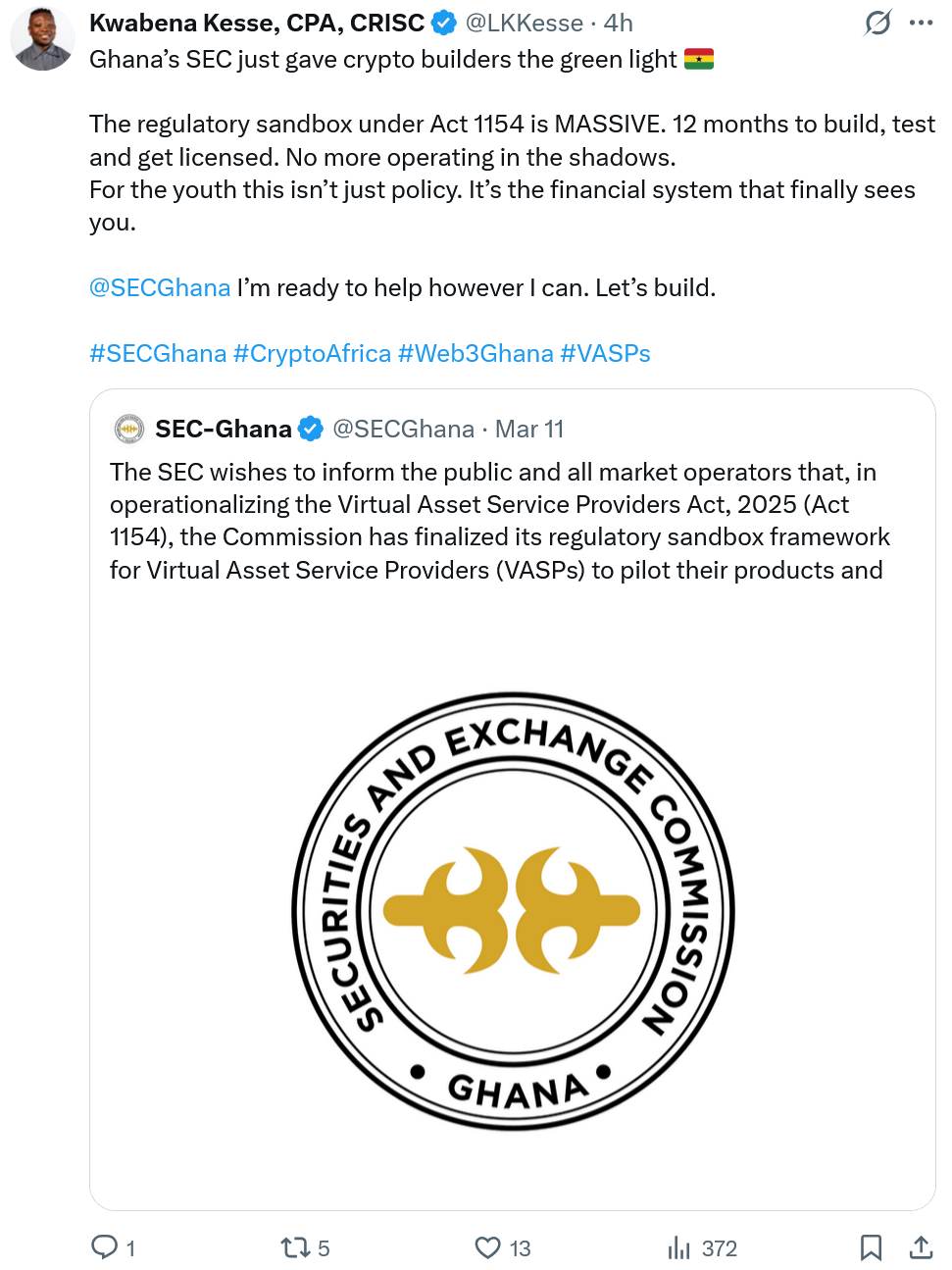
Source: Kwabena Kesse
Ghana said lessons from the pilot will shape the country’s future policies for the crypto market.
The VASP law stated that digital asset activities would fall under the SEC’s oversight and that industry players need to obtain a license or register with the Bank of Ghana or the SEC to operate in the country.
Foreign crypto companies are expanding into Ghana too
The new pilot comes after Blockchain.com said on Monday that it has expanded into Ghana as part of a push to broaden its presence in Africa.
A Blockchain.com spokesperson told Cointelegraph at the time that it would focus on expanding Ghana’s crypto payments infrastructure.
“Given how widely used mobile money is in Ghana, integration with the mobile money ecosystem is a key focus,” they said.
Related: Africa records highest stablecoin conversion spreads, data shows
Ghana is one of the larger economies on the African continent, which sees a high rate of crypto transactions under $1,000.
Crypto value received across the Sub-Saharan African region rose 52% year-on-year to over $205 billion between July 2024 and June 2025, blockchain analytics platform Chainalysis reported in September.
Nigeria dominates crypto activity, receiving over $92 billion over that period, while South Africa, Ethiopia, Kenya, and Ghana are the next-largest markets in the region.
Magazine: A ‘tsunami’ of wealth is headed for crypto: Nansen’s Alex Svanevik

 cointelegraph.com