
 crypto-economy.com
TL;DR
- Eric Trump accused major banks of blocking crypto yields to protect their profits.
- World Liberty Financial issues $USD1, its own stablecoin offering competitive yield returns.
- The ABA spends millions restricting 4-5% stablecoin yields through pending crypto legislation.
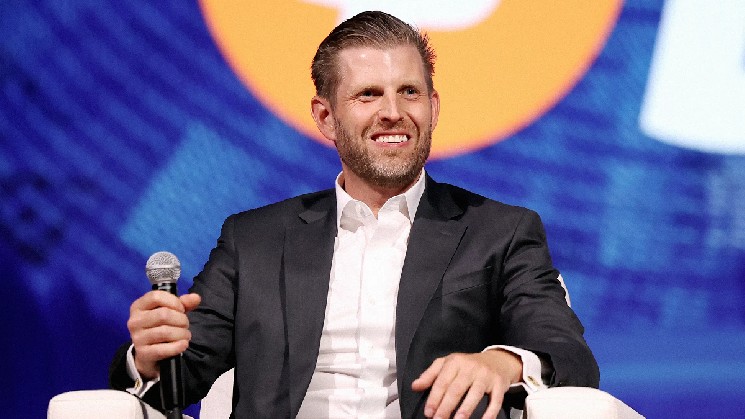
Eric Trump did not choose diplomatic language. The co-founder of World Liberty Financial and son of U.S. President Donald Trump went directly after the American banking industry on Tuesday, accusing major institutions of running a lobbying campaign designed to protect their own profit margins at the expense of ordinary depositors.
His target was specific: JPMorgan Chase, Bank of America, Wells Fargo, and the broader network of financial lobby groups he says are working overtime to kill stablecoin yield provisions in pending crypto legislation. In a post on X, Eric Trump argued that large banks collect interest payments from the Federal Reserve, pass only a fraction of those earnings to customers, and pocket the remainder as profit — a model he characterized as a deliberate extraction from American savers rather than a service to them.
Let me make this very clear: Big Banks (think JPMorgan Chase, Bank of America, Wells Fargo, etc.) are lobbying overtime to block Americans from getting higher yields on their savings—while trying to block any rewards or perks from being given to customers.
These banks, and…
— Eric Trump (@EricTrump) March 4, 2026
The practical grievance centers on yield. Crypto platforms plan to offer stablecoin holders returns of 4% to 5% or higher, a figure that dwarfs what traditional savings accounts currently pay. Eric Trump argues that the American Bankers Association and allied lobby groups are spending millions to restrict or ban those yields through bills like the GENIUS Act — framing their opposition as concern for financial stability while actually defending a low-rate arrangement that keeps deposits from migrating toward higher-yielding alternatives.
“This is anti-retail, anti-consumer, and straight-up anti-American,” he wrote, stripping away any pretense of measured corporate commentary.
The accusation carries a personal dimension that predates the current legislative fight. Eric Trump and his father have both stated publicly on multiple occasions that major banks cut off financial services to the Trump family and their associated businesses over the past several years.
The current stablecoin debate lands against that backdrop, which helps explain why the language coming from the World Liberty camp sounds less like policy advocacy and more like a settling of accounts.
The Trump Family’s Financial Interests Sit Directly Inside the Fight
World Liberty Financial issues its own stablecoin, $USD1, which means the outcome of the stablecoin yield debate carries direct financial consequences for the company Eric Trump co-founded. A regulatory framework that permits yield on stablecoins benefits $USD1 and the platforms built around it. A framework that restricts yield, or bans it outright, constrains the product’s competitive appeal against traditional bank deposits.
The company also currently pursues a banking charter through the Office of the Comptroller of the Currency, a process that would place World Liberty inside the regulated banking structure it publicly criticizes. The dual positioning — attacking banks while seeking to become one — reflects the genuinely complicated nature of the stablecoin industry’s relationship with legacy finance.
President Donald Trump amplified the pressure from his own account on Tuesday, urging Congress to advance the Clarity Act and echoing his son’s criticism of bank resistance to the stablecoin yield provisions.
The president posted shortly after meeting with Coinbase CEO Brian Armstrong, who withdrew his public support for the bill in January over the stablecoin sections and other provisions he found unacceptable.
The White House added institutional weight to the family’s messaging. Patrick Witt, the administration’s executive director for crypto policy, pushed back directly against JPMorgan CEO Jamie Dimon on Wednesday after Dimon stated that stablecoin issuers should face the same regulatory requirements as chartered banks — a position the crypto industry reads as an attempt to impose compliance costs that would neutralize the yield advantage stablecoins currently offer.