
 coinpedia.org
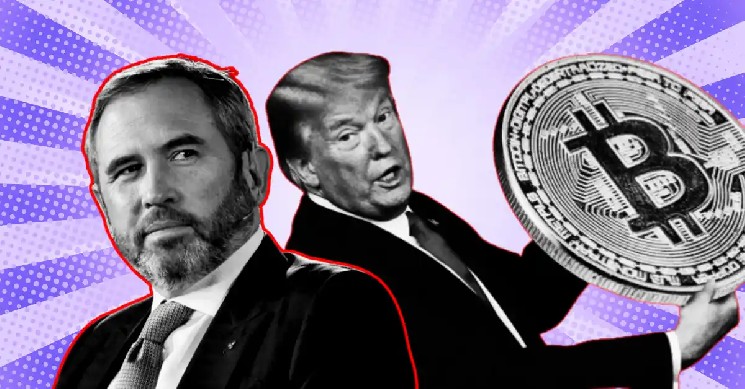
A fresh political push for crypto legislation is stirring debate across Washington and the digital asset industry.
U.S. President Donald Trump issued a forceful statement backing the CLARITY Act and warning that major banks should not undermine what he described as America’s crypto agenda.
In his remarks, Trump said the “Genius Act” was being threatened by banks and stressed that the United States must finalize market structure legislation as soon as possible. He argued that Americans deserve the opportunity to earn more on their money and warned that delays could push innovation to countries like China.
Trump framed the legislation as part of a broader effort to position the U.S. as the “Crypto Capital of the World,” adding that the industry should not be stalled by traditional financial institutions protecting their interests.
Ripple CEO Calls Message “Extremely Pointed”
Reacting to Trump’s comments, Brad Garlinghouse described the statement as “an extremely pointed message” to lawmakers and stakeholders who have slowed progress on the CLARITY Act.
An extremely pointed message from @POTUS to those who are dragging their feet on CLARITY.
— Brad Garlinghouse (@bgarlinghouse) March 3, 2026
This is, and always has been, about what’s in the best interest of the American people. pic.twitter.com/t1CIFBOBg4
Garlinghouse’s response quickly gained traction within the XRP community, where regulatory clarity has long been viewed as essential to long-term growth.
The CEO of Ripple has repeatedly argued that the absence of clear digital asset rules in the U.S. has placed domestic firms at a disadvantage compared to international competitors. His latest reaction shows growing alignment between parts of the crypto industry and political voices calling for immediate action.
Lawmakers and Industry Voices Weigh In
The discussion expanded beyond Ripple.
Mike Selig also backed publicly backed Trump’s stance, stating that the CLARITY Act must pass to establish a future-proof digital asset market structure. He added that the Commodity Futures Trading Commission is prepared to implement the framework under the current administration.
Across social platforms, reactions reflected frustration with perceived delays. Several users questioned why banks should have influence over legislation that could introduce competition to their business models. Others argued that clear rules would unlock innovation, attract builders and accelerate U.S. leadership in blockchain development.
A recurring theme in the responses was urgency. Many commenters warned that Congress is running out of time and called for immediate passage of the bill to prevent the U.S. from falling behind in global crypto adoption.
What’s at Stake
At its core, the debate centers on market structure.
The CLARITY Act tries to define how digital assets are classified and regulated, potentially drawing clearer boundaries between securities and commodities oversight. For years, regulatory uncertainty has been cited as one of the biggest obstacles facing crypto companies operating in the United States.
Trump’s statement framed the issue as one of national competitiveness. He suggested that failing to finalize crypto legislation could shift innovation and capital overseas. That message resonates strongly with industry leaders who argue that regulatory ambiguity has already slowed domestic progress.