
 coindesk.com
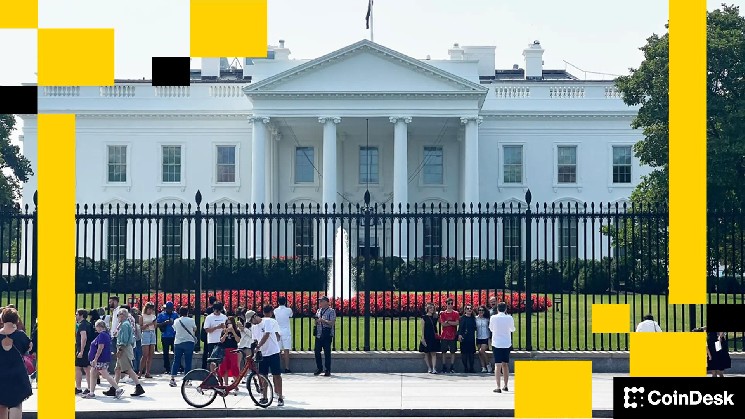
More progress was made but no compromise deal has yet emerged after a meeting hosted by the White House on Thursday to bring crypto insiders and bankers to the table again on U.S. digital assets legislation, according to crypto insiders who attended.
"Today’s constructive meeting at the White House reflects the importance of focused working engagement," said Ji Kim, the CEO of the Crypto Council for Innovation, who has been a regular participant in the talks. "The conversation built upon previous meetings to establish a framework that serves American consumers while reinforcing U.S. competitiveness," he said, adding that there will be "more to come" to continue the progress.
"The dialogue was constructive and the tone cooperative," Paul Grewal, the chief legal officer at Coinbase, wrote in a post on social media site X, saying the sides made "more progress."
This was the third in a series of meetings meant to pierce the impasse that's locked up the crypto market structure bill on a point that has nothing to do with market structure. The U.S. banking industry put its foot down about the way the previous legislative effort that's now law — the Guiding and Establishing National Innovation for U.S. Stablecoins (GENIUS) Act — allowed crypto firms to offer rewards on stablecoins. Bankers argue that such rewards threaten the deposits business at the core of their industry, and they've demanded the Digital Asset Market Clarity Act rehash that point in the GENIUS Act.
After the most recent meeting in which the bankers arrived with a principles document that shut out talk of compromise, Thursday's gathering extended well beyond the two-hour schedule, said people briefed on the talks. White House officials applied pressure on the participants to stay until they'd found common ground, including collecting their phones, the people said.
The question of whether stablecoins should be able to offer yield, such as in the products offered to customers on platforms like Coinbase, is among the major remaining sticking points of the legislation that would govern the U.S. crypto markets. An earlier compromise effort sought to give up rewards on static stablecoin holdings and only retain them on certain activities and transactions made with the assets. But banks had held the line on a demand that all rewards be banned.
If the industries come to terms on this point, it still doesn't lock in a congressional victory. The Senate Banking Committee needs to hold a hearing to consider advancing the legislation, just as the Senate Agriculture Committee did when it voted along partisan lines to approve its own version. But to get a bill that can pass the Senate, the process will need many Democrats on board, and that hasn't yet happened.
Democratic negotiators have insisted on a few major points, such as prohibiting senior government officials from significant business interests in crypto — a concern directed squarely at President Donald Trump. They've also called for the White House to fill the commissions at the Commodity Futures Trading Commission and the Securities and Exchange Commission, including nominating to fill the Democratic vacancies. Also, the members have demanded tighter controls on illicit finance risks, especially in decentralized finance (DeFi).
None of their requests have yet been met with offers from the Republicans and White House that have so far satisfied Democrats.
The Clarity Act is the top policy priority for the crypto industry. Once U.S. regulations are permanently set, the sector expects to see a surge in activity and investment as it becomes an indelible part of the U.S. financial system.
Read More: Banking trade groups responsible for impasse on market structure bill, Brian Armstrong says
UPDATE (February 19, 2026, 19:17 UTC): Adds comment from CCI's Ji Kim.