
 coindesk.com
One way or another, the U.S. crypto industry is likely to receive official policy that defines which digital assets get what treatment from which federal agencies. The problem: It might not last.
Securities and Exchange Commission Chairman Paul Atkins is focused on reversing the "head in the sand" approach he accuses his predecessors of having on crypto policy, and he's ready to issue rules that give the industry the regulatory clarity it craves. The catch, though, is that such rules won't be locked down and can be erased by the same kind of commission vote that puts them in place. They won't be backed by a targeted law that makes them unassailable by future administrations.
"We need a firm grounding in statute so we can't have any backsliding in the future," Atkins told the Senate Banking Committee in Thursday testimony. No matter how enthusiastic he is in giving the industry innovation-friendly rules, they're not "future-proof."
But the legislation in the U.S. Senate that would govern such things is floundering. Crypto executives and bankers haven't been able to reach a compromise on one of the sticking points in stablecoin rewards programs. And Democratic lawmakers haven't been offered answers to a number of their core concerns, including the full staffing of regulatory commissions and the danger of conflicts of interest when senior government officials have deep business ties to crypto (most obviously, in their view, President Donald Trump).
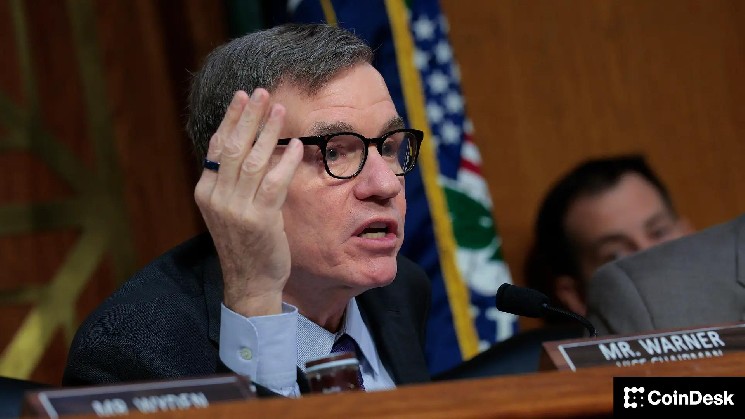
Senator Mark Warner, one of the leading Democratic negotiators on the Digital Asset Market Clarity Act, which still needs a hearing in the banking panel, said there's still a big, bipartisan group working hard on the bill.
"We want to get this done," he said, signalling that Democrats haven't yet abandoned the talks. "It's got to be done safely."
His primary concern is decentralized finance (DeFi) and preventing bad actors from using it for illicit purposes. Warner's views on this have, at times, shaken the industry and been seen as a threat to the future existence of DeFi projects. But the latest talks over the bill's treatment of illicit finance haven't yet settled on an approach.
"We've got to make sure that we don't set up a regime that allows bad actors or carves out enforcement," Warner said.
A Republican lawmaker, Senator Bernie Moreno, commiserated with the SEC chairman, saying, "Congress has failed miserably to give you laws."
Atkins reiterated that his agency has "pretty broad authority" to write rules now that put crypto businesses on a clear regulatory foundation, as he's been trying to execute with his "Project Crypto" agenda. But, he said, the rules would need to have legislation "undergird" them.
"We do need, I believe, a good law coming out of Congress," Atkins said.
Read More: The big U.S. crypto bill is on the move. Here is what it means for everyday users
So far, a similar version of the Clarity Act already passed the House of Representatives last year. And just last month, another version cleared the Senate Agriculture Committee in a party-line vote. However, when it comes time for the full Senate to vote on a final market structure bill, the industry will need at least seven Democrats like Warner on board — and potentially more, if the Republicans aren't unanimous.
While Senate Banking Committee Chairman Tim Scott sounded a hopeful note on Thursday about the Clarity Act, even industry leaders such as Coinbase CEO Brian Armstrong have shown a willingness to pull support if the policy doesn't look right. And Treasury Secretary Scott Bessent called out crypto-industry "nihilists" who are ready to stand in the way, saying they should move to El Salvador if they don't want vigorous regulation.
The girding that Atkins needs for the SEC's pending rules remains uncertain, though the White House has directed negotiators to find common ground before the month is out. The clock is ticking, as House Financial Services Committee Chairman French Hill put it.
Read More: SEC's Paul Atkins grilled on crypto enforcement pull-back, including with Justin Sun, Tron