
 cointelegraph.com

Gemini’s decision to exit the United Kingdom, European Union and Australia to focus on the United States and Singapore has sharpened questions over whether the UK’s still unfinished rulebook is deterring even well‑regulated players the government hoped to attract.
In April 2022, then Chancellor Rishi Sunak said it was his “ambition to make the UK a global hub for cryptoasset technology,” unveiling Treasury measures, such as stablecoin regulation, and launching a Financial Conduct Authority (FCA) “CryptoSprint” to help firms invest in the country.
However, in Gemini’s latest strategy update on Thursday, the exchange said many foreign markets were “hard to win,” with expansion leaving it “stretched thin” and burdened by organizational complexity, driving up costs.
Why Gemini’s exit stings for UK policymakers
For Susie Violet Ward, CEO of Bitcoin Policy UK, the episode highlights how drawn‑out rulemaking, overlapping regimes and high compliance costs relative to market size are discouraging companies from building locally, even while the FCA moves toward a Markets in Crypto Assets Regulation (MiCA)-style prudential regime for crypto asset firms.

She told Cointelegraph that when rules remain in transition, and the cost of compliance is high compared with the opportunity, it becomes harder for companies to commit capital, hire and scale. “Capital goes where it can operate with clarity and confidence,” she said, and Gemini’s retrenchment reflects that reality.
Related: UK finance watchdog nears final consultation step on key crypto rules
Ward added that UK crypto businesses currently operate under a “patchwork” of Anti-Money Laundering (AML) registration, financial promotions restrictions and interim guidance while the full regime remains “years away.”
She argued that this combination makes the country a harder place to deploy capital than jurisdictions offering clearer frameworks.
Friction in the UK framework
Laura Navaratnam, head of UK policy at the Crypto Council for Innovation, told Cointelegraph that, as one of the first firms to secure FCA registration in 2020, Gemini's exit will inevitably be “a blow for policymakers” trying to finalize the new regime ahead of license applications opening in September.
Under draft rules, UK-facing crypto firms will need to apply for full FCA authorization during a five-month “gateway” window from Sept. 30, 2026, to Feb. 28, 2027, before the new prudential regime comes into force in October 2027.
Navaratnam said that key aspects of the framework remained unresolved, in particular the interplay between the FCA’s stablecoin rules and the Bank of England’s systemic regime, warning that these disparate approaches risked a “cliff edge” for companies transitioning from one to the other and could prompt more withdrawals if not addressed.
CoinJar crypto exchange CEO Asher Tan told Cointelegraph that the UK’s shift from a narrow AML‑registration model to full Financial Services and Markets Act (FSMA) authorization is “materially raising the operational lift” for exchanges seeking to serve local customers.
Related: UK Lords launch stablecoin inquiry as Bank of England moves to finalize rules
Bitcoin Policy UK’s Ward said that the UK is getting the balance wrong by failing to differentiate clearly between Bitcoin (BTC) and other crypto assets and by not offering timely, actionable guidance. She added that surveys of UK crypto firms showed that account closures and banking refusals were common, materially increasing the likelihood of businesses leaving.
FCA’s next steps and signs of resilience
Industry retrenchment is not unique to the UK. Global players such as Coinbase have exited markets, including Argentina, when local conditions and strategic priorities no longer justified the operational stretch.
The FCA is now consulting on CP25/42, a proposed prudential regime that would extend its rules to crypto trading platforms, staking and dealing activities, embedding capital and liquidity requirements across the sector as part of a broader package of consultations that closes on Thursday.
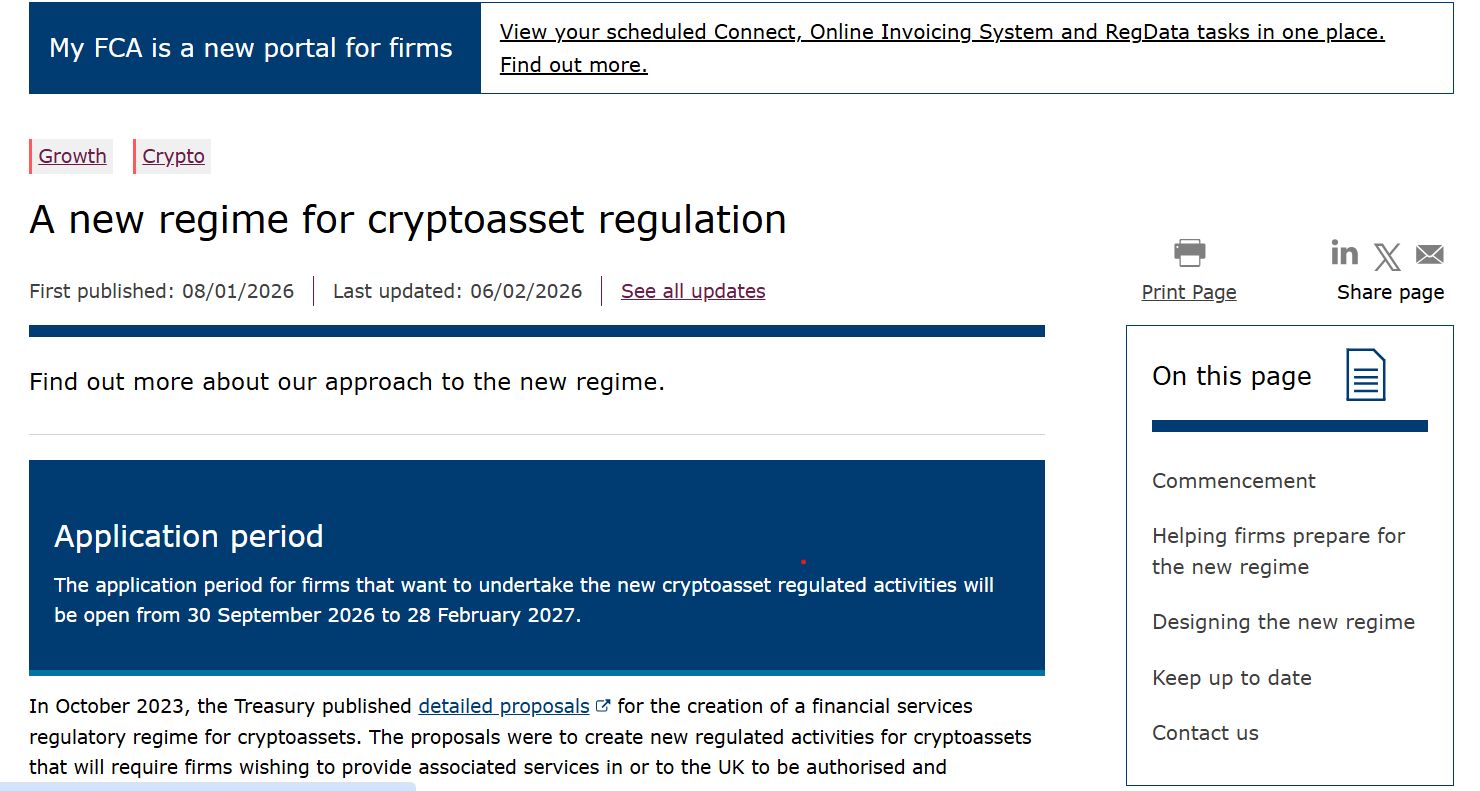
The new regime is expected to come into force on Oct. 25, 2027, following the authorization gateway.
Tan said the “direction of travel is clear.” Companies that want to remain in the UK will need to commit serious resources to meet the new standards, and “many are weighing that cost against the opportunity.”
Cointelegraph reached out to Gemini for comment on its UK departure, but the company declined to comment.
Magazine: How crypto laws changed in 2025 — and how they’ll change in 2026