Companies operating in Vietnam would be taxed differently. Institutional investors earning income from crypto transfers would be subject to a 20% corporate income tax, calculated on profits after deducting purchase costs and related expenses, per the report.
Related: No companies apply for Vietnam crypto pilot amid high barriers
Vietnam formally defines crypto assets
Authorities also reportedly provided a formal definition of crypto assets, describing them as digital assets that rely on cryptographic or similar technologies for issuance, storage and transfer verification.
The draft also outlines strict requirements for operators. Firms seeking to run a digital asset exchange would need at least 10 trillion Vietnamese dong (about $408 million) in charter capital, a threshold higher than that required for commercial banks and far above capital standards in many other industries. Foreign ownership would be permitted but capped at 49% of an exchange’s equity.
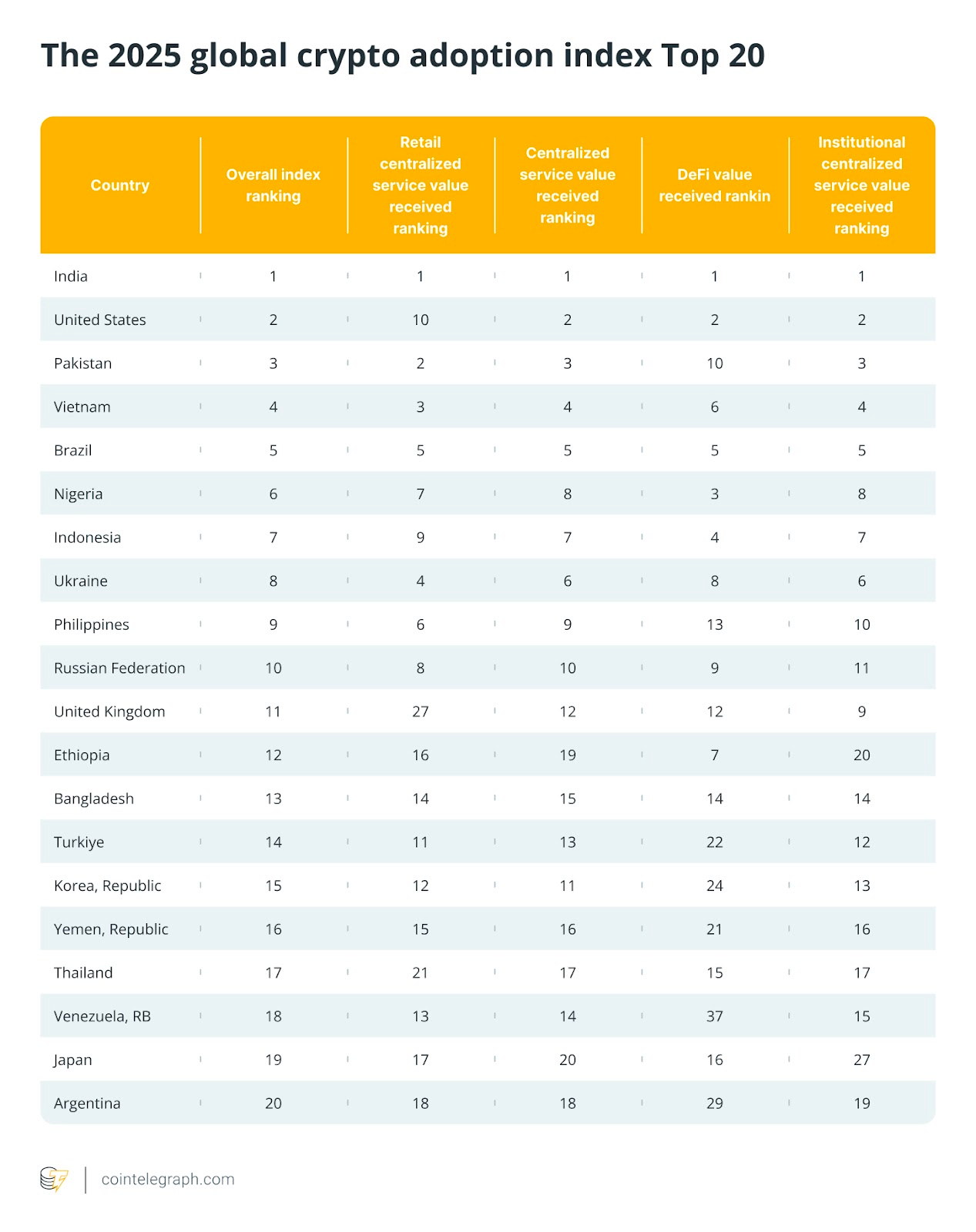
Vietnam is ranked fourth in the world for crypto adoption. Source: Chainalysis
The proposed rules come as Vietnam began a five-year pilot program for a regulated crypto asset market launched in September 2025. On Oct. 6, 2025, Vietnam’s Ministry of Finance confirmed that no companies had applied to participate in the five-year crypto pilot at that time, citing high capital requirements and strict eligibility conditions.
Related: Vietnam central bank expects credit growth amid rapid crypto adoption
Vietnam opens licensing for crypto exchanges
Last month, Vietnam started accepting applications for licenses to operate digital asset trading platforms, marking the operational launch of its planned pilot program for a regulated crypto market.
“Applications for the aforementioned administrative procedures will be accepted beginning January 20, 2026,” the State Securities Commission of Vietnam (SSC) said, framing the move as part of a broader effort to bring crypto under formal regulatory oversight.
Magazine: Bitget’s Gracy Chen is looking for ‘entrepreneurs, not wantrepreneurs’

 cointelegraph.com