
 cryptopolitan.com
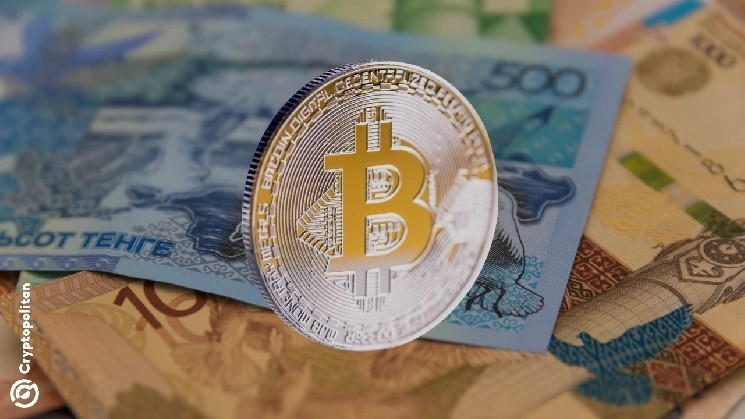
The government of Kazakhstan is stepping up efforts to curb illegal cryptocurrency transactions, including capital flight via digital assets.
The Central Asian nation is a leader in the latter, its head of state says, insisting illicit transactions through crypto trading platforms have become a serious issue.
Astana goes after shadow crypto circulation and outflows
Kazakhstan’s President Kassym-Jomart Tokayev has sharply criticized illegal cryptocurrency transfers, including those serving tax evasion schemes and capital flight, local media reported.
In a statement on the matter, the Kazakh leader directly described such transactions as a threat to the economic security of the country, which has been otherwise trying to become a regional crypto hub.
Quoted by the Interfax-Kazakhstan news agency on Wednesday, Tokayev admitted that attempts to siphon capital abroad using cryptocurrency continue despite government efforts.
This, along with money laundering through crypto operations, is now a major challenge for the state, he indicated during a meeting at the former Soviet republic’s Financial Monitoring Agency (AFM):
“Profit laundering and the illegal withdrawal of capital through underground crypto transactions have become a serious problem.”
Authorities have already shut down over 130 illegal crypto exchange offices with a combined turnover of 62 billion tenge (over $123 million), Tokayev highlighted.
“Property worth 2.6 billion tenge has been seized in connection with these cases,” he added, citing official figures.
Kazakhstan said to be a global leader by capital flight
Meanwhile, despite the measures taken by the government, active advertising of unauthorized coin trading platforms continues on social media. “It appears the issue has not been resolved,” the president acknowledged, further pointing out:
“According to international organizations, our country is one of the leaders in terms of volume of withdrawn capital.”
Despite that, there have been virtually no actual convictions for such cases, Kassym-Jomart Tokayev noted, instructing the AFM to come up with concrete proposals and insisting:
“Illegal capital outflow is a direct threat to economic security.”
Separately, the head of state drew attention to a trend of businesses increasingly accepting cash payments to conceal their actual turnover.
“Retailers are openly quoting two prices for goods – one for cashless payments and another for cash payments, minus the tax amount,” he elaborated.
“This, of course, cannot be tolerated, as such actions undermine the government’s efforts to improve tax administration,” Tokayev told financial regulators.
Kazakhstan intensifies crackdown on illegal crypto operations
The government in Astana has been taking steps to regulate and liberalize the country’s cryptocurrency market, most recently by adopting new banking legislation, with the goal of becoming a crypto hub in the wider Eurasian region. Plans include the legalization of crypto investments.
Kazakhstan became a hotspot for crypto mining when China enforced a ban on the activity a few years ago. Problems caused by the initial influx of miners were solved by introducing higher electricity rates and certain restrictions, some of which were lifted last year.
In 2025, the authorities also sought to expand crypto trading outside the narrow legal framework of the Astana International Financial Center (AIFC). Mining firms were previously allowed to sell their coins only on AIFC-registered platforms, and crypto exchange beyond the financial hub was restricted.
At the same time, government agencies have been cracking down on illegal activities in the space. This month, the AFM announced it has blocked more than 1,100 websites providing exchange services for digital currencies without a proper license, as reported by Cryptopolitan.
Also in January, law enforcement officials said they were after a prominent Kazakh blogger, known as Qaisar Qamza on social media, who has been accused of illegally accepting cryptocurrency remuneration for advertising an online gambling site. Over 180,000 of his Tether coins have been seized.