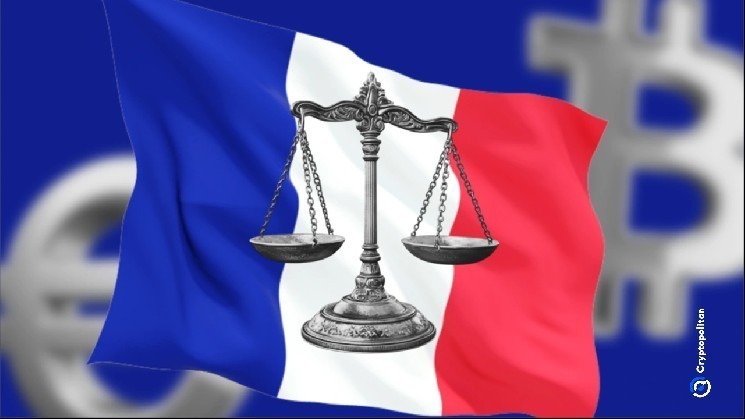
France supports giving ESMA more power
Under the European Union’s crypto rules, MiCA, crypto companies must receive licences from national regulators in order to be able to operate across the bloc. Those rules came into force last year to bring crypto assets under formal regulation.
MiCA licences have been granted to crypto companies, including US exchange Coinbase, OKX, Crypto.com, Binance, stablecoin issuer Circle, and British fintech Revolut. Last year, France threatened to challenge the “passporting” of licences granted by different member states, saying it was concerned companies were seeking out jurisdictions with more lenient licensing standards.
Last month, the European Commission suggested that ESMA should oversee crypto companies at the EU level, although some countries opposed the idea. However, the head of the AMF, Marie-Anne Barbat-Layani, laid out the regulator’s plans for 2026 and said again that France supports making the European capital markets stronger and giving ESMA more power.
At the same time, the European Securities and Markets Authority said that it expects crypto companies without MiCA authorisation to have either implemented or have such plans in place by the end of the transition period.
Deblock, GOin, Bitstack, and Credit Agricole-owned CACEIS have been recorded to have received approval. However, Firms that do not apply for or obtain MiCA licensing risk being forced to suspend services, block EU users, or face financial penalties.
National regulators, including France’s AMF, are closely monitoring whether registered firms are preparing for the transition. Stephane Pontoizeau said that he was concerned about this group.
Analysts state that MiCA’s higher compliance costs may push smaller or lightly capitalized crypto companies to shut down EU operations rather than pursue licensing. This could lead to fewer but more heavily regulated platforms operating in France and across the EU, reshaping competition in the sector.
Investigations that brought fear to crypto companies
Recent moves by the France regulators have shown that licensing alone is not sufficient without ongoing compliance and cooperation with regulators. Q4 was dominated by France conducting anti-money laundering (AML) inspections on dozens of crypto exchanges, including Binance and Coinhouse.
According to Bloomberg, the French prudential supervision authority, ACPR, has been conducting on-site controls since late 2024, after which Binance was instructed to strengthen its risk controls during the examination. “Periodic onsite inspections are a standard part of the supervision of regulated entities,” Binance stated.
The checks verify compliance with conditions for PSAN (digital asset service provider) registration, particularly testing anti-money laundering and counter-terrorist financing controls. Failure to address ACPR findings could lead to sanctions or compromise a company’s ability to obtain MiCA agreements from France.
Two years ago, Coinbase agreed to pay $100 million to settle complaints regarding “historical shortcomings” in its regulatory compliance work with New York’s Department of Financial Services. The exchange has since developed crypto-focused anti-money laundering tools and an automated Transaction Monitoring System, following investigations that began in 2021.
For exchanges operating in Europe, such as OKX, regulators are considering penalties against the exchange after hackers allegedly laundered $100 million in stolen Bybit funds through its Web3 platform. However, the problem lies in the authorities still debating whether OKX’s integrated services

 cryptopolitan.com