However, in practice, she said it means tougher onboarding questions, more frequent account reviews, and far less room for users to assume that activity on overseas or offshore platforms is out of sight for tax agencies.
She added that firms that act now will be best positioned to manage risk and maintain trust, while those that delay could “face regulatory and reputational consequences.”
Structural changes for crypto exchanges
For exchanges, this is not a cosmetic compliance update but a structural change. Firms will need to bolt CARF requirements onto existing Know Your Customer and Anti-Money Laundering processes, redesign onboarding flows to capture tax‑residency and self‑certification data, and build or upgrade reporting systems.
Related: Tax agencies will double down on crypto before Bitcoin hits $1M
That will likely require new governance frameworks, staff training, and closer coordination between compliance, engineering, and support teams, particularly for platforms that operate across multiple CARF and non‑CARF jurisdictions.
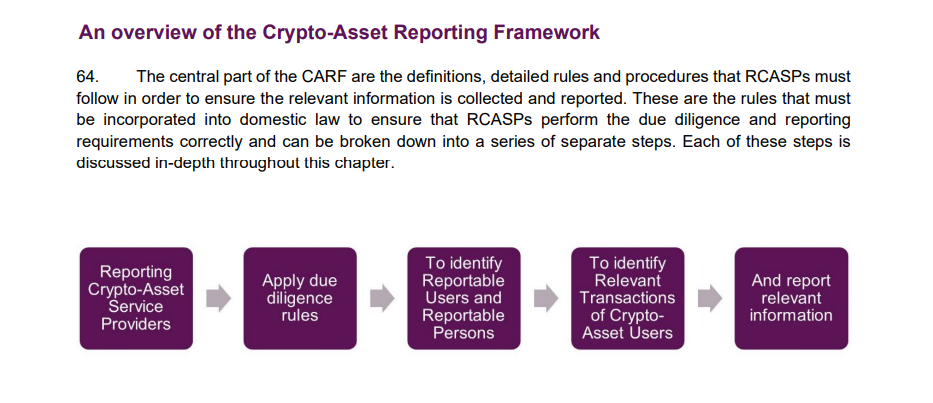
CARF steps. Source: OECD
UK‑licensed exchanges such as CoinJar sit at the center of this shift. Asher Tan, CEO and co-founder, told Cointelegraph that as CARF rules are phased in, users will be asked to provide additional tax residency information.
He said that the challenge is implementing new requirements in a way that “meets regulatory expectations while preserving the clarity, trust, and user-friendly experience people expect.”
He added that for regulated platforms, that balance can become a “competitive advantage” as crypto “moves further into the mainstream financial system and as those looking to trade digital assets look for compliant platforms.”
Related: Hong Kong launches CARF crypto tax consultation to combat evasion
Retail users face a rise in audits
Retail users, meanwhile, face a sharp rise in audit risk rather than new taxes. As UK‑based practitioner, The Bitcoin & Crypto Accountant, told Cointelegraph, CARF does not create new tax liabilities; instead, it makes existing rules enforceable.
He said that, from 2026, the UK’s tax authority, His Majesty’s Revenue and Customs, will receive standardized, machine-readable data directly from exchanges, including overseas platforms, which makes “mismatches between tax returns and exchange data far easier to identify.”
The most common issues he sees among users are not just deliberate avoidance but omissions, such as “offshore exchange activity, frequent small disposals assumed to be immaterial, and Decentralized Finance or non-fungible token transactions that were misreported or not reported at all,” and he urged UK users to take action now:
“While reporting begins in 2026, the data will inevitably be used to question historic positions where figures do not reconcile. Anyone with unresolved issues should be addressing them now, while voluntary disclosure is still available.”
Related: No HMRC letter? UK crypto investors may still owe taxes, expert warns

 cointelegraph.com