
 coindesk.com
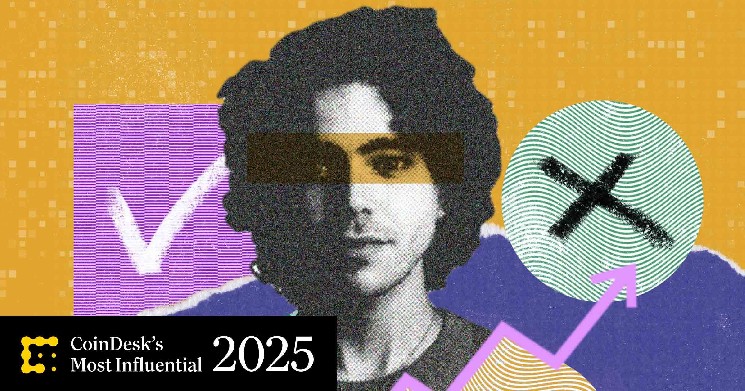
When Shayne Coplan first made mainstream headlines in November 2024, it was far from a success story that drew the media’s attention. In fact, many who heard about the Federal Bureau of Investigation’s (FBI) raid on the New York-native’s apartment in downtown Manhattan might have thought this was the beginning of yet another downfall of a young crypto entrepreneur.
But that couldn’t be farther from the truth.
A little over a year later, a slew of federal probes (including investigations by the Commodity Futures Trading Commission and the Department of Justice) into Polymarket have been dropped with no charges, and Polymarket has been allowed to return to the U.S. Coplan has signed multi-billion-dollar deals with some of the biggest names in finance, including the New York Stock Exchange’s owner, the Intercontinental Exchange, and the sports industry, including the Ultimate Fighting Championship (UFC) and the National Hockey League (NHL).
“Cheers to free markets, the American dream, and $3000/hr lawyers,” Coplan wrote in a post on X celebrating the one-year anniversary of his FBI raid.
Coplan is now considered to be the youngest self-made billionaire in the world, thanks to his 11% stake in Polymarket, which he founded from his Lower East Side apartment during the height of the pandemic in March 2020 after dropping out of New York University. The company is now worth $9 billion.
Through Polymarket, he unlocked a new use case for crypto that has evolved beyond typical trading or payments and has made prediction markets go from niche to a hot commodity, with crypto-powerhouses like Robinhood and even sports clothing line Fanatics all eager to claim a share of the growing crypto-powered space.
When asked whether he ever thought Polymarket could be worth that much in an interview with CBS recently, he said: “I mean, I didn't start it to not get here, you know?”
Coplan built Polymarket as a tool to gain information during the COVID-19 pandemic, aiming to find reliable answers to uncertain questions about the future. With little clarity online, he created a tool that could crowdsource predictions when official sources came up short.
On Polymarket, users bet on the outcome of various events, ranging from elections and global affairs to sports games and culture-related scenarios. It’s a marketplace where buyers and sellers trade positions on what they think will happen — and it’s built on the Polygon (POL) network, a faster and cheaper layer built on top of Ethereum ETH$3,198.69, where instead of using regular dollars, it uses stablecoins, such as Circle’s USD Coin (USDC).
Things started off shaky for Polymarket, as with many crypto-related projects. The company collided with U.S. regulators, as betting on political outcomes is tightly regulated in the U.S. Polymarket didn’t register with regulators before launching, which put it directly in conflict with the Commodity Futures Trading Commission (CFTC).
When asked whether or not he believes he broke the law, Coplan told CBS: “People say ‘breaking the law’. It’s like, which law, you know? So if anything, it’s incompatible.”
In the early days of crypto, many companies developed products knowing they were operating in a legal gray area, as no formal regulations had yet been established.
The investigation ultimately led to a visit from the FBI, during which agents used a battering ram to enter Coplan's apartment and seize his devices, he recalled to CBS. He wasn’t arrested, but the message was clear: regulators and law enforcement had their guns trained on Polymarket.
After the new administration took office in 2025, the investigation was dropped, and Polymarket later became legal in the U.S. through the acquisition of QCX, the holding company for a CFTC-licensed derivatives exchange and clearinghouse.
Since then, Polymarket has landed partnerships with several high-level companies to bring prediction markets to the masses, including the Intercontinental Exchange’s (ICE) $2 billion investment into Polymarket, and partnerships with PrizePicks and YahooFinance, among many others.
But with fame comes scrutiny, and there’s been increasing debate online on how to balance innovation with responsibility. Most recently, rumours of insider trading circulated online showing a trader known as AlphaRaccoon profiting over $1 million in 24 hours by placing 22 out of 23 correct bets on Google’s 2025 Year in Search rankings.
Concerns over insider trading and other risks mark the next frontier for Coplan and his peers as prediction markets edge closer to the mainstream. And then there’s $11 billion-valued competitor Kalshi to contend with
Time will tell what 2026 holds for Polymarket, but 2025 belonged to Coplan.