
 news.bitcoin.com
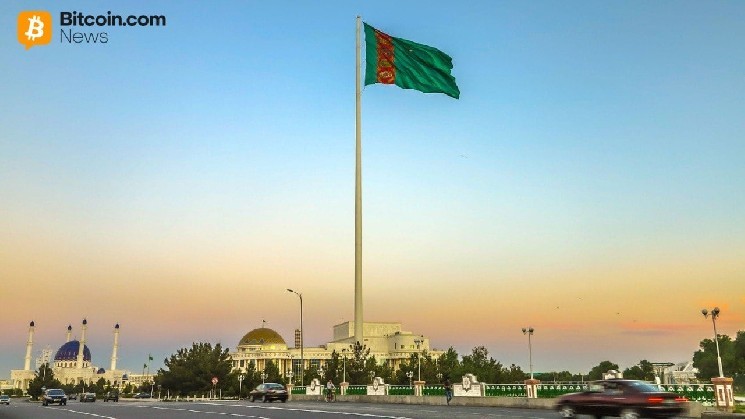
Turkmenistan has passed a new law, signed by President Serdar Berdymukhamedov on Nov. 28, that officially legalizes and regulates virtual assets, starting next year.
A Strategy for Economic Diversification
The Central Asian nation of Turkmenistan has taken a major step into the digital economy, passing a law that officially legalizes and regulates virtual assets, including provisions for licensing cryptocurrency exchanges and mining companies. State media, including the Neutral Turkmenistan newspaper, reported on Nov. 28 that President Serdar Berdymukhamedov signed the landmark legislation, which is set to come into force on January 1st, 2026.
The move is central to the country’s broader strategy to diversify its economy beyond its traditional reliance on exports of natural gas, of which it holds the world’s fourth-largest reserves. A government spokesperson confirmed the significance of the law to Reuters, stating it will “help attract investment and stimulate digitalization.” The legislation provides a legal and economic status for the creation, storage, placement, use, and circulation of virtual assets within Turkmenistan.
Turkmenistan’s Calculated Crypto Pivot
Historically, the highly controlled and closed economy of Turkmenistan viewed cryptocurrencies with suspicion, existing in a regulatory “gray area.” However, this new law marks a definitive policy shift, aligning the country with a growing regional trend toward formalizing the digital asset sector.
The finalized law, effective in 2026, mandates registration and licensing for crypto exchanges and mining operations and introduces strict Anti-Money Laundering (AML) standards, including know-your-client (KYC) checks and a ban on anonymous wallets. Crucially, while digital assets are legalized, they are not recognized as legal tender or currency for internal use.
Turkmenistan’s decision follows a trend among former Soviet Central Asian republics that are actively establishing frameworks to govern digital assets, seeing them as a tool for economic modernization and investment attraction. For instance, Kyrgyzstan has positioned itself as a regional leader in the sector, notably by launching a national stablecoin and a central bank digital currency (CBDC) in partnership with global cryptocurrency exchange Binance in late 2025.
Countries like Uzbekistan and Kazakhstan have also implemented mining and licensing regimes. As Turkmenistan’s new regulations come into effect next year, they will be closely watched by the international community to see if its model can effectively attract foreign investment while maintaining tight control over the financial system.