“The main problem is that only regulated exchanges outside the United States can apply for the FBOT. So, you need to have an existing regulatory framework in your home country.”
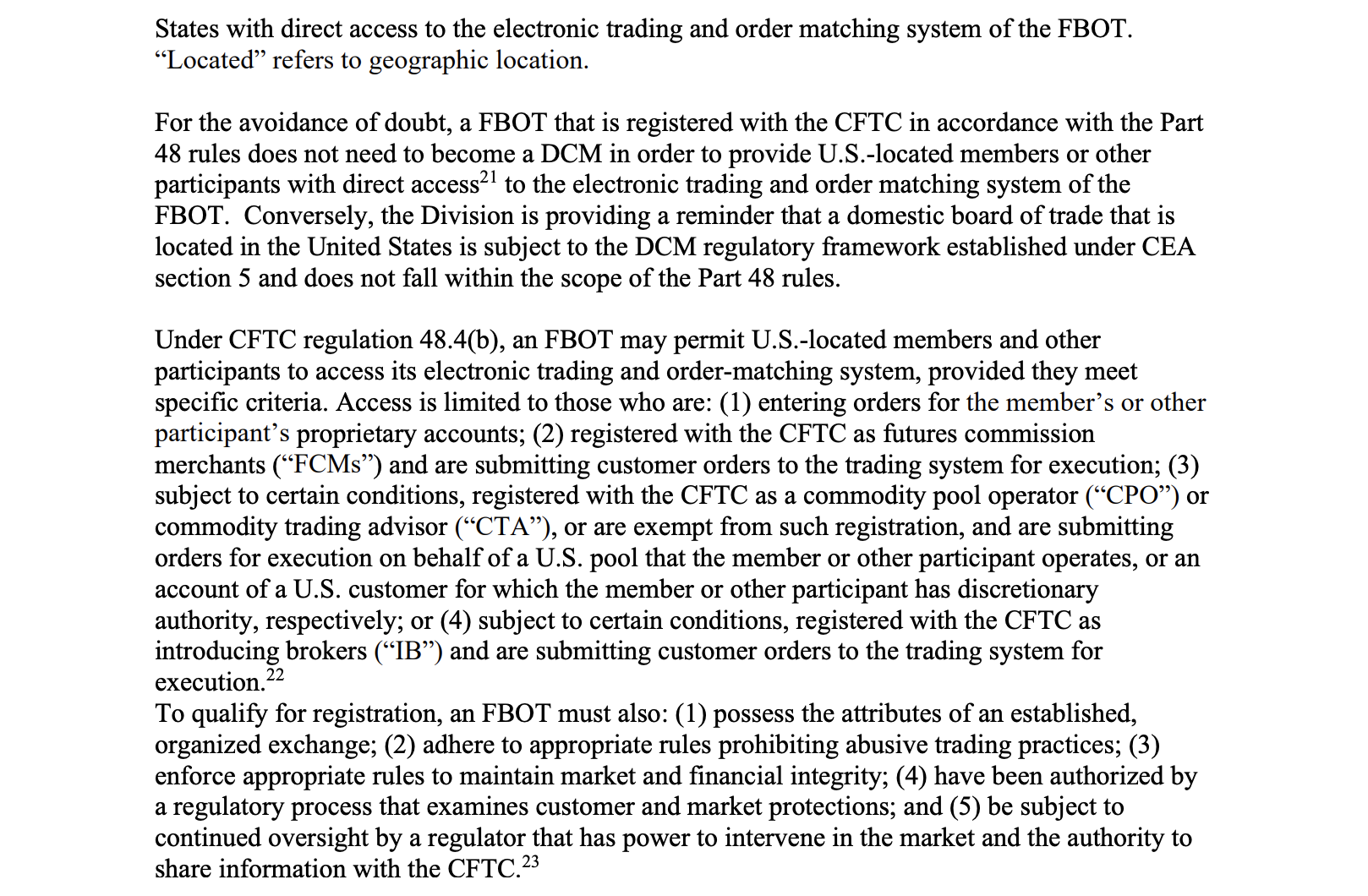
CFTC staff guidance outlining qualifying criteria to register under the FBOT framework and serve US residents. Source: CFTC
Many exchanges choose to set up businesses in Seychelles or other unregulated jurisdictions to avoid such a framework in the first place, Cohen added.
The best way to provide clarity for crypto exchanges is to pass a crypto market structure bill in Congress, codifying crypto regulations into law, and creating lasting change that does not shift from administration to administration, Cohen said.
Related: ‘Too few guardrails,' CFTC’s Johnson warns on prediction market risks
CFTC’s “crypto sprint” promises clarity on regulations and an overhaul of the financial system
The CFTC’s “crypto sprint” is an initiative to overhaul crypto regulations to fulfill US president Donald Trump’s agenda of making the US the global leader in crypto.
Several policy recommendations were proposed in the Trump administration’s crypto report, which was published in July, including giving the Securities and Exchange Commission (SEC) and the CFTC joint oversight over crypto.
Both regulatory agencies have proposed several collaborative policy efforts, including the potential for financial markets to become perpetual, creating a 24/7 trading cycle across asset classes.
The proposed change would be a significant departure from legacy financial markets, which currently do not operate on nights or weekends and close during certain holidays.
Magazine: Coinbase and Base: Is crypto just becoming traditional finance 2.0?

 cointelegraph.com