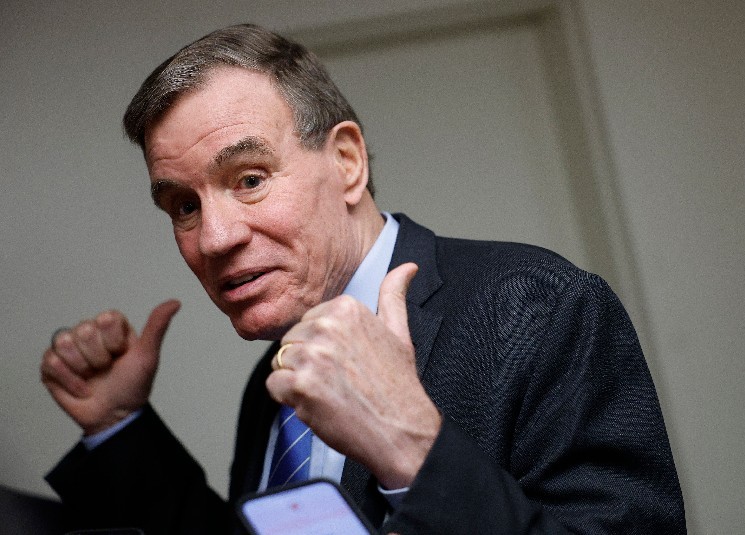
Back then, Warner said such an effort would "help maintain the robust AML and sanctions enforcement we need to protect our national security, while allowing participants who play by the rules to continue to take advantage of the potential of distributed ledger technologies," additionally noting his views that "criminals and rogue states continue to use crypto to launder money, evade sanctions, and conceal illicit activity."
Then he pursued an appropriations provision last year that would have automated a process to sanction "foreign digital asset transaction facilitators" – including crypto exchanges – linked to users who support terrorism groups. So he has a background in seeking to hold digital assets insiders responsible for the illicit use of their products.
A spokesperson for the senator didn't immediately respond to a request for comment on his position in the latest negotiations, but Republican senators have been seeking to fast-track the Senate's market structure bill, trying to follow the House in a wide, bipartisan approval.
Warner is among the Democrats on the Senate Banking Committee — one of the two panels that needs to come to agreement on the crypto legislation before it can move on to a floor vote.
Unlike with the more aggressive stance of fellow Democrat Senator Elizabeth Warren, the industry generally sees Warner as a member with a balanced view on crypto issues, having supported the sector in previous votes, such as in the recent passage of the bill to regulate U.S. stablecoin issuers — still standing as the industry's biggest achievement in Washington. Digital assets political organization Stand With Crypto gives him an "A" grade as a lawmaker who "strongly supports crypto."
When the Guiding and Establishing National Innovation for U.S. Stablecoins (GENIUS) Act was still moving through the Senate before its passage by a wide margin in June, some Democrats had halted the process on that bill to object to security and illicit-finance aspects of the industry (in addition to the potential conflicts posed by President Donald Trump's own stablecoin business interests.) The disagreements were kicked down the road in favor of an easy passage of that earlier bill, with the knowledge that this market structure legislation would be a better place to hash out those concerns.
That debate is now arriving for the bill that's the lynchpin of the digital assets sector's Washington plans. This legislation to set out tailored regulations for U.S. crypto transactions is seen as necessary for the industry to come into its own and to bring remaining institutional players and hesitant retail investors into the realm of digital tokens.
Behind closed doors, crypto lobbyists are wondering if Warner's background in venture-capital work for technology firms will help them make a case for protecting software-writing innovators from legal liability. In light of cases such as Tornado Cash developer Roman Storm's recent criminal conviction, the urgency to establish a shield is amplifying.
Read More: Roman Storm Guilty of Unlicensed Money Transmitting Conspiracy in Partial Verdict

 coindesk.com