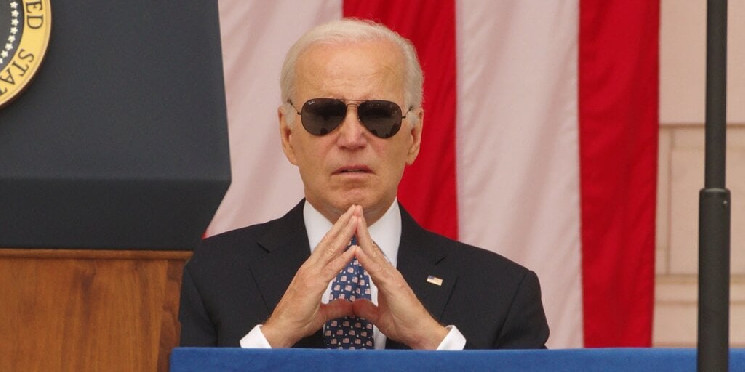
“When people pay for their family expenses using new forms of digital payments, they must be confident that their transactions are not tainted by harmful surveillance or errors,” the Bureau’s director, Rohhit Chopra, said today in a statement.
🚨🚨🚨Biden Administration 11:59 PM interpretive rule drop:
TLDR: in order to protect consumers and to avoid a competitive advantage to new forms of electronic fund transfers over traditional ones, the Electronic Funds Transfer Act (EFTA) should be reinterpreted to apply to… pic.twitter.com/RjLT2PZ9zX
— Bill Hughes : wchughes.eth 🦊 (@BillHughesDC) January 10, 2025
The response to the proposed rule by crypto policy leaders was swift and critical.
“Hacked because you… believed that fashion model in Malaysia needed 5,000 bucks to fly to see you? Don’t worry your wallet might have to cover it,” Bill Hughes, senior counsel at MetaMask creator Consensys, quipped sarcastically in a post to X on Friday. (Disclosure: Consensys is one of 22 investors in Decrypt.)
“This is like holding a hammer manufacturer (who in many cases gives hammers away for free) liable for the misuse of a hammer,” Joey Krug, a partner at Peter Thiel's tech-focused venture firm Founders Fund, posted in response.
We’ve gotta keep track of all this stuff to get it undone right away in the new administration. In case people somehow weren’t convinced enough that the Biden / Kamala admin hates crypto, this is like holding a hammer manufacturer (who in many cases gives away hammers for free)…
— Joey Krug (@joeykrug) January 10, 2025
Many in crypto saw the move, if galling, as unsurprising—given the deep connections between the Consumer Financial Protection Bureau and Elizabeth Warren, perhaps the industry’s most hated villain.
Warren herself proposed the creation of the Bureau back in 2007, while still a professor at Harvard. Rohit Chopra, the agency’s current director, is a longtime Warren ally who was nominated to the position by Joe Biden in 2020.
If crypto leaders are frustrated about Friday’s proposed rule, though, they don’t seem overly concerned about its potential harm. In 2020, the U.S. Supreme Court ruled that the president can dismiss the Bureau’s director without cause.
Given the incoming Trump Administration’s intensely pro-crypto positioning—and Republicans' long-simmering anger at the mere existence of the Consumer Financial Protection Bureau—it appears likely that Chopra, and his efforts to rein in crypto wallet providers, are living on borrowed time.

 decrypt.co