According to a detailed explanation shared by the Satoshi Action Fund, most states will follow a structured six-step legislative process, beginning as early as this month.
The Six-Step Process for Bitcoin Reserve Bills Include:
- Bill Introduction: A bill is introduced in either the state House or Senate.
- Initial Hearing: A small group of lawmakers, typically 7 to 21, will review and vote on the bill in a committee hearing.
- Floor Vote: If the bill secures a simple majority in the hearing, it moves to a full chamber vote. Porter explained, “If it started in the House then it will move to the Senate and vice versa.”
- Second Chamber Review: The bill advances to the other legislative chamber (House or Senate) for a similar hearing and vote.
- Governor’s Decision: If both chambers approve the bill, it is sent to the Governor for a signature or veto.
- Becomes Law: Upon the Governor’s signature, the legislation becomes law.
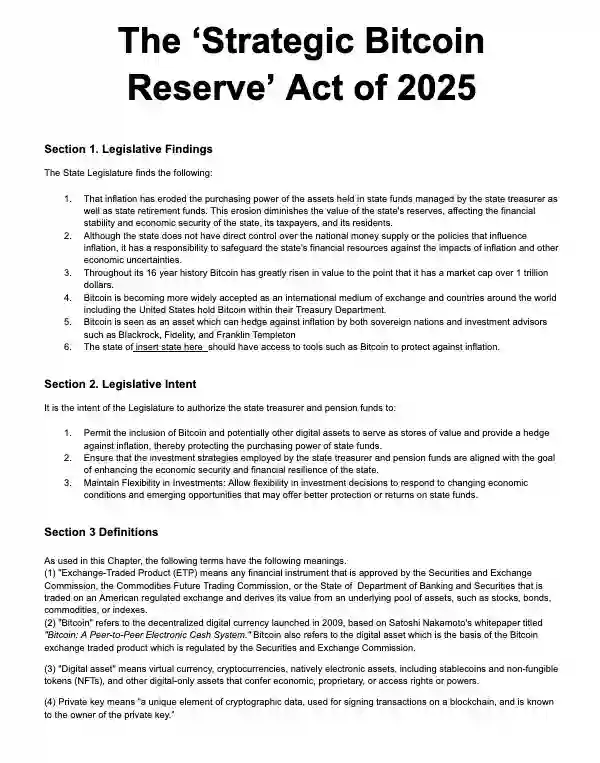
Courtesy: Bitcoin Reserve Bill via Satoshi Act Fund
Porter added, “Ultimately, the policy process is a lot of work. It’s filled with potential land mines that could kill a bill at any moment. This is also why we at @SatoshiActFund are so keen on having multiple bills in multiple states at the exact same time. It dramatically increases the odds that we will get critical legislation like ‘Strategic Bitcoin Reserve’ across the finish line.”
Porter further shed light on how most states operate on part-time legislative cycles, with sessions often lasting only a few months. As a result, the timeline for these bills is compressed, and the process must move swiftly. Advocates expect significant activity over the next six months, aiming to establish strategic Bitcoin reserves in several states by summer. In states with year-round legislatures, such as Ohio and Pennsylvania, the process may take longer.

 cryptonewsz.com