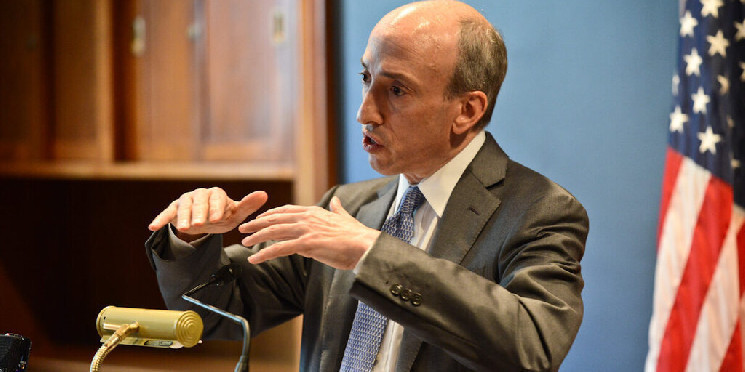
This happened previously with Jay Clayton—who was appointed by Trump—resigning before Joe Biden’s inauguration. Before that, Barack Obama’s pick Mary Jo White resigned the day of President Trump's inauguration.
“This practice allows the new president to appoint a chair who aligns with their policy objectives,” Thielen wrote. “If these historical patterns hold, Gary Gensler may resign in December or January, with a new SEC chair potentially confirmed by April or May.”
Gensler’s impact
Appointed by President Joe Biden in 2021, Gensler has led the SEC in an aggressive crackdown on U.S. crypto exchanges, decentralized finance projects, and software developers, which has been perceived by many as a hostile stance towards the sector. His term is set to last until 2026.
Donald Trump has repeatedly said that he would fire Gensler if elected, and suggested that crypto startups would be "living in hell" if he didn't return to office and help change the course of American regulation.
“I pledge to the Bitcoin community that the day I take the oath of office, Joe Biden and Kamala Harris’ anti-crypto crusade will be over,” Trump said during his Bitcoin 2024 conference keynote in July. “It will end. It will be done.”
According to Decrypt analysis, however, regulatory protocols establish that the president could not remove Gensler from his position without cause. Still, the new president would have the authority to demote him from the role of chairman and appoint another SEC commissioner in his place.
U.S. Republican Representative French Hill recently said that the SEC should have new leadership next year—regardless of which party controls the White House. He said that Gensler's "fear-mongering" at the SEC is unconstitutional and misuses the agency's regulatory authority.
Edited by Andrew Hayward

 decrypt.co