Ex-App Store Director: 'Apple Had a Problem With Crypto From Day One'
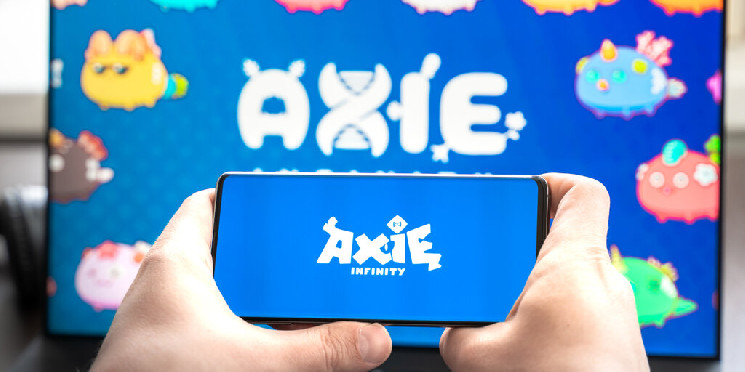
Origins, which was previously available in limited regions through the Google Play store and owner Sky Mavis’s own Mavis Hub, is now rolling out to key markets in Latin America and Asia on the App Store.
It will be available for Apple mobile users in countries including Argentina, Colombia, Peru, Mexico, Venezuela, Indonesia, Malaysia, and Vietnam.
He said that this free-to-play version begins with non-$NFT Axies, the cute digital characters in the game.
“Starter Axies will remain as non-NFTs,” Larsen said. “But eventually as people buy other Axies in app we will want [to] turn them into NFTs.” He added that $NFT holders will also be able to move their Axies into the app.
The game operates on Sky Mavis’s proprietary Ethereum-based Ronin sidechain, so owners of $NFT Axies will be able to play them in the iOS release. Developers said in a blog post they believe this is the first time Apple has agreed to make an externally-purchased $NFT usable on the App Store.
Following the launch, Larsen told Decrypt that the company hopes to introduce the studios that are part of its Ronin Network to Apple, potentially making it easier for their games to be accepted as well.
“The relationship with Apple is solid,” he said.
$AXS up but still well below peak
The native token of Axie Infinity got a boost after the announcement. $AXS was up 9.6% in the past day at the time of writing, priced at $7.44, according to data from CoinGecko.
This is still a long way off its all-time high of $164.90, reached in November 2021. In the time since then, Axie has had to deal with a wider crypto market slump, as well as the fallout from a $622 million hack of Ronin.
The in-game token for Axie, Smooth Love Potion (SLP) also got a small bump of 4.2% on the announcement but is still down more than 99% on its July 2021 peak.
The decline in the value of SLP led to a collapse in the original Axie game’s economy, prompting the company to make several changes to the tokenomics. Origin was soft-launched last year as part of a transition from play-to-earn to “play-and-earn.”

 decrypt.co