
 cryptopolitan.com

Web3 cryptocurrencies are coins and tokens that will support Web 3.0 or decentralized projects using smart contracts to automate transactions over the Internet. Considering the advent of Web 3.0, the rise of Web 3.0 cryptocurrencies is inevitable. However, Web3 has a dubious reputation; some critics brand it as an extension of blockchain-based trends that are “overhyped” and “harmful.”
In this guide, we will evaluate top Web3 cryptocurrencies and possibly support the growth of Web3 by investing in these cryptocurrencies.
What is Web 3.0?
Tackling scalability issues with Layer 1 solutions
Web 3.0 applications are often run on the Ethereum network, a Layer 1 blockchain. Such blockchains are also known as Layer 1 blockchain solutions which help to improve scalability for better adoption.
Besides Ethereum (ETH), Cardano (ADA), Binance Smart Chain (BSC), Litecoin (LTC), Polkadot (DOT), and Terra (LUNA) are some of the Layer 1 blockchain solutions that help tackle the “Scalability Trilemma.”
How different networks scale depends on the consensus mechanism, which includes Proof of Work (PoW) and Proof of Stake (PoS), Proof of Capacity (PoC), Proof of Activity (PoA), Proof of Burn (PoB), Proof of Elapsed Time (PoET), and Proof of History (PoH). For Web 3.0 to surpass its predecessors, it should use Layer 1 solutions.
Top 15 Web3 cryptocurrencies
As revealed earlier, Web3 tokens are decentralized projects that use smart contracts and automate transactions over the Internet. Here are the 15 top Web 3.0 cryptocurrencies.
Helium (HNT)
Helium, a cryptocurrency with a market cap of $2 million, is a decentralized blockchain network that powers the Internet of Things (IoT) devices that use a global network of low-energy wireless hotspots to broadcast data through radio waves recorded in the blockchain network.
However, the network uses a new algorithm known as the proof-of-coverage (Poc) consensus to validate that hotspots provide legitimate wireless coverage. Helium’s mainnet allows low-powered communication between different IoT devices and sends data across its vast network of nodes.
Polkadot (DOT)
Polkadot is one of the most popular cryptocurrencies in the crypto market, but most investors might not know it is a Web 3.0 project. This cryptocurrency currently has a market cap of $17.61billion as of writing. However, its network is more scalable than Ether, and it ranks higher when it comes to charging lower fees and offering fast speeds. Because it is a top-ranking position and the network stands as the market leader.
Siacoin (SIA)
Sia is a blockchain technology that uses a P2P network to create a digital platform where users pay hosts to rent their storage space. However, transactions in the network are boosted through smart contracts. Furthermore, Siacoin, the native token of the blockchain network, acts as the currency used to pay for storing data on the web. Currently, Siacoin has a market cap of $448 million.
Chainlink (Link)
Chainlink is a decentralized network that is built on the Ethereum blockchain. However, this network helps create smart contacts based on real-world data. This network integrates easily to any blockchain network, which is why it has become a widely used platform for oracle services. Chainlink currently has a market cap of $6 billion.
Filecoin (FIL)
Filecoin is also a decentralized network where users can earn the FIL token (the network’s native token) by renting the storage space in their hard drive space. Filecoin is a storage network, and anyone on the platform can be a storage provider. However, the more storage you have and provide on the Filecoin network, you can earn more transaction fees and tokens. Filecoin has a market cap of $3 billion.
BitTorrent (BIT)
BitTorrent is the most potent P2P network globally, with over two billion users and 200 million wallets. It also touts itself as “the world’s biggest distribution network.” On BitTorrent, large files are divided into fragments and transmitted over the web in a fragmented form, merging into one whole file on the recipient’s computer.
People who download the file from the network become part of the distribution. BitTorrent was created by the Tron network in 2018, and later the BitTorrent Token (BTT) was built on the Tron blockchain. BitTorrent has a market cap of $2.5 billion.
Kusama (KSM)
Kusama (KSM) is a web3 cryptocurrency like Polkadot (DOT). However, its network was created to solve developers’ problems related to their projects. On Kusama, developers compete to get a spot on the Kusama network through parachain auctions. Kusama has a market cap of $1 billion.
Basic Attention Token (BAT)
Basic Attention Token is a native token of the Brave web browser built on the Ethereum blockchain network. The network aims at offering security and efficiency in digital advertising through blockchain technology. The native currency is designed to be pretty exchanged by advertisers, users, and publishers.
Furthermore, BAT also tracks how users interact with digital advertising content. Again, it then stores that information in a distributed ledger. Today, there are more than a billion BAT tokens in circulation. Basic Attention Token has a market cap of $1 billion.
Flux (FLUX)
Flux was created to help developers develop web3 applications and deploy them on different networks. It is also used to create decentralized projects. The change also has a decentralized structure that allows users to access data on or off-chain. FLUX’s current market cap is $335 million.
Ocean Protocol (OCEAN)
The ocean is another type of Web3 cryptocurrency that offers all the tools you need to create web3 solutions. However, this token is a good investment for people looking to invest in a web3 pass with potential. The platform focuses on data sharing and decentralization, offering transparency when handling data. Lots of Web3 applications have been created through Ocean Protocol. The platform currently has a market cap of $663 million.
Livepeer (LPT)
Livepeer is a decentralized blockchain network that changes how video streaming works. It is built on the Ethereum network, and it provides inexpensive broadcast and streaming services directly at the Web 3.0 video stack layer. Livepeer aims to encourage network participants and distribute real-time videos.
Furthermore, the platform’s open-source nature allows developers and users to participate in the management and maintenance of the platform. The native token (LPT), which will enable users to stake it in the network, can earn ETH and LPT as rewards. Livepeer’s current market cap is $491 million.
The Graph (GRT)
The Graph is a vital decentralized indexing system in the DeFi world that aims to bring a decentralized public infrastructure to the mainstream market. However, the network can be used to organize blockchain data.
Also, it is a low-level blockchain indexing protocol and a high-level cryptographic ledger. The Graph allows network users to build and publish an application programming interface (API), a workflow process that hides complex code behind a simple API. An API is a subgraph in the graph protocol which uses a specific query to get data from a blockchain. Furthermore, contributors on the blockchain network use a graph token (GRT) to ensure the security of the Graph network. GRT is a token that allows a community of stakeholders to provide curating services to the network. GRT’s market cap is $1.7 Billion.
Kadena (KDM)
Due to its braided chains, Kadena is a scalable Layer-1 blockchain protocol that processes up to 480,000 transactions per second (TPS). It is also a Proof-of-Work protocol but differs from other POW protocols because it offers smart contracts abilities similar to those in the Ethereum blockchain network. Kadena has a market cap of $1.1 Billion.
Zcash (ZEC)
Scientists developed Zcash from John Hopkins, MIT, and other eminent academic and scientific institutions. However, it is one of the first-privacy-built cryptocurrencies. Its token, ZEC, was initially built on Bitcoin codebase. Zcash has a market cap of $2.1 Billion.
Audius (AUDIO)
Audius is a decentralized music streaming platform for artists, fans, and node operators. Its token, AUDIO, can be used for staking, governance, and incentivizing artists’ earnings. Furthermore, Audius rewards its creators by featuring their music in weekly trending lists. Audius is currently in partnership with streaming platform TikTok and plans to introduce a stablecoin on its network to offer paid content in the future. Audius has a market cap of $432 million.
How to buy web3 tokens
Buying Web3 tokens is easy. We will use Binance as the exchange platform to buy these cryptocurrencies for this article.
Step 1: Deposit fiat currency through an e-wallet transfer or bank transfer on Binance. Make sure you check the available fiat channels for desired cryptocurrencies.
You can also convert fiat currencies to BUSD or USDT so that you can trade a greater variety of tokens.
Step 2: Purchase any Web3 tokens through a wallet purchase or credit or debit cards.
Step 3: To use your web3 tokens, you need to transfer the tokens from the Binance crypto address to a MetaMask wallet address.
Interoperability of Web 3.0 and the metaverse
In recent times, we have seen how blockchain technology, especially NFTs, can enable users to participate in the metaverse. Thanks to blockchain, these digital environments are scalable and interoperable.
Also, Web3 can offer the foundation for people to buy and sell virtual properties such as NFTs. Because Web3 is a collection of apps and user interactions on a decentralized platform, it is likely to be highly interoperable and facilitate trade and communication. Again Web3 is focused on hosting more open, interconnected websites for more excellent user utility.
A Web 3.0 app is Axie Infinity, a complex gaming metaverse that bridges gaming and decentralized finance (DeFi). These games, which are NFT-based, require users to purchase an Axie avatar in the form of NFT to start playing and use virtual currencies Axie Infinity Shards (AXS) and Smooth Love Potion (SLP).
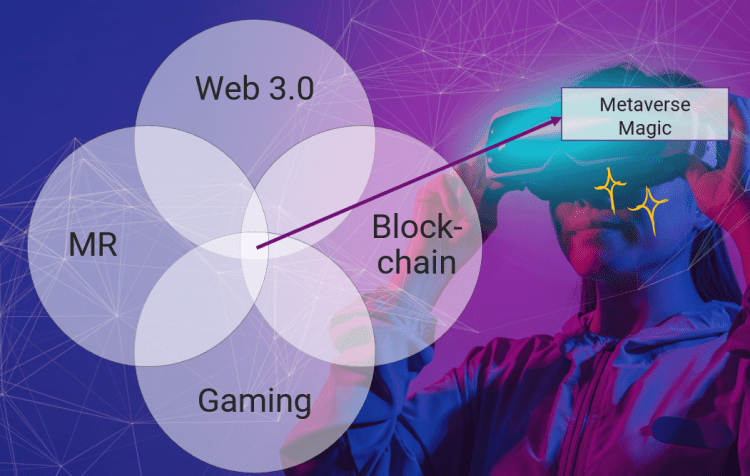
The metaverse happens at the intersection of Web3/Blockchain, MR, and gaming. If you don’t trust the way the Internet works nowadays and believe The Social Dilemma is right, consider an alternative: Web3. The Internet can empower ordinary people by breaking down existing power structures as the web comes full circle.
Final words
Web3 tokens offer immense potential to change the future of the Internet. Web3 is built on the concept of more excellent utility, decentralization, and openness. However, since these concepts are increasing daily, their high support is likely to push Web3 tokens to the mainstream, thus, making them become profitable investments for the future. Direct investment in blockchain protocols, through crypto, is the right place to start participating in the growth of Web 3.0.
As adoption of these blockchains grows, via greater network usage, rise in decentralized apps (dApps), growth in decentralized finance (DeFi), and acceptance of Non-Fungible Tokens (NFTs), so too will the adoption of Web 3.0 and its technologies.
In addition to directly buying cryptocurrencies, you can check out DeFi projects like Pancake Swap or Bakery Swap, which are decentralized exchanges (DEXes) that facilitate the swapping of tokens. Additionally, through these DeFi projects, individuals can stake their crypto tokens in liquidity pools to earn even more tokens as a result of their contributed liquidity and active use of their funds.
Before you consider further action, make an informed decision and spend the amount you can afford to lose.
FAQs about Web3 crypocurrencies
Does Web 3.0 already exist?
Web 3.0 has not yet been implemented, so there is no solid definition. It took over ten years to transition from the original web, Web 1.0, to Web 2.0, and it is expected to take just as long, if not longer, to implement and reshape the web with Web 3.0 entirely.
Is Web3 really decentralized?
Web3 will provide decentralized access to corresponding data, unlike Web 2.0, which primarily stores data in centralized locations.
Does Web3 have a coin?
Web3 tokens will be used for decentralized power apps (DApps). Web3 tokens are built on platforms like Ethereum but usually have their platforms associated with them.