Bitcoin lags tech stocks as Fed’s Waller renews call for 50-basis-point hike
cryptobriefing.com
25 m
Bitcoin traded lower on Wednesday despite a rally in the Nasdaq, where Nvidia’s latest earnings results helped ease concerns about the technology sector.
The largest crypto asset was down 1.5% over the past day, trading near $64,000 at press time. Ethereum also declined, falling below $1,800, while Solana and XRP gained approximately 2% each and BNB was unchanged.
The S&P 500 and Nasdaq futures edged higher in early trading, while the VIX fell more than 4.5% from the prior session’s spike.
Know when your coins move
Alerts, real-time prices, and market news — all in one app
Point your phone camera to install
4.8 based on 40K reviews in the App Store and Google Play
Nvidia shares rose about 2% after reporting better-than-expected quarterly results and stronger guidance, although uncertainty over its leadership succession, regulatory scrutiny, and tighter US chip-export restrictions kept gains in check.
The market outlook has faced pressure from renewed calls for higher interest rates. Federal Reserve Governor Christopher Waller told CNBC Wednesday that the central bank should consider a 50-basis-point rate increase at its December 8-9 meeting, arguing that inflation was proving more persistent than anticipated.
He said inflation was becoming more widespread, warning that policymakers might need to “shock people” to prevent price growth around 3% from becoming entrenched.
Waller said the central bank should first undo the three quarter-point cuts made in 2025, but indicated that a return to the previous rate level might not adequately address inflation. He said a quarter-point increase in December could be sufficient if the Fed also signals another hike in January. If officials are unwilling to provide that signal, he favors a larger half-point increase immediately.
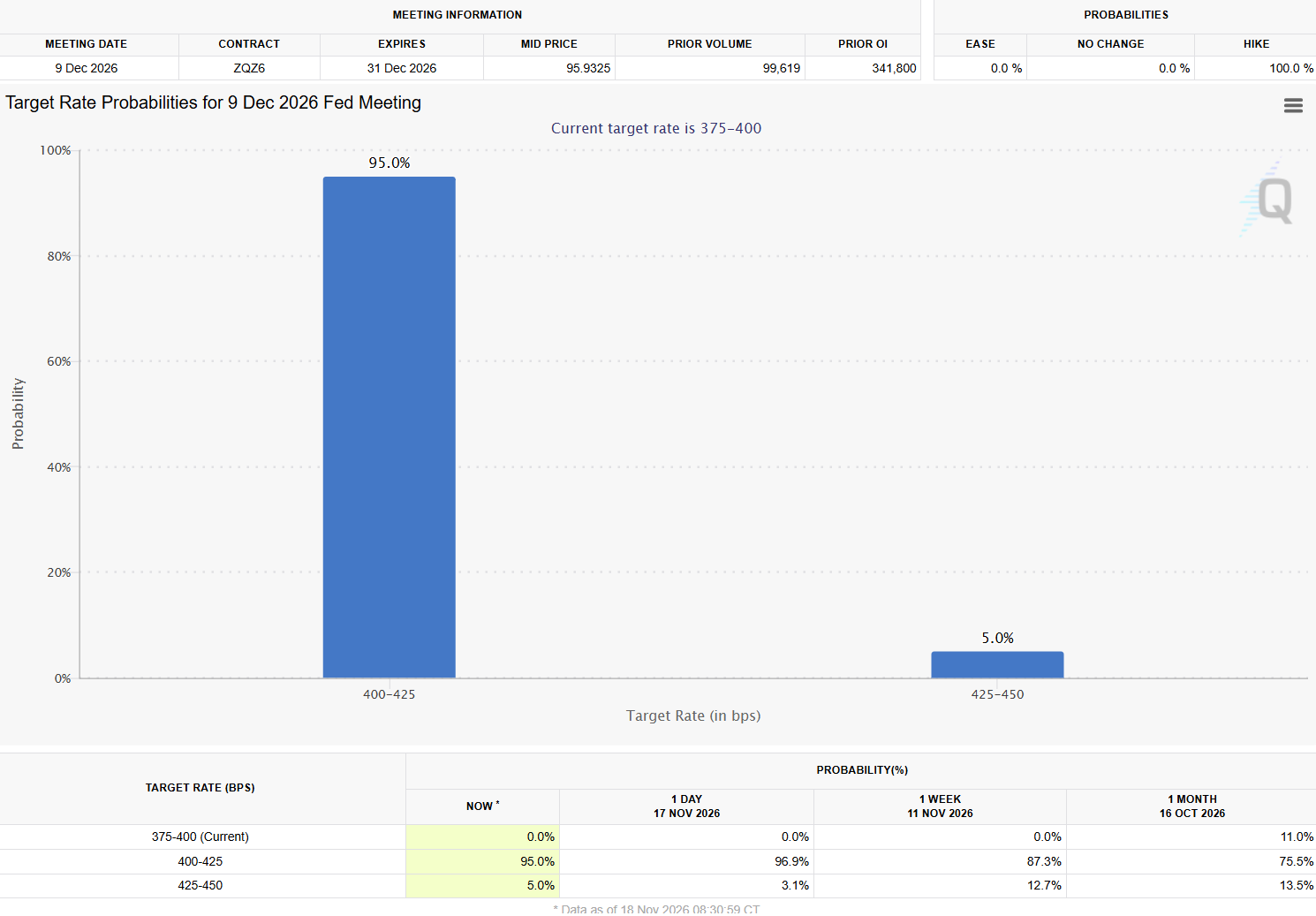
Interest rate futures continue to reflect expectations of smaller increases. The most likely outcome, with a 95% probability, is a quarter-point increase to a 400-425 basis point range, according to the CME FedWatch tool.
The Fed delivered three rate cuts in 2025 as concerns about employment and expectations of easing inflation supported a less restrictive policy.
However, inflation has since accelerated, with higher energy prices following US and Israeli strikes against Iran in late February and the continued impact of tariffs keeping most inflation readings above the central bank’s 2% target.

 cryptobriefing.com