Tether loses $6.6B in market cap as banks bet $270M on Project Faro
ambcrypto.com
15 m
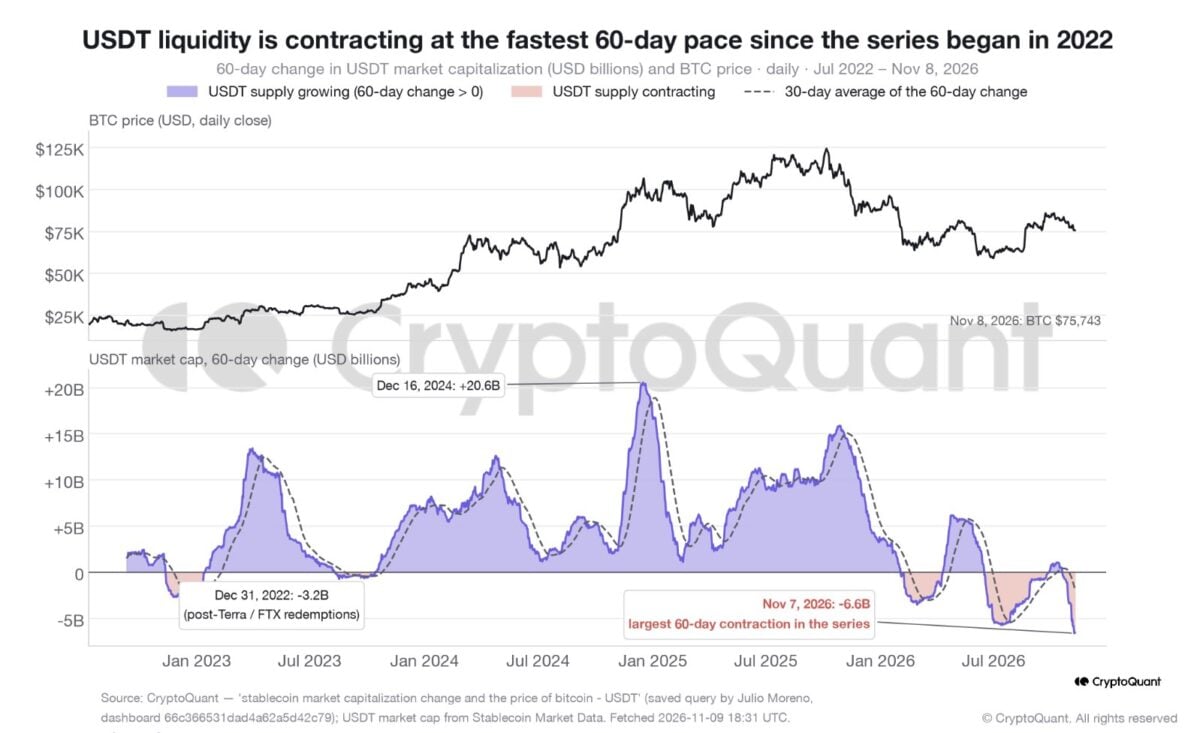
Liquidity in the stablecoin space has contracted rapidly, reducing one of the most significant sources of buying power from crypto markets. Over the last 60 days ending on the 7th of November, according to CryptoQuant, Tether [$USDT] saw its market capitalization drop by $6.6 billion.
This represents the largest such contraction since CryptoQuant began tracking this metric in 2022, exceeding a $3.2 billion decline in the wake of the FTX collapse. Trends suggest that investors are withdrawing capital from stablecoins instead of holding them ready for use in crypto trades.
Source: CryptoQuant
Know when your coins move
Alerts, real-time prices, and market news — all in one app
Point your phone camera to install
4.8 based on 40K reviews in the App Store and Google Play
Overall, stablecoin capitalization now stands at approximately $290 billion. With less capital available to provide dollar backing for potential sales and new position entries, there appears to be fewer dollarsremaining to fund a crypto market recovery.
At the same time, a decrease in demand of approximately 284,000 $BTC over thirty days is evident for Bitcoin [$BTC]. As such, if no additional capital flows into stablecoins, then buyers may experience difficulty in sustaining a rally.
Project Faro enters the stablecoin race
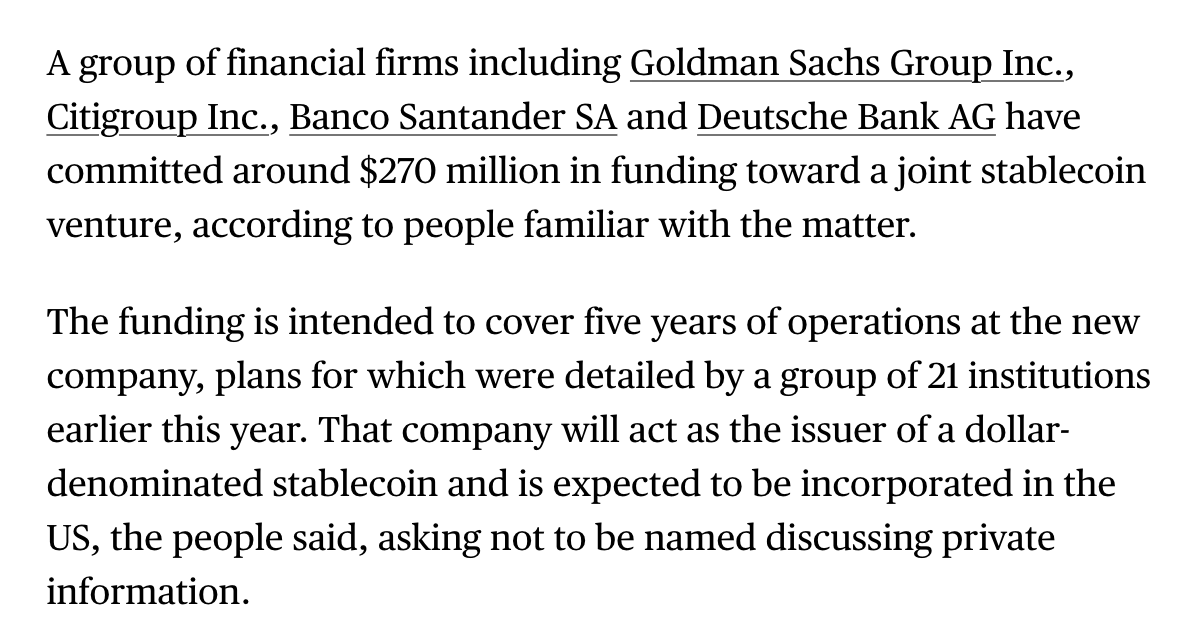
As stablecoin capitalization declines, large financial institutions have positioned themselves to capture a greater percentage of the overall market. Project Faro, a joint stablecoin venture, has obtained $270 million from 21 major financial firms.
This includes Goldman Sachs, Citi, Santander, and Deutsche Bank to fund operations over five years prior to launching their dollar-backed stablecoin during the first half of 2027. Still, a euro back stablecoin is expected tofollow.
Source: Bloomberg
This funding illustrates increasing interest among large establishedbanks regarding participation in the stablecoin market. This is as the overall capitalization of the stablecoin space dropped to $290 billion.
Yet entering the market will be easier than displacing existing leaders. Tether and Circle control roughly 85% of supply, making adoption and liquidity key challenges.
Can Project Faro reshape stablecoin liquidity?
Although Project Faro is preparing for launch, the true measure of success will dependupon how businesses utilize the payment features provided by the project.
AsProject Faro aims to facilitate cross-border transactions using dollar-backed stablecoins, they could potentially eliminate reliance on slower bank processingtimes associated with cross-border transactions.
Companies would be able to send dollar-backed tokens across borders without being required to wait for the standard settlement period. Payment speed and access to funds may also beimproved for multinational corporations that operate in various markets.
However, recurrent business payment willultimately define whether Project Faro achieves its ultimate goal of establishing a meaningful role for its stablecoin products and services as a result of its banking ambitions.
Final Summary
Tether ($USDT) lost $6.6 billion in market capitalization over 60 days, deepening crypto market liquidity pressures as Bitcoin ($BTC) demand weakened.
Project Faro secured $270 million from 21 banks, but challenging Tether and USDC will require real payment usage and deeper liquidity.

 ambcrypto.com