en
Back to the list

Paraguay's President Resigns as Ueno Bank Failure Freezes Deposits for Millions

source-logo  cryptoknowmics.com 5 h
image

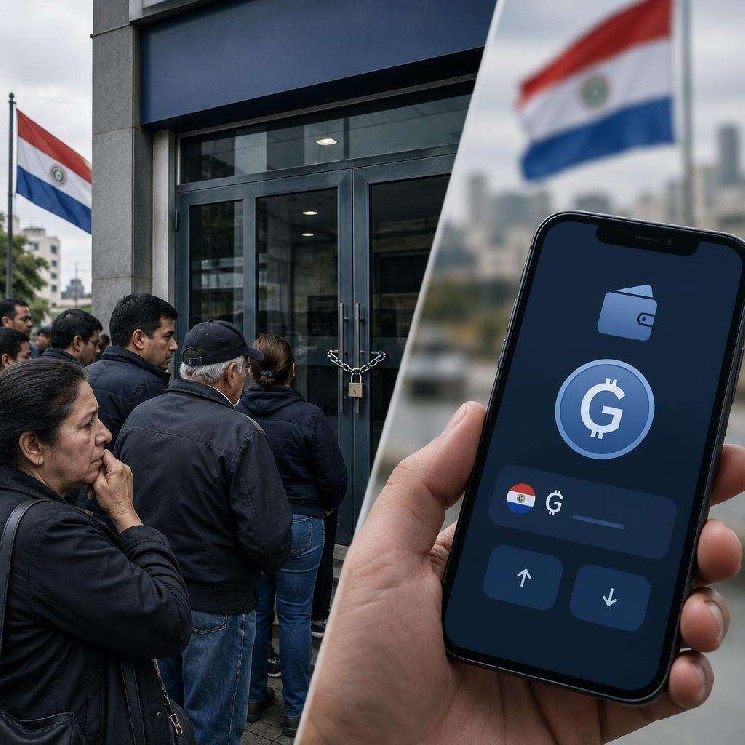
Santiago Peña resigned as president of Paraguay on Thursday, November 5, citing the need to protect the country's stability and democratic institutions after the failure of digital lender Ueno Bank triggered both a financial emergency and a political crisis. In a video posted to X, Peña said his priority was safeguarding Paraguayans who had entrusted their savings to the financial system — a pointed reference to the more than 3 million depositors who lost access to their funds when authorities suspended the bank's operations.

A Bank That Grew Too Fast

Ueno Bank expanded rapidly after its 2021 launch, becoming one of Paraguay's largest financial institutions in a country of roughly 6.5 million people. Trouble surfaced in June 2026, when regulators began scrutinizing loans the bank had extended to companies connected to its controlling shareholder, Grupo Vázquez. The bank later acknowledged, in an October statement, that it had received regulatory notices on June 5 and July 24 demanding it reduce that related-party lending exposure.

Those adjustments proved fatal to the bank's balance sheet. After revisions to its financial statements, Ueno's solvency ratio — the capital buffer regulators require banks to hold against losses — fell to 5.56%, less than half the 12% legal minimum. The Central Bank of Paraguay initiated resolution proceedings on November 2 and suspended operations, cutting customers off from their deposits. The following day, authorities detained eight executives, including Grupo Vázquez president Miguel Vázquez and bank president Juan Manuel Gustale. A court subsequently ordered six of them held in pretrial detention and placed two under house arrest.

Know when your
coins move

Alerts, real-time prices, and market news — all in one app
qr-code Point your phone camera to install
4.8 based on 40K reviews in the App Store and Google Play

The Political Dimension

Peña's exposure to the crisis was not purely institutional. He had remained a business partner of Grupo Vázquez until March 2025, according to the Associated Press, and lawmakers moved to open impeachment proceedings citing alleged conflicts of interest, misuse of pension funds and institutional cover-ups tied to the bank's failure. Peña denied wrongdoing, characterizing the affair as a regulatory dispute that had been weaponized politically.

Peña was elected in April 2023 and took office that August, with a five-year term set to run through 2028. Under Paraguay's Constitution, Vice President Pedro Alliana would assume the presidency for the remainder of the term if Congress formally accepts the resignation. Hundreds of depositors, pensioners and workers gathered in the capital, Asunción, demanding the return of their savings and accountability from officials.

What Depositors Can Recover

Paraguay's central bank announced Thursday that it would begin deposit guarantee payments to eligible clients holding balances of up to 10 million guaraníes (roughly $1,630), on the condition that they had no outstanding debts to Ueno and held accounts at other financial institutions. The country's deposit insurance framework protects up to 228.3 million guaraníes (about $37,200) per depositor per institution, so customers with larger balances face a longer, uncertain recovery through the resolution process.

Crypto Markets as an Alternative

With traditional accounts frozen, some Paraguayans sought liquidity through cryptocurrency markets. David Eisenmann, founder and CEO of Paraguayan crypto exchange X4T, said customers were converting holdings into guaraníes or US dollars to cover payroll and settle debts, while others were purchasing dollar-backed stablecoins — digital tokens designed to maintain a one-to-one peg with the US dollar — as a way to preserve value. "When that access is restricted, people look for other sources of liquidity," Eisenmann said.

Stablecoin prices on X4T rose about 8% in recent weeks, though Eisenmann was careful to note that the dollar's recovery against the guaraní began in October, before the bank's collapse — central bank data show the dollar gained roughly 1.6% against the guaraní between October 1 and month-end — so the full increase cannot be attributed to the banking crisis alone. On Bybit's Paraguay peer-to-peer marketplace, one listing observed early Thursday offered USDT at 6,942 guaraníes, approximately 13% above the central bank's November 4 reference rate of 6,144 guaraníes per dollar. Tether CEO Paolo Ardoino weighed in on X, writing that "USDt is a lifeline for hundreds millions of people in the world" in response to news of the turmoil.

The premium on stablecoins reflects a pattern common to banking crises: when access to deposits is cut off, demand shifts toward assets that can still move. Whether that demand persists depends largely on how quickly — and how fully — Paraguay's resolution process returns funds to the country's depositors.

cryptoknowmics.com