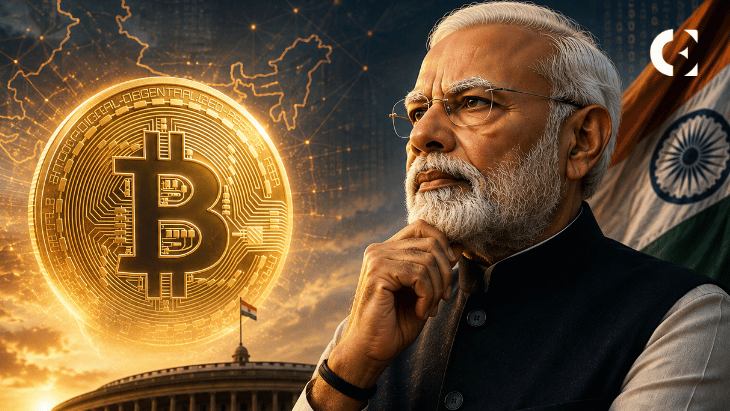
Here, Bitcoin and crypto come into the picture. If gold loses its appeal among Indian investors, many may look for other options, including $BTC. While gold has long been seen as a way to preserve wealth as well as a hedge against inflation, Bitcoin could be seen as a digital alternative.
India’s Gold Habit Is Bigger Than Jewellery
It is worth noting that gold is more than just jewellery for Indians. People used to view it as a way to save money, preserve wealth, and protect against financial issues. Although many families buy it for weddings, festivals, and other occasions, their main focus is its long-term value and ability to act as a financial safety net. This deep-rooted history of gold in India makes the PM’s statement critical. If Indians are forced to reduce their gold investments, it needs to be thought where they would put their money.
What Happens When Indians Look for Another Store of Value?
If gold looks less attractive to Indians, they may start searching for other appealing investment tools. They need to preserve their money and use it when required. In the country, there are already several existing options, including stocks, mutual funds, bonds, real estate, as well as crypto.
Despite regulatory uncertainty, crypto is gaining significant traction in the country. That’s why India is the largest country in terms of crypto adoption. Thus, the decline in interest in gold could pave the way for greater interest in digital assets, particularly Bitcoin.
Bitcoin vs Gold: The Indian Investor’s Different Trade-Off
While both gold and Bitcoin may look attractive to investors who want to save their money as a hedge against inflation, both come with different risks. Gold is generally less volatile, and it has long been considered a safe-haven asset. On the other hand, $BTC is highly volatile and has a limited supply. Although $BTC can offer higher returns, the volatility could bring huge losses as well.
Another major difference is their nature and accessibility. Gold is a physical asset and is widely accepted in India. At the same time, $BTC is a digital asset, and it’s still in the grey zone. $BTC payments are not accepted in the country. Therefore, it is not that easy for Indian investors to switch from gold to Bitcoin.
Stablecoins Change the Question from Gold to Dollars
Interestingly, this topic takes a different angle with the inclusion of stablecoins. Unlike Bitcoin, which is highly volatile, stablecoins are stable as they are backed by fiat currencies like USD or other assets. This could make stable tokens more attractive in India as it could provide a way to gain digital exposure to the dollar.
However, this may create contradictions. If the potential reduction in gold purchases is to lower reliance on imported assets, adoption of stablecoins may bring greater use of foreign currencies. In other words, Indians may move away from gold without necessarily moving toward a domestic asset.
Can Swadeshi Policy Actually Push Demand Toward Digital Assets?
As of now, it is not clear whether Modi’s Swadeshi push will bring more crypto investments to the country. As there are more options like stocks and mutual funds, the future of crypto depends on the investors’ preference. But if investors want a digital alternative to gold, Bitcoin has scope.
The Regulatory Problem India Would Face
However, the main issue is India’s regulatory uncertainty. Regulation is an important factor if people want to move to $BTC. Digital assets lack a clear regulatory framework, with the country’s current rules focusing mainly on taxation and anti-money laundering. Currently, India’s Income Tax Department levies 30% tax on crypto gains and a 1% TDS on every transfer. This makes crypto investments even more challenging in the country.
The country continues to face a large number of crypto-related scams and threats. If crypto adoption surges without clear regulations, this number could even surge more, with more investors falling victim to hacks and scams.
(adsbygoogle = window.adsbygoogle || []).push({});
What Indian Investors Should Watch Next?
Interestingly, the main thing to watch is how investors receive PM Modi’s statement on gold. It needs to be seen whether there will be a significant fall in the demand for the metal. Even if there is a decline, it doesn’t actually mean that investors are choosing $BTC. It takes time to know if the country is experiencing a massive shift in the investment space.
Related: $19B in Indian Crypto Activity Could Be Taxable—What Should Indian Investors Know?

 coinedition.com