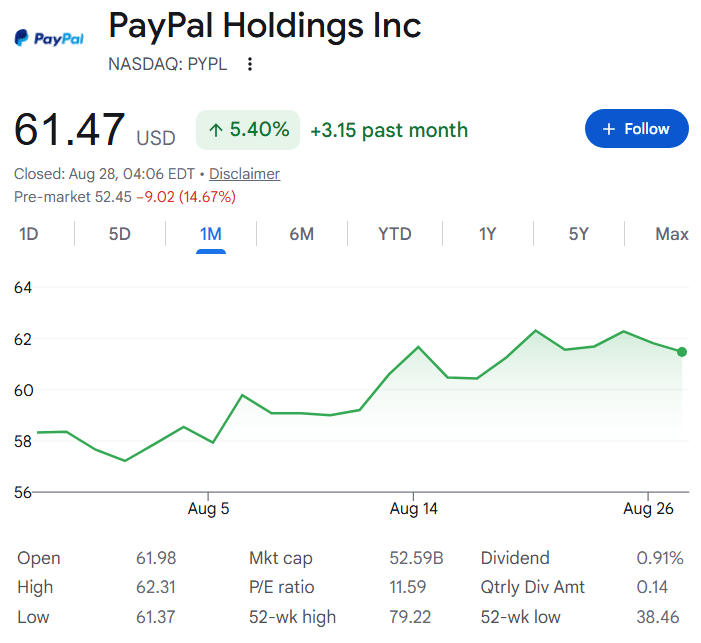
The sharp downward move was entirely driven by reports that Stripe and Advent decided to withdraw their offer to acquire PayPal for $60.50 per share.
Simultaneously, the news proved especially damaging for PYPL stock price as the proposed acquisition was the main driver of the summer rally that took the equity roughly 50% above its June lows.
Indeed, shortly after the bid was disclosed in mid-July, PayPal shares reversed the 2026 decline that had, by that point, taken them nearly 20% lower from $58.14 on January 2 – the first regular session of the year – to $47.37 on the eve of the bid.
Why PayPal stock crashed more than 14% on the bid’s withdrawal
Notably, PYPL’s extended session decline also demonstrates that the company’s own merits – including strong second-quarter (Q2) results and the turnaround plan – have relatively little sway among investors.
Meanwhile, PayPal’s performance in the ongoing decade highlights the drivers behind the lack of investor enthusiasm.
While the company is undeniably a pioneer within its sector and saw a remarkable rally during the COVID-19 pandemic that took it to highs above $308, competition has been slowly eating away at its business.
Furthermore, PayPal’s fall from grace was exacerbated by the company’s retention of steep fees levied upon its users through the firm’s ascendance, as it made rising competitors instantly attractive to customers.
Still, PYPL stock’s latest steep decline and the results it posted for Q2 do indicate that the equity might soon be a worthwhile investment.
PayPal remains a major player in its industry and could execute a successful comeback, though remaining cautious until the repricing is complete is arguably a good move.
Featured image via Shutterstock

 finbold.com