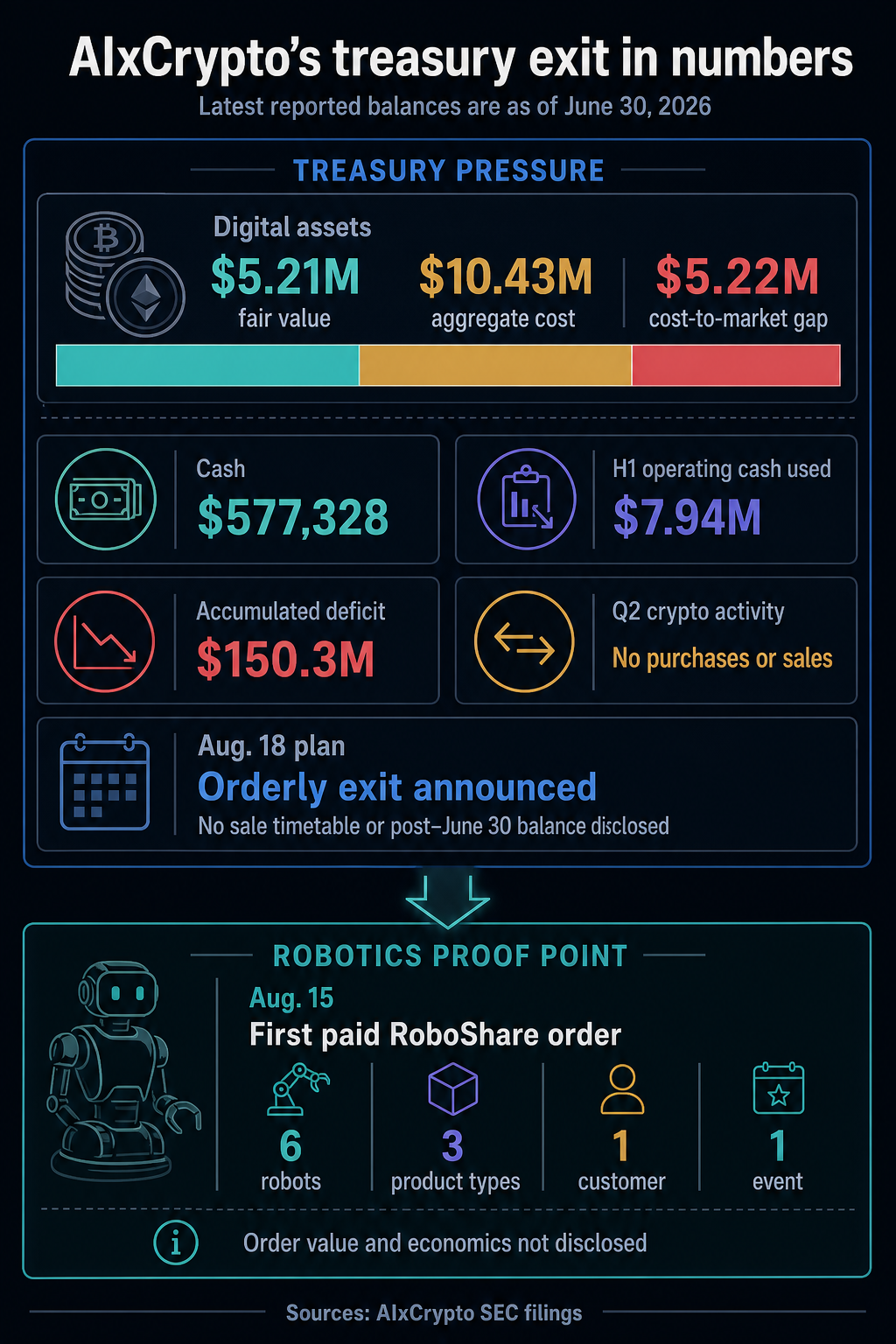
The Aug. 18 filing described a planned orderly exit, not a liquidation that has begun or been completed. AIxCrypto did not disclose a timetable, a post-June 30 balance or expected proceeds. Its attached release warned that volatility, market depth, execution timing and custody constraints could cause realized proceeds to be materially less than carrying value.
The sale plan follows a rapid decline in liquidity. AIxCrypto used $7.94 million of cash in operations during the first half and reported an accumulated deficit of $150.3 million at June 30. Its quarterly filing cited limited cash, no recurring operating revenue, volatile digital assets and no committed alternative financing, raising substantial doubt about the company’s ability to continue as a going concern.
The pressure was already visible in the first-quarter report. AIxCrypto recorded $2.11 million of digital-asset dispositions, a $1.95 million net loss on the portfolio and $4.50 million of operating cash use during that period.
A June financing agreement offers another possible source of funds, but not committed cash. It allows conditional stock sales of up to the lesser of $50 million or 19.99% of pre-agreement voting power unless shareholders approve issuances above the cap. Each draw is priced at a discount to a trading benchmark calculated over three days and carries a 3% fee, creating dilution risk if used.
That financing pressure raises the bar for RoboShare. The platform said it completed its first paid commercial order on Aug. 15 for one Malibu event involving its first customer, deploying six robots across three product types with custom show production.
The Aug. 18 filing did not disclose how much AIxCrypto earned, what the delivery cost was, or whether demand would repeat. The company said its near-term priorities include validating repeat demand and operating economics in Los Angeles before expanding under a planned 10-city strategy.
If completed, the planned sale would end a treasury strategy whose remaining holdings were valued at about 50% below aggregate cost at June 30. Whether the robotics pivot can ease the company’s liquidity pressure will depend on repeat orders with economics that have yet to be disclosed.

 cryptoslate.com