coindesk.com
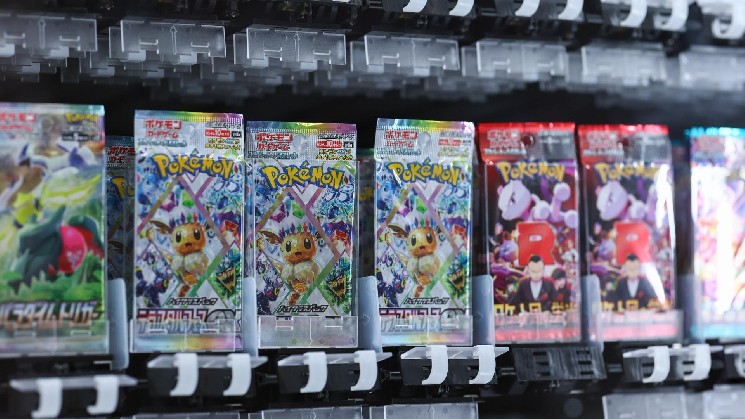
It’s 3:30 a.m. on a cool April morning, and hundreds of people are already lined up outside a Costco in British Columbia, some sitting in folding chairs, hours before the store opens.
The buyers aren't here for a bulk deal on toilet paper or groceries. They’re waiting to be the first to get their hands on boxes of Pokémon cards, specifically the "Prismatic Evolutions" cards, selling around C$100 each. On secondary marketplaces such as Facebook Marketplace, the cards often get listed for several times their retail price.
And just recently, popular influencer Logan Paul sold a rare Pokémon card, a Pikachu Illustrator, for $16.5 million dollars, reportedly earning him more than $8 million in profit. The buyer? AJ Scaramucci, founder of venture capital firm Solari Capital and son of financier Anthony Scaramucci.
In addition to Costco, other big-box retailers are seeing the Pokémon card frenzy show up in their businesses. Target said that sales of its trading cards were up nearly 70% last year, driven largely by Pokémon, and that it plans to expand store space dedicated to trading cards as part of its growth strategy. Walmart also reported its online marketplace saw 200% jump in trading card sales last year. Both retailers have had to impose purchase limits on trading cards to curb scalping. Meanwhile, eBay, the largest marketplace for these cards, saw $2.62 billion in sales in 2025.
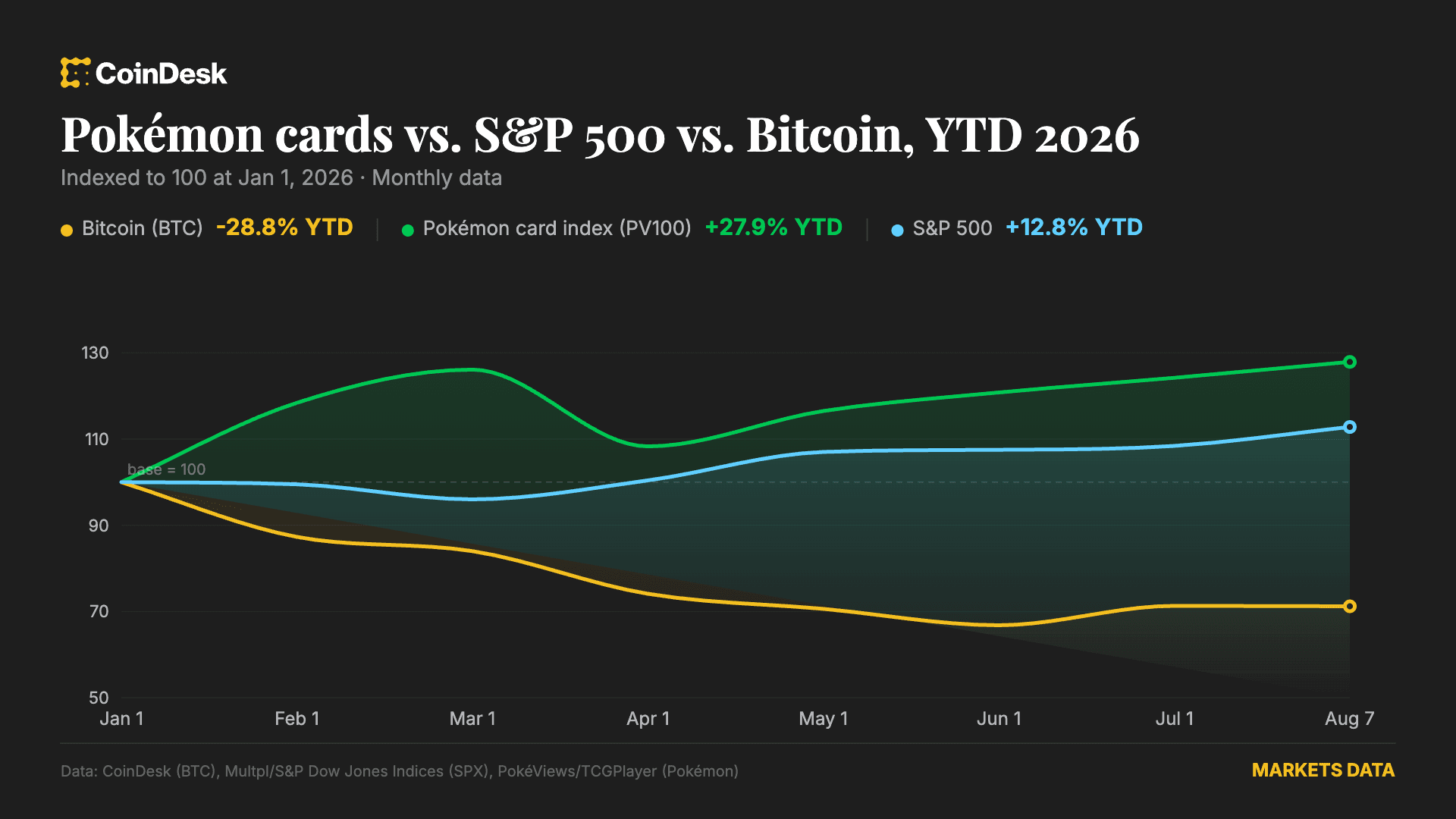
In fact, both the S&P 500 (up about 13%) and bitcoin (down 29%) underperformed this year compared with the value of Pokémon cards (rose 28%).
The hype is part of a broader transformation of trading cards from hobby-store collectibles into a multibillion-dollar market that increasingly resembles an alternative asset class.
Exactly how large this market is hard to pin down, because it has developed through dense, decentralized dealer networks, local card shops and conventions. So the market size varies by methodology and firm, but the rough estimates put the value around $10-$15 billion today. For example, Kovoy VC, which invests in gaming platforms and tech, pegged the value at around $13 billion in 2024, and Mordor Intelligence puts it at around $15 billion in 2026. Meanwhile, TCGCharts estimates that the market cap of every "graded" card is around $10.8 billion today.
House of Chimera found that many tokenized-card platforms rely on the same grading and storage providers, making the underlying infrastructure relatively similar across competitors. The research firm said a more meaningful advantage may be having enough capital and inventory to support buybacks and liquidity.
To secure the supply of these highly graded cards, $ATH has partnered with Japan Trading Card Center (JTCC), which operates a large Japanese online marketplace for mystery card packs. The company said the agreement grants Deadstock "exclusive" access to tokenizing JTCC’s inventory and sourcing network. $ATH's Jang said JTCC's scale gives $ATH access to a continuously replenished pool of cards that would be difficult for a new Western platform to replicate.
"They are single-handedly the largest buying stream in Asia," he said.
JTCC reportedly booked about $2.4 billion yen in profit for the period from Dec. 2024 to Nov. 2025 and had total assets of 6.9 billion yen, according to publicly available documentation.
According to $ATH, having access to an ample supply of cards is important because tokenized or digital cards must be backed by a physical card. $ATH's pitch is that access to Japan's dense ecosystem of specialist card stores allows it to source inventory closer to the source, rather than competing for cards that have already passed through several layers of dealers in Western markets.