coindesk.com
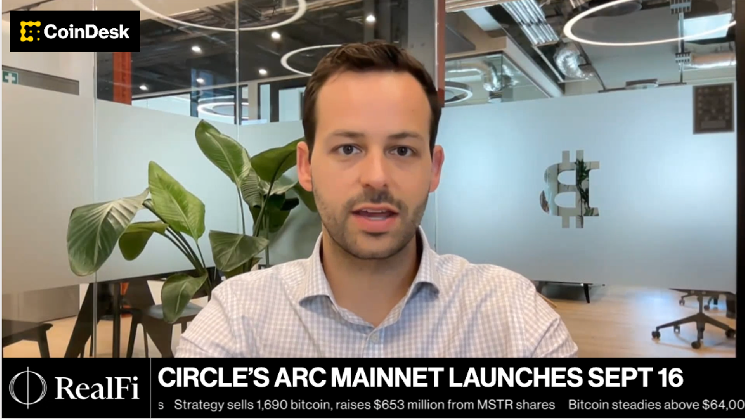
The big picture: In an interview on CoinDesk’s Public Keys, Bitwise Head of Research Ryan Rasmussen said investors are underestimating Circle’s opportunity as stablecoins move toward a multi-trillion-dollar market.
- Rasmussen expects the stablecoin market to grow from roughly $300 billion to between $3 trillion and $5 trillion.
- He said Circle is particularly well positioned as U.S. stablecoin regulation takes shape, with its existing market share giving it a head start.
- “I think we'll look back five years from now and Circle will be not only a stablecoin giant, but a payment giant,” Rasmussen said.
Closer look: Rasmussen’s thesis isn’t just that more stablecoins mean more reserve revenue for Circle — he sees payments infrastructure becoming a major second business.
- Circle is building infrastructure designed to facilitate payments in a stablecoin-driven financial system.
- Rasmussen said that expansion is being “very mispriced by the market,” as investors remain focused on Circle’s reserve-based business.
- He compared Circle’s potential trajectory to global payments giants including Visa and Mastercard.
The competition: Banks, consumer companies and other incumbents are preparing their own stablecoins, but Rasmussen doesn’t see that as a major threat to Circle.
- He argued the overall market could expand fast enough for Circle to grow even as new competitors enter.
- Rasmussen pointed to new stablecoin initiatives such as OpenUSD as evidence of growing interest from incumbents.
- Circle’s advantage, he said, is its ability to keep executing as the regulated stablecoin market develops.
What comes next: Circle’s Arc blockchain could test whether the company can successfully expand beyond issuing stablecoins and into the infrastructure that moves them.
- Rasmussen described Arc as a layer-1 blockchain designed to facilitate stablecoin payment activity.
- He said investors should watch whether that infrastructure is adopted and integrated into the traditional financial system.
- The key question over the next year, Rasmussen said, is how Circle’s economics change as stablecoin adoption grows and its new infrastructure gains traction.